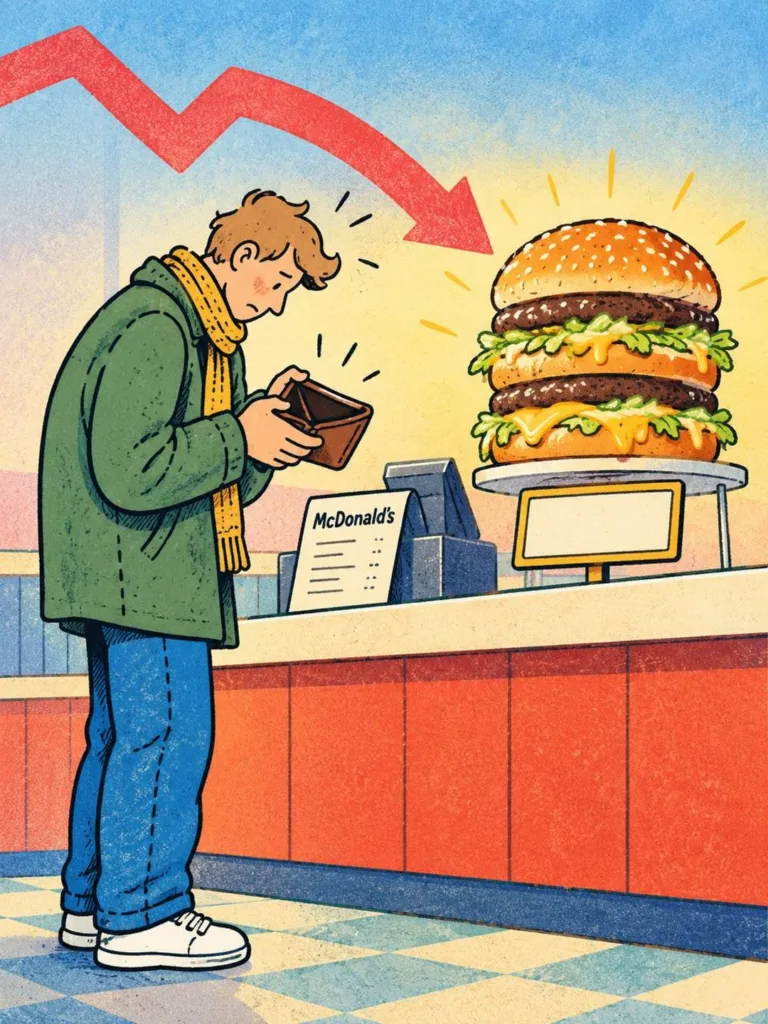
McDonald's shares are about 31% below their February high. They closed at $236.50 on Sept. 25. If that pace holds through year-end, it will be the stock's worst year since 2002. As an illustration, 10 million won invested at the February peak would now be worth about 6.9 million won.
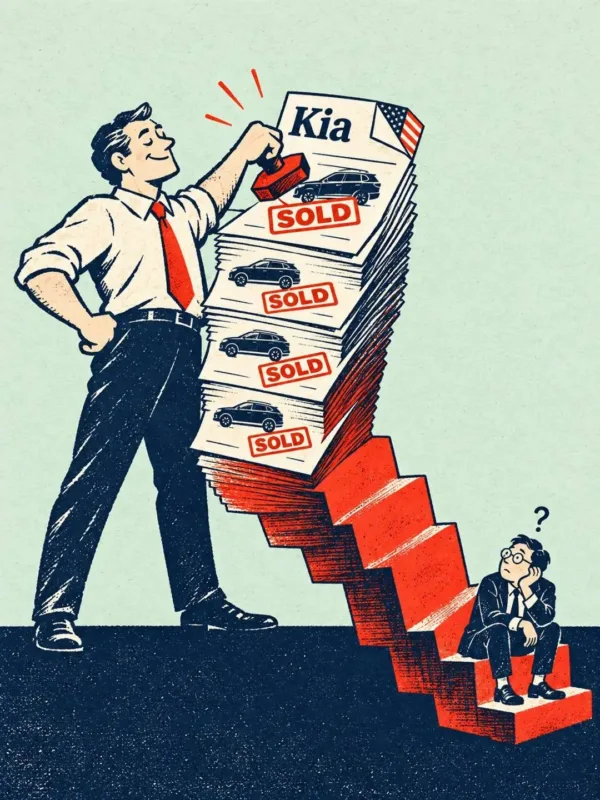
This news is easy to read as "one burger company is having a bad year." But follow the numbers and a different story appears. For years, McDonald's protected its profits by raising prices. What has been shaken now is that approach, and the assumption behind it: "customers keep coming even when prices go up."
- At investor day, the company put the bad numbers out first
McDonald's held its investor day (an event where a company explains its medium- to long-term plans to shareholders and analysts) on Sept. 23. There it guided for "slightly negative" US sales this quarter. Last quarter, US same-store sales (sales growth comparing only stores open more than a year) rose 0.8%, the slowest pace in more than a year.
It also announced $8.5 billion in support for franchisees (owners who run restaurants under the McDonald's brand). The money is spread through 2036, and about $5 billion of it goes to rent relief and capital funding by 2030. The stock fell 4.8% that day; at one point it was down 6.1%, its biggest single-day drop since March 2020.
- The Big Mac got 23% pricier in six years
According to the Big Mac Index, which the British magazine The Economist uses to compare Big Mac prices across countries, the US Big Mac price rose about 23% from 2019 to the end of 2025. As food and labor costs rose, McDonald's raised menu prices to protect its profits.
Customers reacted to the prices. A post showing an $18 Big Mac meal spread widely on social media, and the company explained it was the price at one of more than 13,700 US restaurants. Jacob Aiken-Phillips of Melius Research, a US equity research firm, said, "Their prices have gone up substantially, and it's no longer viewed as the best value in food."
- In the same burger market, the cheaper players sold more
Rivals' numbers point the other way. Burger King's US same-store sales rose 8.5%, and Taco Bell, a Mexican-style fast-food chain, grew 7%. While McDonald's stayed at 0.8%, rivals leaning on value menus sold more.
McDonald's also launched a menu of 10 items under $3 this year. But franchisees pushed back on the discounts, because they lift sales while cutting the profits of operators already facing higher costs.
- Low-income customers pulled back first
CEO Chris Kempczinski said on the November earnings call last year that low-income customer visits fell nearly double digits in the third quarter. Over the same period, higher-income customers grew. At this investor day he said industry traffic growth would be flat while inflation stays elevated, and in a related interview he said, "We're not expecting things to change."
Interest rates are squeezing wallets too. The Federal Reserve, America's central bank, raised its policy rate to 3.75-4% on Sept. 16, its first hike since 2023. Analysts note that customers squeezed by inflation and rising rates have become more selective about where they spend. US brokerage Baird cut its price target from $285 to $250, citing "a challenging environment for low-income consumers."
- Why the $8.5 billion became bad news
With prices no longer an easy way to protect profits, the company chose to spend on restaurants and service. The goal is about $100,000 more in annual cash flow for a typical US restaurant. The company expects it will take five to six years to earn back the investment.
For shareholders, the costs come before any profit growth. McDonald's also pushed its global restaurant expansion target back a year, from 2027 to 2028, citing weak consumer spending and high construction costs.
- Wall Street cut its targets, but they are still above the current price
After investor day, brokerages cut their targets one after another: Baird to $250, Evercore ISI to $300 (from $320), and BMO Capital at $310. Even so, the average price target is 28% above the Sept. 25 close. Ratings stand at 24 buys, 16 holds and one sell.
The stock trades at about 17 times expected earnings for the next year, well below its five-year average. It got cheaper not because of earnings, but because of doubts about customer counts.
- BITPRESS Insight
What McDonald's stock is telling us is not about burgers but about the limits of "pricing power" (the ability to raise prices without losing customers). A company that grew sales by raising prices has to give that money back through discounts or investment once customer counts start falling, and the stock prices in those costs first.
The same yardstick works when Korean investors look at US consumer and restaurant stocks: does sales growth come from price, or from more customers? When cheaper players like Burger King and Taco Bell sell more over the same period, it means money is moving toward value, not brand.
The rule fits in one line: when sales stall at a company that relied on price hikes, the next quarter's profits get hit first by discounts and investment costs.
Sources
https://www.bloomberg.com/news/articles/2026-09-26/mcdonald-s-sell-off-hits-30-as-big-mac-inflation-spurs-pushback
https://finance.yahoo.com/markets/stocks/articles/mcdonald-sell-off-hits-30-130000443.html
https://finance.yahoo.com/markets/stocks/articles/mcdonald-shares-drop-ceo-reveals-162759471.html
https://www.forbes.com/sites/jimosman/2026/09/25/mcdonalds-stock-fell-29-its-turnaround-plan-could-make-things-worse/
https://www.g-enews.com/article/Global-Biz/2026/09/2026092622441064729a1f309431_1
https://www.fxleaders.com/news/2026/09/24/mcdonalds-stock-forecast-mcd-234-support/
https://finance.yahoo.com/markets/stocks/articles/mcdonald-breaks-52-week-low-193342212.html
https://www.convenience.org/stay-current/news/2025/november/6/3-mcdonalds-dip-in-low-income-customers_finance
https://finance.yahoo.com/markets/stocks/articles/street-trims-mcdonalds-targets-investor-120720263.html
https://ca.investing.com/news/stock-market-news/baird-cuts-mcdonalds-stock-price-target-on-consumer-headwinds-93CH-4853553
https://stockanalysis.com/stocks/mcd/history/
https://www.federalreserve.gov/newsevents/pressreleases/monetary20260916a.htm
Glossary
Same-store sales — Sales growth comparing only restaurants open more than a year, which strips out new-store effects and shows whether customers are actually spending more.
Pricing power — The ability to pass higher costs on through prices because customers don't leave when prices rise.
Franchisee — An owner who runs a restaurant using the brand and menu of the parent company, paying fees and rent to it.
Investor day — An event where a listed company gathers shareholders and analysts to explain its multi-year strategy and target numbers.
Target — The price a brokerage analyst expects a stock to reach, usually within a year.
BITPRESS articles are information to help your investment decisions, not a recommendation to buy or sell any stock or coin. Investment decisions and their results are your own responsibility.