
A rule that makes a buyer purchase small investors' shares at the same price when a company changes hands is about to return after roughly 30 years. It is called a mandatory tender offer. On Nov. 1, the Financial Services Commission said it wants to start with the ‘50% plus one share’ version the National Assembly agreed on.
The common reading is “minority shareholder protection is coming back.” But the real issue lies elsewhere. It is how much of the small investors' stock the buyer takes how much over. Under this proposal, that share varies widely depending on how much the controlling shareholder owns.
- What is the mandatory tender offer meant to fix?
A company's buyer pays extra for the controlling shareholder's stake. This extra is the control premium (an added price for the right to run the company as one sees fit). In past M&A (mergers and acquisitions), controlling shareholders sold at this premium, but ordinary shareholders often did not get the same price.
A mandatory tender offer makes the buyer also purchase ordinary shareholders' shares through a tender offer (a public offer to buy at a set price), so that the premium is shared. It was first introduced in 1997, but was abolished the following year because it could slow corporate restructuring during the foreign exchange crisis.
- Why did "50% plus one share" cause a fight?
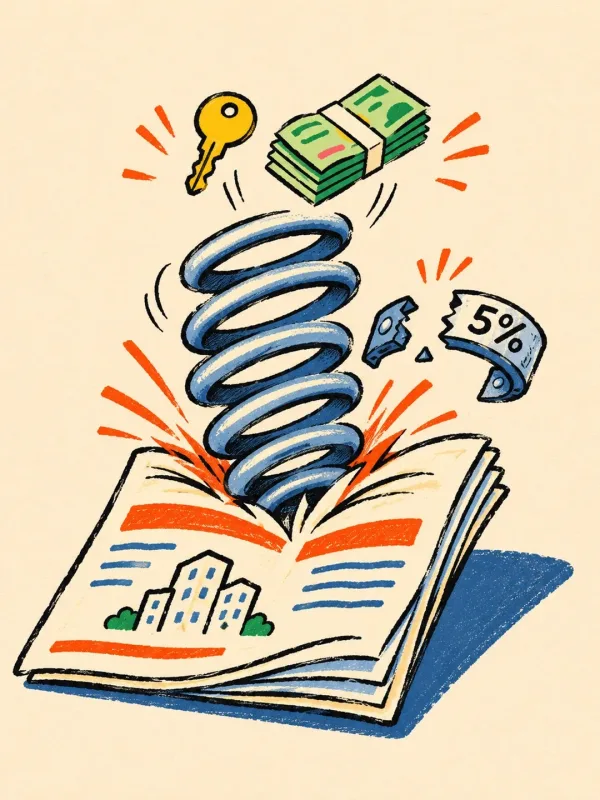
The amendment treats buying 25% or more of a listed company and becoming its largest shareholder as taking control. In that case, the buyer must purchase up to 50% plus one share of the issued shares, including what it already holds. That means the buyer only needs to buy enough to firmly hold control, not everything.
The amendment also allows advance buying, in which the buyer first purchases the controlling shareholder's stake over the counter (directly between buyer and seller, outside the exchange). If the controlling shareholder holds 40%, the buyer buys that 40% first and then needs only the remaining 10% plus one share from ordinary shareholders. The controlling shareholder sells everything, while ordinary shareholders sell only part.
It is like handing over a favorite shop: the buyer pays extra for the owner's whole share but buys only a set amount from the partners' shares. With stocks, though, there are thousands or tens of thousands of partners, so each person's portion is much smaller.
- How much does my share change with the big shareholder's stake?
Let's calculate, assuming all ordinary shareholders join the tender offer and sell in the same proportion. If the controlling shareholder holds 25%, the buyer purchases 25% plus one share out of the ordinary shareholders' 75%, so each sells about one-third of their shares. If the controlling shareholder holds 40%, the buyer buys 10% out of 60%, or about one-sixth. At 45%, it is 5% out of 55%, or about one-eleventh.
Put simply, the closer the controlling shareholder's stake is to half, the closer to zero the portion small investors can sell at the premium. Even if you hold KRW 10 million worth of a company's stock, if the controlling shareholder owns 40%, only about KRW 1.67 million worth can be sold at the tender offer price.
What about companies where the controlling shareholder already holds more than half? The Korea Corporate Governance Forum (a group that advocates better governance at listed companies) pointed out that the rule offers ordinary shareholders no protection in such companies.
- What happens to the shares you can't sell?
After the tender offer ends, the buyer holds a majority and fewer shares trade on the market. The remaining shareholders are left in a weak position in a company that moves as the buyer wishes. The forum pointed out that small investors, worried that the value of their remaining shares will fall, may accept a tender offer price lower than they would otherwise expect.
Lawyer Shim Hye-seop said, “As the remaining shareholders become vulnerable, the mindset of ‘let's sell while we can’ kicks in,” and “it effectively becomes a structure in which the controlling shareholder can do as it pleases.” As alternatives, the forum proposed ‘pro rata buying,’ in which the controlling shareholder also joins the tender offer and sells only at the same ratio as ordinary shareholders, and approval by a majority of independent shareholders.
- So why not make it 100%?
There is an opposing argument too. Requiring the buyer to purchase all remaining shares (a full buyout) would raise the buyer's burden and weaken controlling shareholders' reasons to sell, so M&A itself would decline. The Financial Services Commission said, “It is reasonable to run the system, look at its actual impact on ordinary shareholders and the corporate M&A market, and then discuss improvements such as a full buyout.”
Overseas examples are split too. The United Kingdom requires an offer for all remaining shares, but the Financial Services Commission judged it inappropriate for Korea, where ownership is concentrated, to follow that model as is. Opponents cite Japan as the model. In Japan, when the buyer's acquired stake is between 30% and 66.7%, the buyer must purchase all shareholders' shares pro rata.
- Where does the bill stand now?
The National Assembly's Political Affairs Committee passed the amendment on Sept. 17. Eighteen Korean and foreign asset managers held a press conference on Sept. 30 to request a delay, and on Oct. 1 its submission to the plenary session was put on hold. On Oct. 28, President Lee Jae-myung asked for opinions on the mandatory purchase ratio on X (formerly Twitter).
The 1997 system vanished within a year amid a crisis. This time the difference is that it is stalled not by a crisis but over ‘how much the buyer must purchase.’
- BITPRESS Insight
Under this bill, when a company is sold, the premium goes to the controlling shareholder first, and small investors get only the room left after ‘50% plus one share’ is filled. The size of that room is set not by the law but by the stake the company's controlling shareholder already holds.
So for a stock that has risen on ‘expectations of a control sale,’ the same expectation carries different weight. Between a company where the controlling shareholder holds around 25% and one where it holds close to half, the premium small investors share can differ by several times even if a buyer appears.
When you hear your stock is being sold, how much the controlling shareholder owns decides your share before the size of the premium does.
Sources
https://www.yna.co.kr/view/AKR20261031031200002
https://news.mtn.co.kr/news-detail/2026092412463436296
https://news.mtn.co.kr/news-detail/2026100113171855492
Glossary
Mandatory tender offer — A system in which the law requires a person buying control of a company to also publicly buy ordinary shareholders' shares.
Control premium — The extra amount paid above the market price for a controlling shareholder's stake, which comes with the right to run the company.
Advance purchase — The buyer purchasing the controlling shareholder's stake over the counter before the tender offer.
Pro rata buying — A method in which the controlling shareholder also joins the tender offer and sells shares only at the same ratio as ordinary shareholders.
Off-exchange trade — A trade in which the buyer and seller exchange shares directly, without going through the stock exchange market.
BITPRESS articles are information to help your investment decisions, not a recommendation to buy or sell any stock or coin. Investment decisions and their results are your own responsibility.