Tesla CEO Elon Musk wrote on X (formerly Twitter) on Oct. 15 that China will produce an enormous amount of memory chips in 2028. A few days earlier, he had said of the U.S. memory maker Micron: "Micron has shown a reasonable attitude regarding future memory prices, but other companies have been demanding absurdly high prices."
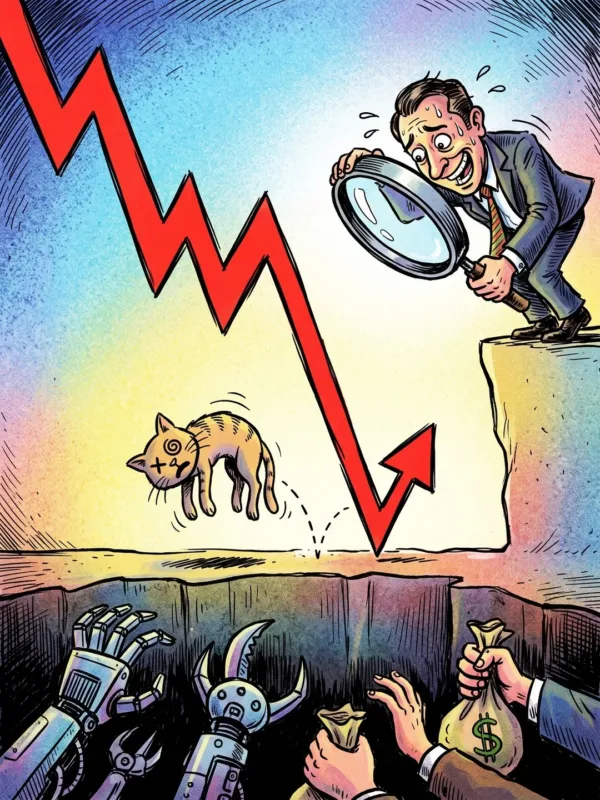
The common reading is a "Chinese supply bomb." The worry is that if Chinese DRAM floods the market, Korean memory prices will collapse at once. But the key point lies elsewhere. Korea's expansion accounts for a bigger share of the DRAM being added through 2028 than China's does, and Musk, who made the remark, is a buyer of memory, not a seller.
- Why did Musk single out 2028?
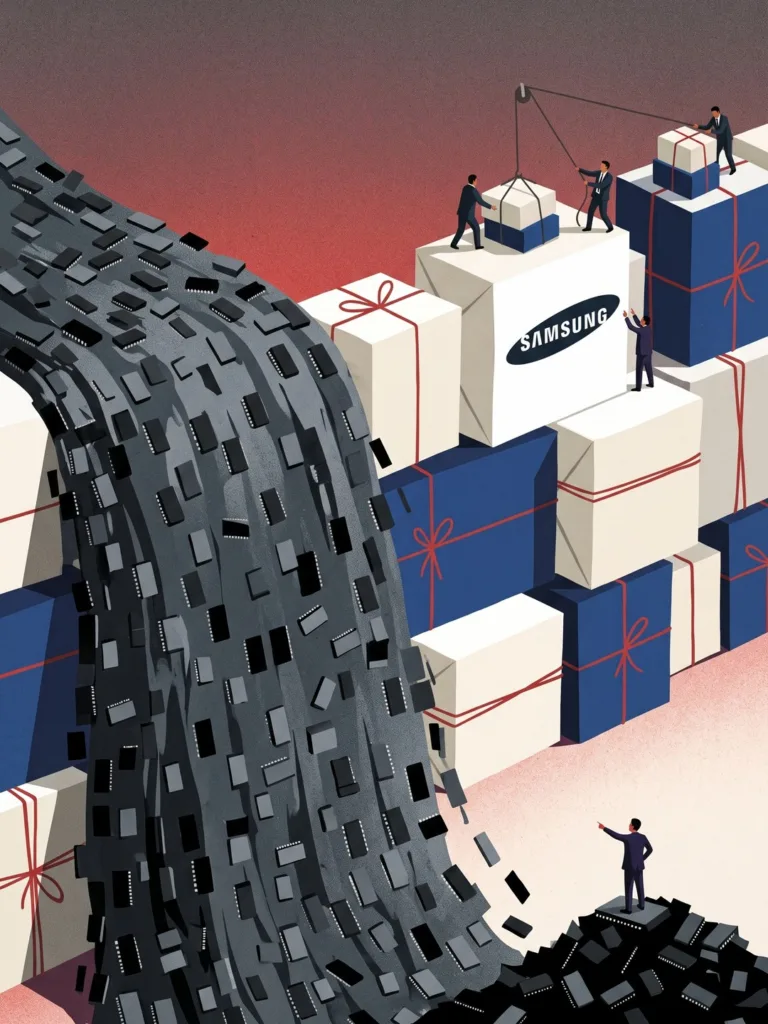
2028 is the year the capacity that Samsung Electronics, SK hynix and Micron have been adding for AI demand starts to show up in output. Forecasts say China's ChangXin Memory Technologies (CXMT, a Chinese DRAM maker) could also reach monthly capacity of 500,000 to 600,000 wafers (the round silicon discs chips are printed on) by the end of 2028, the world's third-largest.
Morgan Stanley expects China to account for about 30% of the new DRAM wafer volume added worldwide through 2028, second only to Korea. In July, the Financial Times reported concern that, with all three companies building record amounts of capacity, oversupply could return from 2028 to 2029 if AI demand falls short of expectations.
Put simply, the DRAM reaching the market in 2028 won't be only Chinese. It is like a year when many new apartments open in a neighborhood and push jeonse (Korea's lump-sum deposit lease) prices down. This time, though, the biggest builder of new complexes is Korea.
- Musk is a buyer of DRAM, not a seller
Tesla, SpaceX and xAI (Musk's AI company), all led by Musk, run AI, self-driving and data center businesses, so memory prices hit them hard. As AI investment left memory in short supply, Samsung Electronics and SK hynix gained pricing power, and the burden grew for big tech companies that have to buy in bulk.
That is why some in the industry read the remark as a price-negotiation card. One semiconductor industry official said, "He keeps signaling that prices are too high so they won't go up." Apple CEO John Ternus, in an interview with the U.S. news weekly Time published on the 15th, called the memory supply crunch an "absolute crisis" and suggested he would keep the door open to adopting Chinese memory.
Think of a tenant about to renew a jeonse lease who says, "A flood of new homes is coming in the next complex." It isn't wrong, but the remark also carries a calculation to keep the deposit increase down. That said, Musk did not name Samsung Electronics or SK hynix directly, and he did not disclose any actual negotiations.
- If Chinese chips are used, they would reach general-purpose DRAM first, not HBM
DRAM is not one product. High-bandwidth memory (HBM), the high-performance DRAM that goes into AI servers, and general-purpose DRAM, which goes into smartphones and PCs, differ in technology level and supply chain.
Kim Dong-won, head of research at KB Securities, said, "The gap in DRAM process technology between Samsung Electronics and China's CXMT is judged to be 5 to 7 years, measured by when mass production begins," and he saw market worries about China's technological catch-up as excessive. Kyung Hee-kwon, a research fellow at the Korea Institute for Industrial Economics and Trade, said, "If big tech companies use Chinese products, it would start with memory chips for mobile devices, laptops and desktops, the budget devices." He added, though, that U.S. tariffs and big tech's possible diversification of suppliers mean "it is clearly a serious situation."
Put simply, if Chinese chips push prices down, that pressure is likely to show up first in DRAM for budget phones and laptops rather than in high-end AI products. It is like a bumper rice harvest: ordinary rice prices move first, while premium grades move later.
- Multi-year contracts keep prices from falling all at once
Samsung Electronics expects multi-year contracts to cover 60% to 70% of its memory production capacity once the deals now in progress are finished. The default contract term is five years. SK hynix has also signed long-term supply contracts with about 10 customers, and on Sept. 30 Micron said more than 75% of its 2027 output was already committed to customers.
The contract terms also favor the seller. In August, Bank of America (BofA) analyzed Samsung Electronics' long-term supply contracts as limiting the quarterly price cut to 5% and putting effectively no cap on increases. Think of a cell phone plan. During the contract, your bill doesn't change much at once even if a shop next door sells for less. However, memory contracts are negotiated every year to extend the term, so buyers may have more say at renewal.
JP Morgan forecasts a memory supply shortfall of about 20% in 2026, 19% in 2027 and 15% in 2028. Put simply, the market as a whole is expected to be short even in 2028, which runs opposite to the oversupply worry the Financial Times reported.
- BITPRESS Insight
Musk's words can be read two ways. They are a warning that supply could rise sharply in 2028, and also a signal from a big memory buyer asking for smaller price increases.
So what decides Samsung Electronics' and SK hynix's DRAM prices is not only "how much China makes." It is also how much of the DRAM overlaps with Chinese products, and how much of the volume is tied up in multi-year contracts. Volume with quarterly price cuts capped, like Samsung's contracts, is unlikely to see a big one-time drop even if Chinese supply grows.
The next time news says China will flood the market with DRAM, the question to ask is not "how much?" but "which DRAM, and how much of it outside contracts?"
Sources
https://www.yna.co.kr/view/AKR20261016074300003
https://www.mt.co.kr/en/tech/2026/10/14/2026101408070493867
https://www.newsis.com/view/NISX20260720_0003714889
https://sateconomy.co.kr/news/view/1065619488562019
https://www.tokenpost.kr/news/market/383862
Glossary
DRAM — A memory chip that computers and smartphones use to hold data temporarily while they work.
HBM (high-bandwidth memory) — High-performance DRAM used in AI servers.
General-purpose DRAM — Standard DRAM used in everyday devices such as smartphones, laptops and PCs.
CXMT (ChangXin Memory Technologies) — A Chinese DRAM maker forecast to have the world's third-largest capacity by the end of 2028.
Multi-year supply contracts (long-term supply contracts) — Supply contracts that fix volumes for several years in advance. Samsung Electronics signs them in five-year terms by default and extends them through annual negotiations.
BITPRESS articles are information to help your investment decisions, not a recommendation to buy or sell any stock or coin. Investment decisions and their results are your own responsibility.