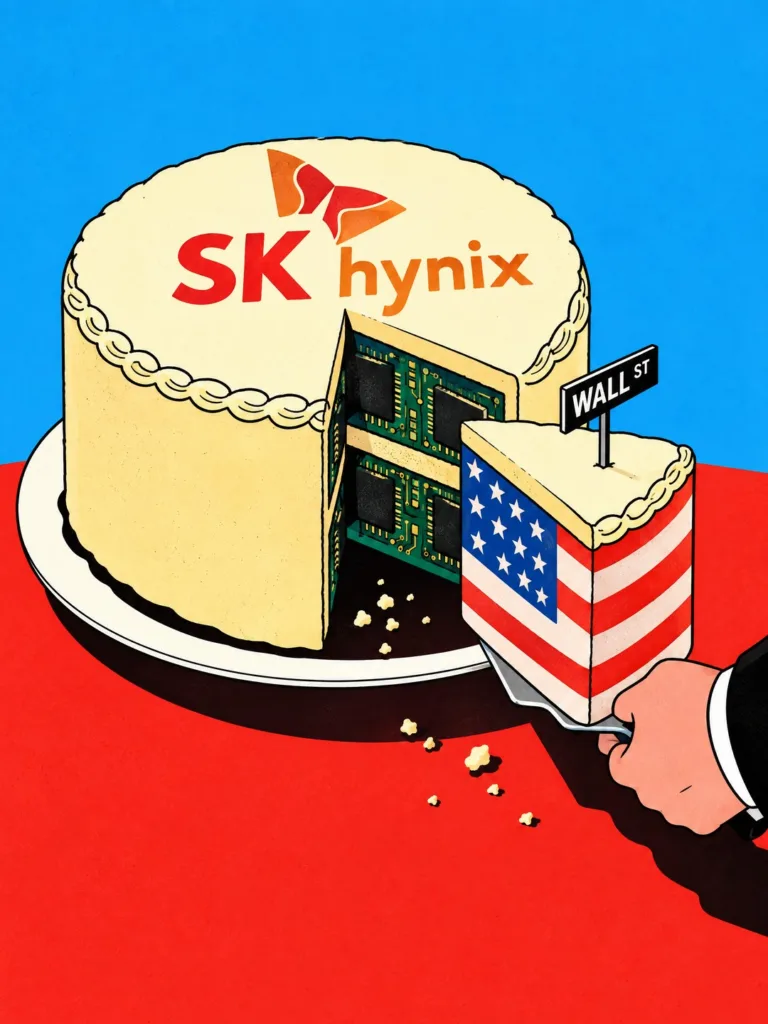
SK hynix has stopped weighing a listing of its U.S. subsidiary Solidigm (the company SK hynix set up in 2021 after buying Intel's data-storage (SSD) business) on Oct. 23. In a filing, it said it had "decided to halt its review of a pre-IPO round and an initial public offering (IPO), taking overall capital-market conditions into account." A pre-IPO round is a sale of shares to a few investors before a company lists. The official statement followed a report a day earlier that the plan was being withdrawn.
The common take is "if a subsidiary lists in the U.S., it gets a price tag, which is good news for the parent." But the real point is different. If the same business is listed in two places, SK hynix shareholders' stake in Solidigm shrinks, and its value may show up less in SK hynix's share price. That is why shareholders objected.
- Why did Solidigm want to list?
Solidigm mainly sells enterprise SSDs for AI data centers. The total contract price SK hynix agreed to pay Intel was $9 billion, and Solidigm was launched in late 2021 when it paid the first $7 billion. The ownership chain runs SK Inc. → SK Square → SK hynix → an intermediate company → Solidigm, which makes Solidigm a grandchild company of SK hynix.
The reason to list was money for plants. The company said its existing facilities alone could not keep up with growing demand, so it had been looking for funding for a new U.S. plant. Foreign media estimated a listing could raise $10 billion–$15 billion (up to about KRW 20 trillion), and reports said Goldman Sachs and Morgan Stanley had been picked as lead underwriters.
- What happens to SK hynix shareholders' stake when new shares are sold?
Raising money through a listing means Solidigm prints new shares and sells them to outside investors. As Solidigm gains owners, the percentage SK hynix holds falls, and part of the profit Solidigm earns as it grows goes to the new shareholders. This is the point where shareholder anger grew.
Think of a neighborhood bakery. An owner who holds all 100 shares prints 25 new ones and sells them to a partner to expand the shop, so the owner's stake drops from 100% to 80% (hypothetical math). If the bigger shop earns that much more, the owner is no worse off, but if it does not, the owner is left with a smaller slice. The share of Solidigm that was actually going to be sold has not been disclosed.
- Why does a separately listed subsidiary show up less in the parent's share price?
The loss of stake is not the end of it. Once Solidigm is listed on its own, anyone who wants to invest in the SSD business can buy Solidigm shares directly instead of SK hynix. The money that wants in gets split between two places.
Analysts worried that demand for the shares would be divided and could harm ordinary shareholders of the parent. iM Securities explained that when a subsidiary lists separately, a "duplicate-listing discount" dispute can arise, in which the parent's stake in the subsidiary is not fully reflected in its share price. Others pointed out that adding one more listed company to the SK Group's layered ownership structure could mark down the parent's value.
- Why did regulators apply the same yardstick to a U.S. listing?
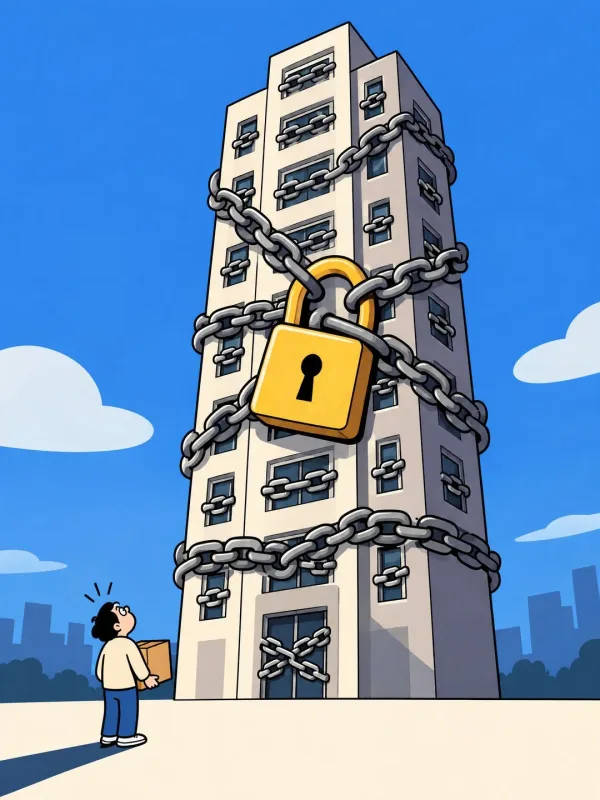
Financial regulators have enforced duplicate-listing guidelines since Aug. 3. Duplicate listings are banned in principle, and to win an exception, the parent must meet five obligations: assess the impact on shareholders, set up shareholder protection measures, communicate with shareholders, hold a board vote, and make a disclosure. The rules cover not only subsidiaries spun out of an in-house division but also ones created through an acquisition, as Solidigm was.
Financial Supervisory Service Governor Lee Chan-jin said at a parliamentary audit on Oct. 19 that he saw Solidigm as subject to the duplicate-listing rules, and Financial Services Commission Chair Lee Eog-weon answered on the 22nd that it was "subject to the duplicate-listing guidelines." Lee also said, "It applies whether the listing is overseas or domestic." In other words, even with a U.S. listing, the duty to protect the Korean parent's shareholders stays.
- If the listing is dropped, who pays for the plant?
SK hynix said "it is not because Solidigm's growth potential or need for investment has changed," and that it would keep reviewing the timing and size of the investment and how to fund it. The new U.S. plant is still needed.
That leaves a problem. iM Securities said that withdrawing the listing eases concerns about a discount in shareholder value but also removes a chance to bring in outside capital, so the investment funding SK hynix has to shoulder could grow. Bloomberg Intelligence had also assessed that if Solidigm took in outside capital, SK hynix could spend more on core businesses such as HBM (high-performance DRAM for AI). Meritz Securities, on the other hand, read the decision as a signal that shareholder value comes first, and expected a good chance that a shareholder-return plan exceeding existing forecasts will come out at the third-quarter earnings briefing scheduled for Oct. 28.
- BITPRESS Insight
A subsidiary listing is a deal that sells a slice of the business to raise investment money. Had Solidigm brought in money from outside, SK hynix's investment burden would have been lighter, but in return shareholders would have had to give up part of their Solidigm stake and the chance that Solidigm's value would show up fully in SK hynix's share price. The company cited capital-market conditions. But since regulators said they would apply the same yardstick to overseas listings, any listing would have had to clear the shareholder-protection obligations first.
Now the weight of paying for the plant has come back inside SK hynix. It has to decide, together, how to fund the plant without outside investors' money and how much to give back to shareholders.
When you see subsidiary listing news, look first not at "what price tag it gets" but at "does my slice of the stock grow or get split?" If it gets split, the test is how much the money coming in lightens the burden on my company.
Sources
https://www.etoday.co.kr/news/view/2639181
https://www.etoday.co.kr/news/view/2639163
https://www.etoday.co.kr/news/view/2639197
https://www.etoday.co.kr/news/view/2639242
https://www.etoday.co.kr/news/view/2639334
https://www.etoday.co.kr/news/view/2638933
https://view.asiae.co.kr/article/2026102211431388531
https://www.etoday.co.kr/news/view/2637950
https://www.hankyung.com/article/202610229798i
https://www.etoday.co.kr/news/view/2091701
Glossary
Dual listing — A subsidiary of an already listed company listing on a stock market on its own, which raises worries that the parent's shareholders' stake shrinks or the parent's value gets marked down.
Dual-listing discount — A situation where the value of a subsidiary held by the parent is not fully reflected in the parent's share price because the subsidiary is listed separately.
Pre-IPO — Raising money before listing by first selling a stake to some investors.
Dilution — When a company prints and sells new shares, so the percentage of the company existing shareholders hold goes down.
Grandchild company — A company owned by a subsidiary, which the parent controls indirectly through the middle company.
BITPRESS articles are information to help your investment decisions, not a recommendation to buy or sell any stock or coin. Investment decisions and their results are your own responsibility.