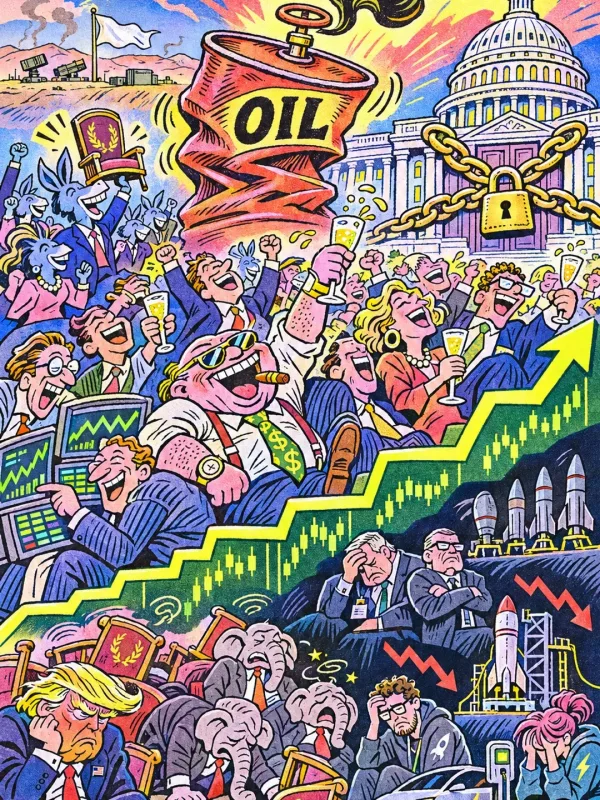
Elon Musk spent more than $445 million backing Republicans in this U.S. midterm election. That is more than 600 billion won at about 1,350 won to the dollar. Even with help from the election's biggest donor, Republicans lost both the Senate and the House.
From Korea, the result in Texas, where Musk concentrated his giving, stands out more. Musk put $224 million of that into Texas alone. Texas holds 27% of the data center power capacity planned in the U.S., and Republicans lost both the Senate race and the governor's race there. One of the new governor-elect's pledges was to pause data center development for a while.
- If Texas stops data centers, will Korean chipmakers get hit too?
Data centers are where this election result reaches Korean companies first. In Texas and Georgia, Democratic candidates who pledged to pause data center development won the governorships. The Texas governor-elect said she would halt all data center approvals until the state legislature passes a law protecting residents.
For companies it is AI investment, but for residents it is a question of where the electricity to run the servers and the water to cool them will come from, and who will pay to expand the power grid. It is like hearing a big factory is coming to your neighborhood and worrying about electric and water bills before thinking about jobs. Even if Trump pushes AI investment at the federal level, building the facilities and bringing in power can meet pushback from state governments and local communities.
Whether Korean chipmakers feel it depends on the next decisions of Big Tech (large U.S. technology companies such as Microsoft, Google, Amazon and Meta that spend heavily on AI data centers). If the data centers planned for Texas are built at the same scale in other states, AI chips are still needed. But if construction stalls in several regions and Big Tech delays or cuts server orders, demand for the HBM that goes into AI chips from Samsung Electronics and SK hynix could also be affected. Demand is strong for now: Samsung Electronics said its third-quarter HBM4 sales more than tripled from the previous quarter. The number to watch in Korea is Big Tech's server orders, not construction starts in Texas.
- If the $7,500 benefit returns, Hyundai smiles too
With Democrats taking Congress, Korea is watching whether the car and battery credits will come back. In the U.S., buyers of qualifying new electric vehicles could get a federal tax credit of up to $7,500. That benefit ended in late September 2025, under Trump. Put simply, the program in which the government paid part of the car price is gone.
If the credit returns and Hyundai EVs meet its requirements, U.S. buyers' actual cost falls even if Hyundai does not cut prices itself. For Hyundai, that could mean selling EVs more easily without spending more on discounts. But a restoration of the credit is still only a scenario.
- Trump has picked $54 billion for Alaska. Korea is running the numbers
With Congress changing hands, the investment Trump has asked of Korea is now open to a second look. Trump floated putting $54 billion of Korean money into an Alaska liquefied natural gas (LNG) project. Under the project, gas extracted in northern Alaska would be sent south through a pipeline of about 1,300 km, liquefied and then exported. The Korean government says nothing has been decided, neither whether to invest nor how much, and that it will first assess whether the project pays off.
Korea has pledged a total of $350 billion in investment in the U.S. Of that, $150 billion is earmarked for shipbuilding cooperation between the two countries. How much of the rest goes to Alaska is a separate negotiation. If the new Congress starts questioning such investment projects, Korea can buy time to review. On the other hand, if Trump uses tariffs as a bargaining chip to show investment results within his term, the pressure on Korea to hurry could grow. In fact, in early October Trump said he would "charge more" if Korea did not sign on to the Alaska project.
Sources
https://www.hankookilbo.com/news/article/A2026110209410004741
https://www.ytn.co.kr/_ln/0104_202611041510517176
https://www.mediapen.com/news/view/1135272
https://www.cnbc.com/2026/11/04/2026-midterm-election-results-live-updates.html
https://www.cnbc.com/2026/11/04/ai-stocks-texas-governor-data-centers.html
https://finance.yahoo.com/technology/ai/articles/ai-data-center-boom-set-062312036.html
https://www.texastribune.org/2026/11/04/data-center-texas-pause-gina-hinojosa-governor-policies/
https://news.samsung.com/global/samsung-electronics-announces-third-quarter-2026-results
https://news.skhynix.com/en/q3-2026-business-results/
https://www.irs.gov/credits-deductions/credits-for-new-clean-vehicles-purchased-in-2023-or-after
https://www.news1.kr/economy/trend/6341823
https://biz.sbs.co.kr/amp/article/20000337443
https://www.etnews.com/20261001000371
https://www.cnbc.com/2026/10/05/trump-alaska-lng-south-korea-pay.html
https://www.tbsnews.net/worldbiz/usa/trumps-midterm-drubbing-could-give-trade-partners-room-resist-1593066
Glossary
HBM — HBM is high-bandwidth memory that helps AI chips process huge amounts of data quickly.
Big Tech — Big Tech means large U.S. technology companies such as Microsoft, Google, Amazon and Meta that spend heavily on AI data centers.
EV purchase tax credit — The EV purchase tax credit lowers the tax burden of buyers of vehicles that meet certain requirements.
LNG (liquefied natural gas) — LNG is natural gas cooled until it becomes a liquid, which shrinks its volume so it can be loaded on ships and exported.
Tariff — A tariff is a tax on imported goods; if the U.S. raises tariffs on Korean products, costs rise for U.S. importers, and that burden can show up in local retail prices or in the profits of Korean exporters.
BITPRESS articles are information to help your investment decisions, not a recommendation to buy or sell any stock or coin. Investment decisions and their results are your own responsibility.