From the first week of January to the fourth week of October, Seoul's apartment jeonse price index (jeonse: a Korean lease in which the tenant pays a large deposit instead of monthly rent) rose 8.91%. That beats the sale price index (8.73%) over the same period and is 3.9 times last year's gain (2.31%).
Many people assume jeonse prices creep up a little each year, so the next contract will rise by about the same. But the real issue lies elsewhere. A tenant who has already used the renewal right no longer has the 5% cap that limited the increase, and the next expiry comes without it.
- Why the 5% cap protects a tenant only once
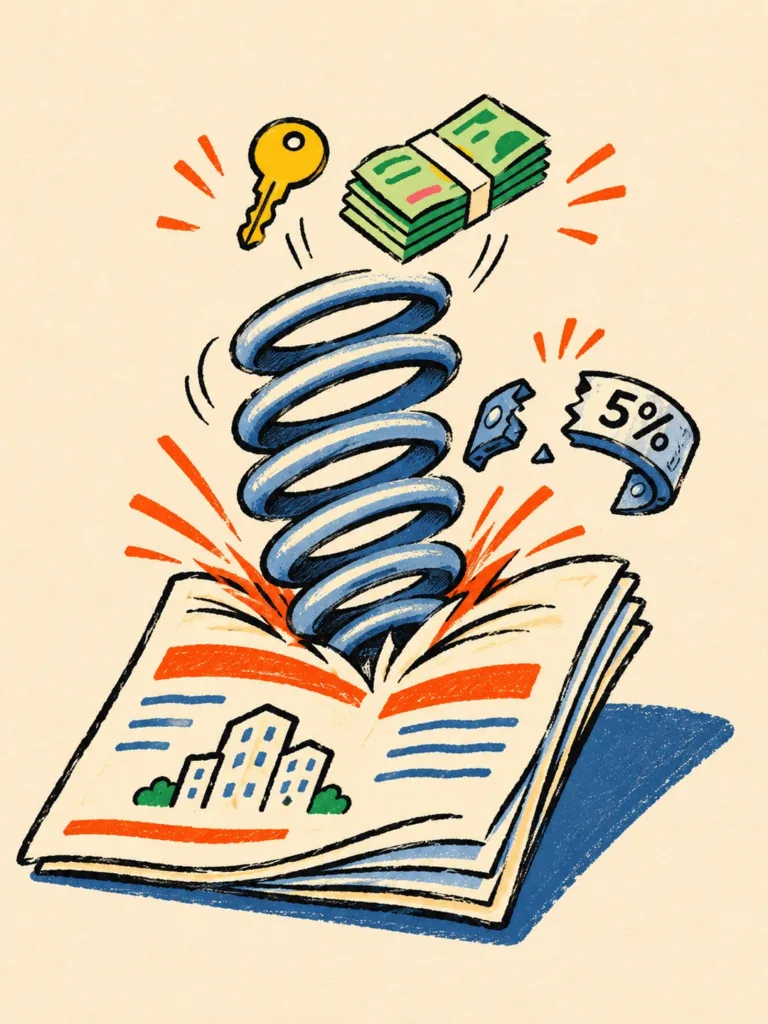
The Housing Lease Protection Act lets a tenant use the renewal right (the right to demand a two-year extension between six and two months before expiry) only once. At renewal, the deposit cannot rise by more than one twentieth of the existing amount, that is, 5%.
So the sequence runs like this. First two-year lease → renew for two more years with a rise of 5% or less → at the four-year expiry the right is gone, so a new contract → the landlord can ask for the market-price deposit. Think of it like a phone-contract discount. The difference is that when a phone contract ends, only the discount disappears, whereas with jeonse the market gain that could not be passed on all lands at once.
- Why expiries cluster in February-March next year
From late 2022 through 2023 was a period of reverse jeonse (new jeonse prices falling below the existing deposit). High interest rates pulled home and jeonse prices down together, and in outer Seoul quite a few tenants signed for a lower deposit than before.
After a two-year renewal, they are now reaching expiry. Nam Hyeok-woo of the Woori Bank Real Estate Research Center said, "Expiries of leases that have used up even the renewal could rise sharply around February-March next year." That coincides with the peak moving season.
- How much the renewal right changes the bill
Take a jeonse with a 400 million won deposit (Korean won, KRW). For a tenant who still has the right, the landlord can raise it by at most 20 million won (5%). If the market price of a used-up tenant's home rose as much as Seoul's jeonse index did in January-October of last year and this year (2.31% and 8.91%), the new deposit would be about 445.7 million won. That is about 45.7 million won, roughly 2.3 times the cap (a hypothetical calculation).
Put simply, even in the same complex and size, the money to find at the next contract can differ by more than double depending on whether the right remains. Actual deals support this. This year's median new jeonse deposit in the same complex and size rose 8.6% from last year, with Seongbuk-gu up 15.4% and Nowon-gu up 14.0%. If the 5% cap at renewal kept the deposit below market, that gap also rises in one go at this contract.
- Why market prices jumped so much
The number of homes offered for jeonse has fallen. As of Nov. 1, Seoul apartment jeonse listings numbered 21,385, down 14.5% from a year earlier. According to Financial News analysis, blocks on gap investing (buying a home with a tenant's deposit), loan rules and the duty to live in a purchased home thinned the supply of jeonse homes, and landlords shifting to monthly rent because of property-holding taxes also played a part.
New apartments are scarce too. Seoul apartment completions in January-September this year were 22,768 units, down 21.5% from the same period last year. The Ministry of Land, Infrastructure and Transport expects completions to rise from 2028, but construction takes two to three years or more from start to move-in, so it will not reach next spring's expiries.
- Where the gap goes when tenants cannot cover it
Some switch it to monthly rent. Nam said, "Some choose to pay the difference as monthly rent rather than raise additional deposit money." Seoul apartment jeonse deals in January-September fell 26.9% from last year, but monthly-rent deals fell only 1.5%, and monthly rent accounts for 57.5% of newly signed contracts.
As a result, monthly rents are rising too. Seoul apartment monthly rents rose a cumulative 7.68% in January-September, close to double last year's full-year gain (3.94%). Nowon-gu rose 12.88%, and in September 85.0% of Jungnang-gu's jeonse and monthly-rent contracts were monthly rent.
- BITPRESS Insight
How much your next jeonse contract rises depends more on the renewal history in your contract than on the Seoul average. If the right remains, the rise stops within 5%, but if it is already used, four years of market gains reflected at only 5% pile up and land at once.
So even in the same neighborhood and building, each tenant's burden next spring differs. A tenant who used the right ends up choosing one of three: find more deposit money, borrow more, or turn the gap into monthly rent. Even with the right remaining, though, a landlord can refuse renewal by saying he will move in himself.
There is one yardstick. Your next increase is not your current deposit times 5%, but the gap between your deposit and the deposit a new tenant pays for the same home today.
Sources
https://www.law.go.kr/LSW/lsInfoP.do?lsiSeq=276291
https://www.fnnews.com/news/202611011856071100
https://www.hankookilbo.com/news/article/A2026110111160002385
https://www.fnnews.com/news/202611041814557957
Glossary
Right to demand a lease renewal — A tenant's right to demand a two-year extension between six and two months before expiry. It can be used only once, and the deposit may rise by no more than 5% at that renewal.
Jeonse price slump (reverse jeonse) — A situation in which the new jeonse price is lower than the existing deposit, as happened in late 2022 to 2023 when interest rates were high.
Jeonse price index — A weekly index of changes in jeonse prices for sample apartments, compiled by the Korea Real Estate Board and used to compare percentage gains.
Median — The middle value when contracts are lined up in order of amount.
Gap investing — Buying a home with a small amount of cash by relying on the tenant's jeonse deposit.
BITPRESS articles are information to help your investment decisions, not a recommendation to buy or sell any stock or coin. Investment decisions and their results are your own responsibility.