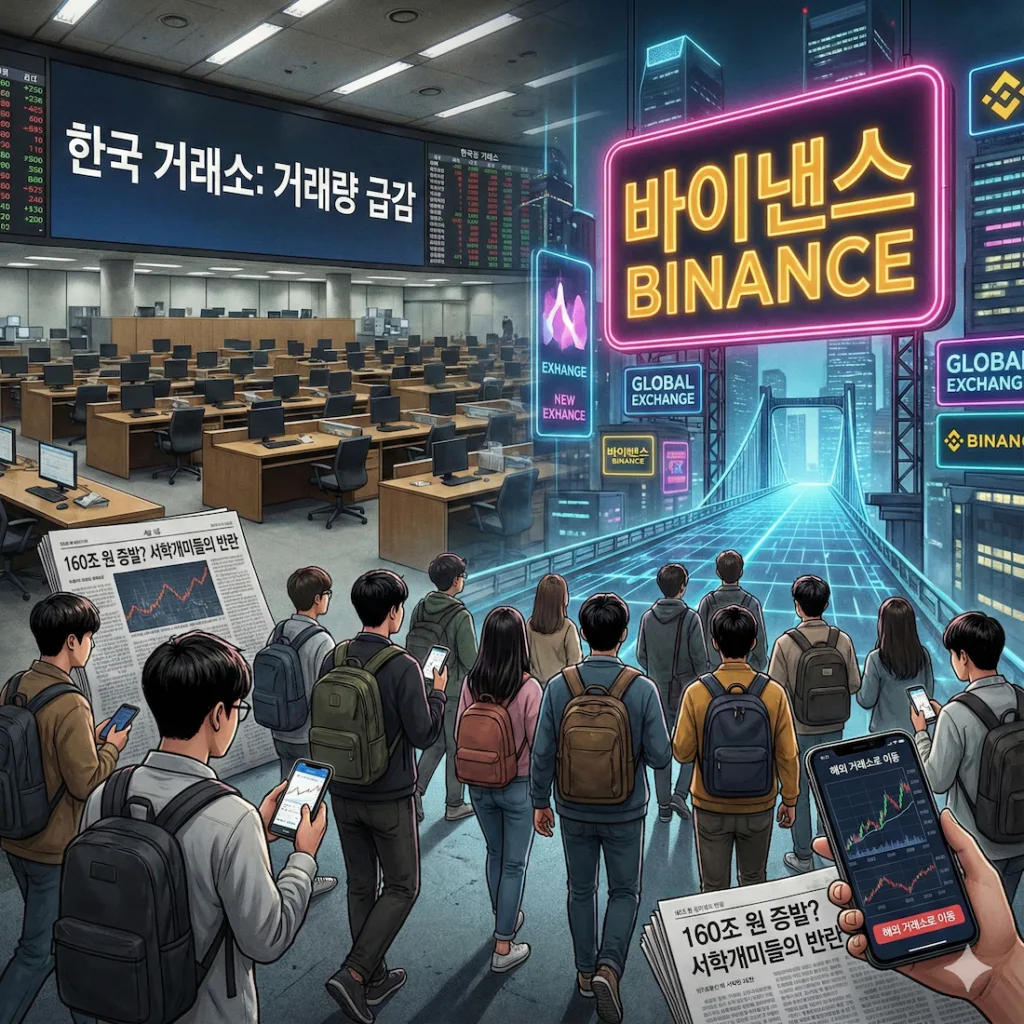
1. Why is Korean investors' money moving overseas?
In recent years, the center of Korean crypto investors' trading
has been moving from domestic exchanges to overseas exchanges and servicesgradually.
According to market estimates,
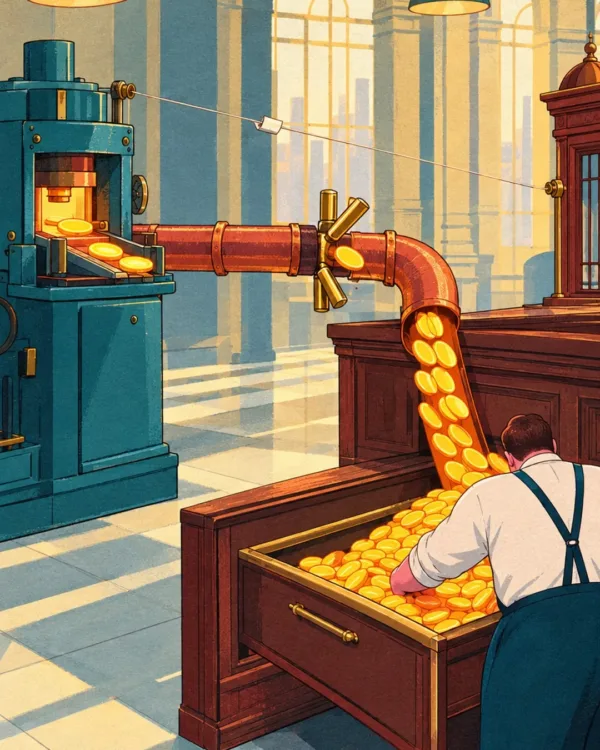
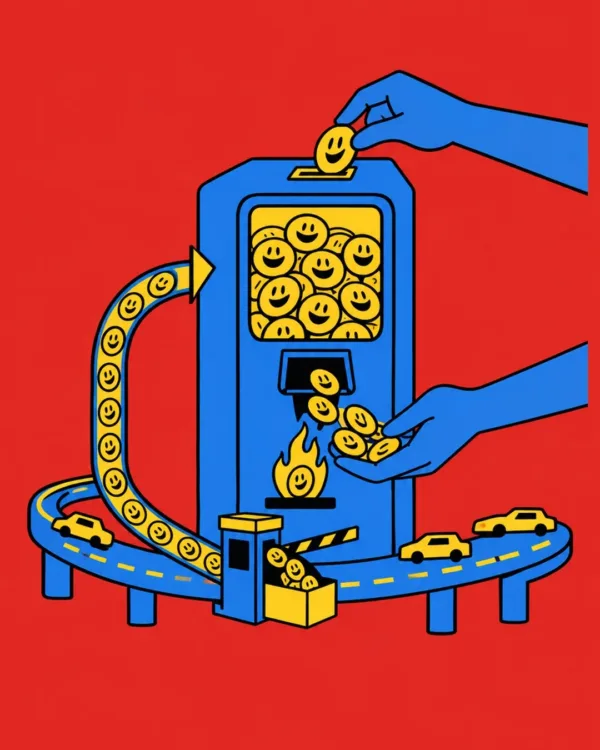
the annual trading fees Korean investors pay to major overseas exchanges come to about KRW 4 trillion to 5 trillion— that is the estimate.
This far exceeds **the annual operating revenue of Korea's five major crypto exchanges (Upbit, Bithumb, Coinone, Korbit and Gopax) over the same period (in the high-KRW 1 trillion range)**.
This trend is less a simple "exodus from Korea"
than the result of demand for trading functions and financial services the domestic market cannot offer moving elsewhere.for experimenting with tokenized financial products.
2. Three structural limits of Korea's crypto market
① A "single-structure" market limited to spot trading
Korean crypto trading effectively runs on spot trading spot-trading-drivenalone.
- No trading of derivatives (futures, options, perpetual contracts)
- Limited strategic tools such as leverage and short selling
- No risk-management tools for falling or sideways markets
Large overseas exchanges, by contrast,
offer, beyond spot trading, perpetual futures, leverage of up to several dozen times, and short positions,and
of total trading volume, derivatives commonly account for 60–80%..
👉 Because of this gap,
trading frequency and trading amounts are far larger on overseas markets,and
as a result, total fees also flow overseas.
② Exchange revenue that is extremely lopsided
The revenue structure of Korean crypto exchanges is very simple.
- At Korea's major exchanges, trading fees make up about 97–98% of revenue
- When trading volume falls, revenue drops immediately
Overseas exchanges, especially U.S.-listed ones, have a different structure.
- Besides trading fees,
- staking reward income,
- stablecoin (e.g., USDC) management and interest income,
- custody and prime brokerage for institutions,
- and monthly subscription services
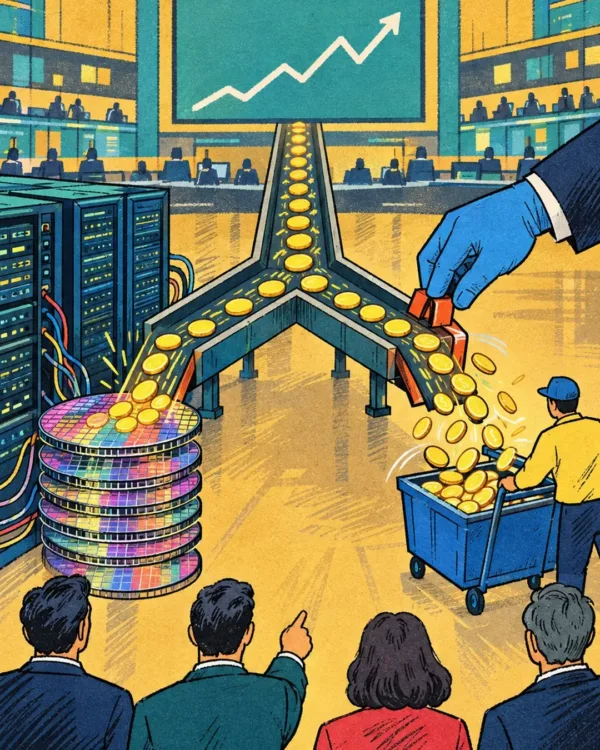
together make up 30–40% or moreof revenue.
👉 While Korean exchanges remain in the "trade brokerage business,"
overseas exchanges are evolving intocrypto financial platforms.
③ No link to traditional finance
Korea's crypto market still has
limited connections to traditional finance.
- Limits on direct participation by corporate and institutional investors
- No trading of crypto-based ETFs or ETNs
- Restrictions on financial firms expanding into crypto businesses
As a result,
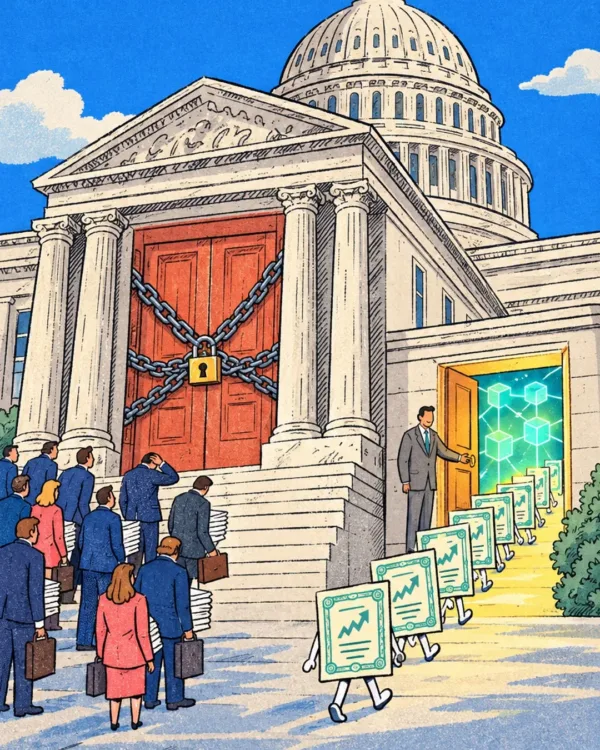
Korean institutional money flows in indirectly through overseas products and overseas exchanges, bypassing the domestic market,and this pattern keeps repeating.
👉 For the domestic market, this
means missing out on both liquidity and revenue opportunitiesat the same time.
3. Even so, the Korean market clearly beats the U.S. in some ways
Korea's crypto market is not all weaknesses.
If anything, There are areas where it is clearly stronger than the U.S.too.
① Investor protection is very strong
In Korea,
- mandatory real-name accounts,
- segregated custody of customer deposits,
- and surveillance of unfair trading
all work effectively.
As a result,
- the risk of a major exchange going bankrupt
- and damage from reckless listings and delistings
are kept relatively in check.
👉 Short-term profit opportunities may be smaller, but
the level of retail investor protection itselfis rated among the best in the world.
② Retail access is world-class
- Mobile-first trading,
- fast deposits and withdrawals in won,
- and heavy use of IT and financial services
mean that Korea
ranks among the best in the world for retail investors' market access and ease of tradingalone.
The U.S. has advanced rules, but
- differences in state-by-state regulation
- and complex tax filing
actually create barriers to entry for retail investors.
③ Predictable regulatory direction
In the U.S., issues such as
- whether crypto assets are securities
- and jurisdiction among regulators
have still not been fully settled.
Korea, on the other hand,
- has relatively clear lines on what is allowed and what is banned
- and keeps to a gradual approach to regulation,
so regulatory uncertainty itself is relatively low..
4. The real challenge for Korea's crypto market
The core problem is not that "there is a lot of regulation."
It is that regulation focuses only on "protection.".
- A market with plenty of protection
- but too few choices
In this structure,
- Short-term spot investors stay,
- while strategic investors, institutional capital and industry money move overseas.
5. BITPRESS Insight
Korea's crypto market right now
is close to **"a safe market that does not grow."**
Capital moves not because it wants freedom
but in search of the functions and financial structures that let it design strategies.too.
The key question ahead is clear.
It is not about allowing speculation,
but how far to allow "functions" within a controllable range.
Until there is a clear answer to this question,
Korea's crypto market is likely to keep repeating
a pattern in which trading stays but profits and industry move overseasover and over.