Say a tenant has a KRW 150 million jeonse home (Korea's lump-sum deposit lease) that went to auction because of jeonse fraud, and got back KRW 20 million in distribution and KRW 10 million in auction surplus. Until now, KRW 30 million was the end of it. From Nov. 13, another KRW 20 million is added, making KRW 50 million.
The news is often read as 'jeonse fraud victims get an extra one-third of their deposit from the state.' Read that way, KRW 50 million is added on top of a KRW 150 million deposit.
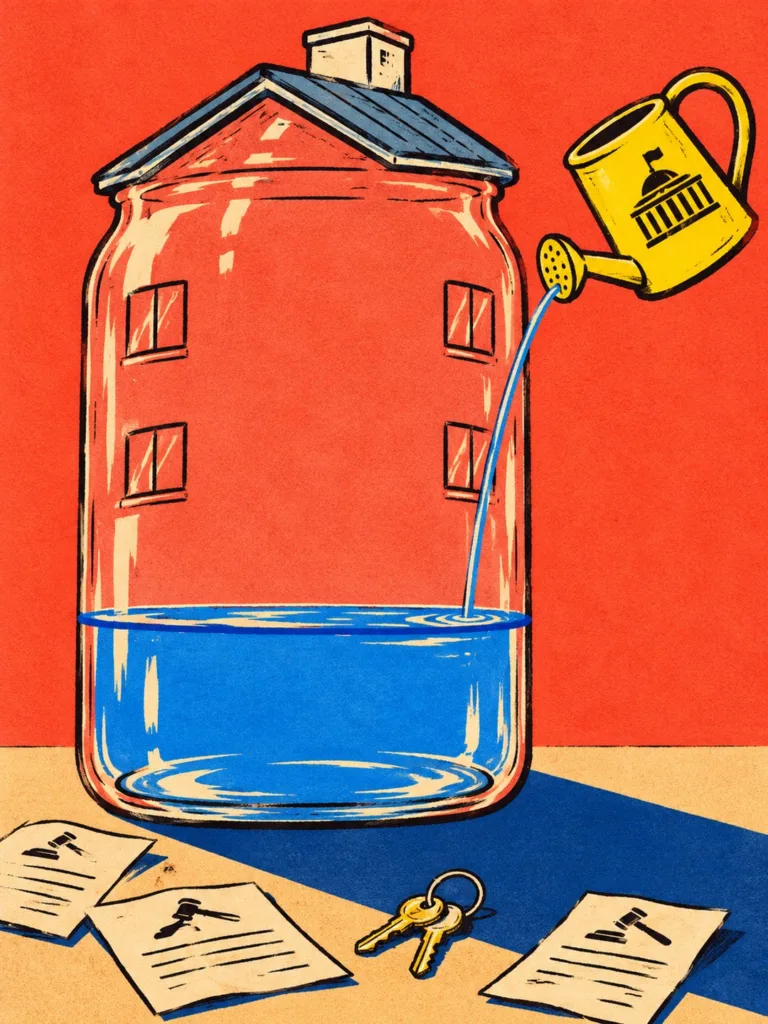
But the real point is different. The state does not add another one-third; it fills only the gap when the money recovered falls short of one-third. It is a floor.
- What changes on Nov. 13
The Ministry of Land, Infrastructure and Transport said that on Oct. 6 the Cabinet approved an amendment to the enforcement decree of the Special Act on Jeonse Fraud, and the minimum guarantee system takes effect Nov. 13. The decree sets the calculation method and procedures.
It covers people who have been certified as jeonse fraud victims and whose recovered amount after the auction or public sale (forced sale of a home to pay debts) falls short of one-third of the deposit. Victims who could not sign a normal contract, as in trust fraud, are eligible for advance payment with later settlement, receiving money before the auction or public sale ends and settling up afterward.
- The state pays one third minus what you already received
The calculation has two steps. First, one-third of the deposit is set as the minimum guaranteed amount. From that, subtract money received through priority repayment rights such as auction distribution, money repaid on the lease deposit return claim, the auction surplus (the surplus generated in the auction of the victim's home that goes to the victim), and rent support. What remains is the minimum support amount.
Think of a supermarket's lowest-price guarantee. If you paid more than elsewhere, it refunds only the difference, not the whole price. The difference is that the baseline for the minimum guarantee is not another store's price but one-third of your own deposit.
- In numbers, it is big only for those who got almost nothing back
With a KRW 150 million deposit, the floor is KRW 50 million. As in the ministry's example, if KRW 30 million was recovered, the minimum support is KRW 20 million. A trust fraud victim who received only KRW 10 million in rent support would get a KRW 40 million advance payment, also reaching KRW 50 million.
Conversely, a tenant who has already gotten back KRW 50 million or more of the same deposit gets KRW 0 (a hypothetical calculation). Put simply, nothing changes for those who recovered a lot, and the closer someone is to empty-handed, the more they receive.
- Why one third and not one half
During National Assembly discussions, raising the guarantee ratio to 50% was considered, but it was set at about 33% given the fiscal burden. Jeonse fraud damage recognized by the ministry stood at 38,503 cases as of May, and the Assembly put KRW 28.9 billion into the initial funding through a supplementary budget.
The floor approach concentrates this budget on those who recovered the least. If everyone had received an extra one-third, the same money would have gone to people who had already recovered a good part of their deposit.
- What it takes to get the money
The minimum support is applied for after the disposal of the damaged home is finished (or, if a purchase by LH was requested, after the auction surplus is calculated). LH decides whether to pay and how much within 90 days of the application, and can extend that once by up to 30 days if unavoidable. Anyone who objects to the decision can file an appeal within 30 days of receiving notice.
If more of the deposit is recovered after payment, that amount must be returned, and failing to return it within the set period brings a fine of up to KRW 30 million depending on the number of violations. Under the law, the support cannot be transferred to others, pledged as collateral or seized.
- BITPRESS Insight
The minimum guarantee system does not make up for the damage; it sets a floor on how deep the damage can go. For a tenant with a KRW 150 million deposit, the state promises up to KRW 50 million, and the remaining KRW 100 million still depends on other safeguards such as ranking in the distribution and deposit insurance.
So the people who feel less anxious because of this system are victims who were already defrauded and got back almost nothing. Being recognized as a victim means the risk has shrunk to two-thirds, not that it has disappeared.
When you sit with a jeonse contract and ask 'how much would I get back in the worst case?', the yardstick is this. If you are recognized as a jeonse fraud victim, one-third of the deposit remains as a floor, and whether anything protects the two-thirds above it is the home's real risk.
Sources
https://eiec.kdi.re.kr/policy/callDownload.do?num=287848&filenum=1&dtime=20261104090905
https://eiec.kdi.re.kr/policy/materialView.do?num=287848
https://biz.sbs.co.kr/amp/article/20000338417
https://www.dailian.co.kr/news/view/1698086
https://inews24.com/view/1966975
Glossary
Minimum guaranteed amount — An amount equal to one-third of the lease deposit, the baseline for calculating the minimum support amount.
Minimum support — The shortfall left after subtracting distribution, claim repayments, auction surplus and rent support from the minimum guaranteed amount, paid by LH.
Auction gain — The surplus generated in the auction of the damaged home that goes to the victim.
Pay first, settle later — A method for victims who could not sign a normal contract, such as in trust fraud, in which money is paid before the auction or public sale ends and adjusted later to reflect what is recovered.
Priority repayment right — The right of a tenant with a confirmed date to be paid the deposit from auction proceeds ahead of lower-ranking creditors.
BITPRESS articles are information to help your investment decisions, not a recommendation to buy or sell any stock or coin. Investment decisions and their results are your own responsibility.