On Nov. 2, the day the KOSPI rose 2.24%, HL Mando shares fell 5.53% to close at 35,000 won. Right after the open, they had sunk as much as 12.15% to 32,550 won. The trigger was third-quarter operating profit, filed on Oct. 30, of 51.5 billion won, down about 45% from a year earlier.
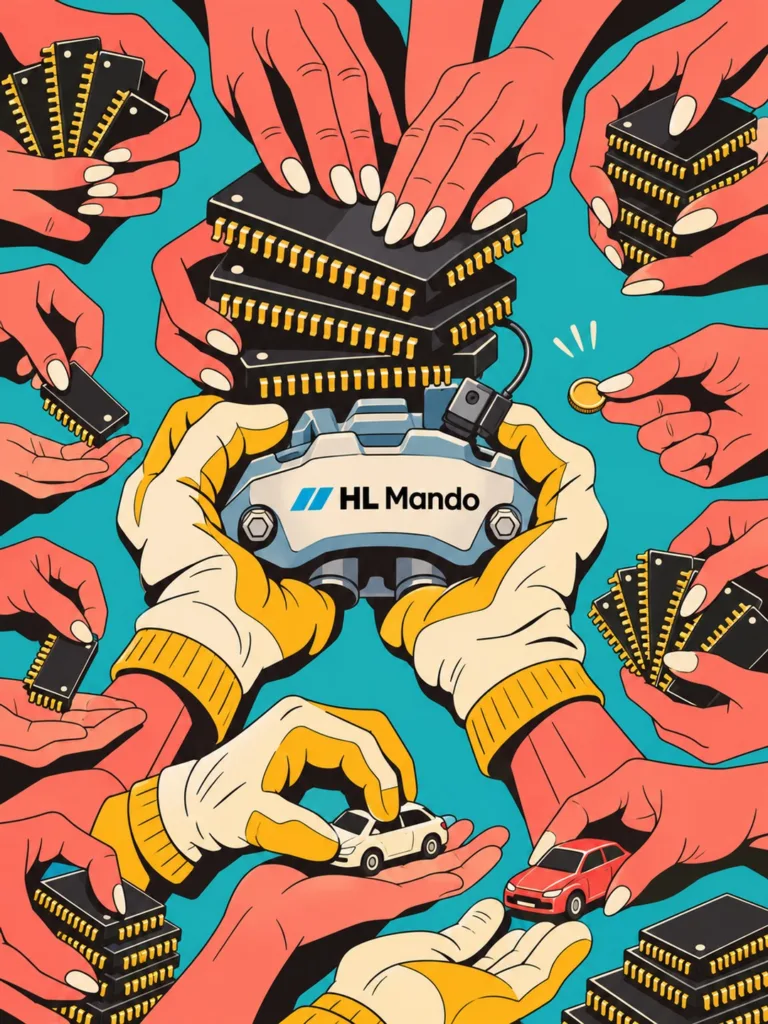
On the surface, this is one weak auto-parts stock taking a hit. But the real story is elsewhere. For the first time, the numbers show who absorbs the cost when memory chip prices rise. That same day, SK Hynix, which sells memory, rose 3.81%.
- Why did profit nearly halve?
HL Mando (an auto-parts company in HL Group that makes brakes, steering systems and driver-assistance systems and supplies them to carmakers) posted third-quarter operating profit of 51.5 billion won. That is down about 45% from a year earlier.
Close to half of what it keeps from sales is gone. Put simply, costs are rising faster than the money coming in, so less is left over.
- Why do memory prices become an auto-parts maker's cost?
Today's cars come with ADAS (advanced driver-assistance systems: features such as lane keeping and emergency braking that let a car sense its surroundings and react). Building these systems takes memory chips. HL Mando is a buyer of memory, not a seller.
Analysts point to the same issue as the cause of the weak results. Shin Yun-cheol, an analyst at Kiwoom Securities, said, "The rise in purchase prices for the memory needed to produce ADAS products is not being settled with customers in a timely way." In other words, HL Mando gets paid back for higher memory costs by its customers only after a delay.
- Why can't a parts maker pass on higher prices right away?
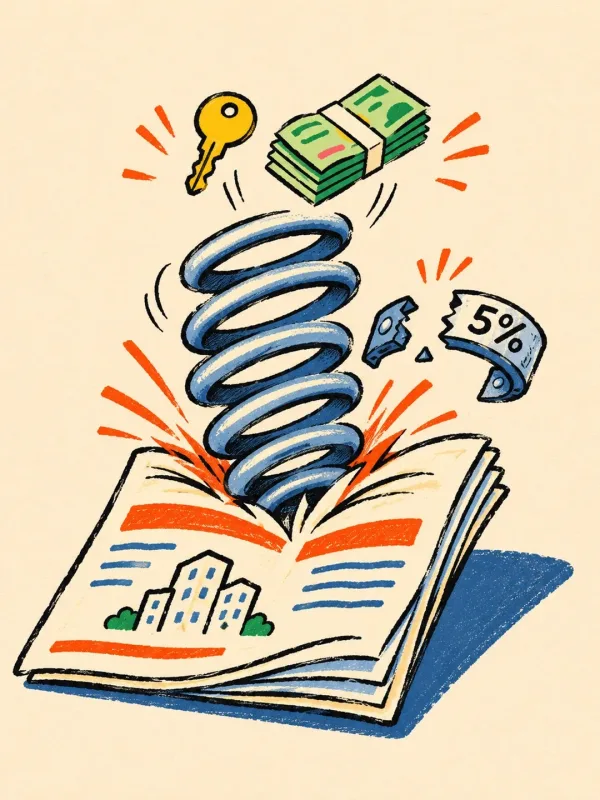
A parts maker delivers to carmakers at unit prices agreed in advance. If costs rise, the difference is settled through separate talks with the customer. So when memory prices jump within a few months, the parts maker pays the difference first, until that settlement is done.
Think of a caterer on a one-year price contract with a school. Even if cabbage gets pricier, it can't raise the price of a meal right away, and it covers the difference while the price is renegotiated. A parts maker, though, may still get some of the increase back later. This filing does not say when or how much will be settled.
A made-up example makes it clearer. Say a part sells for 100,000 won and costs 90,000 won to make, of which 10,000 won is memory. If memory rises to 15,000 won, what is left over falls from 10,000 won to 5,000 won, half as much. The price received stays the same, yet profit is cut in half.
- PC makers carry the same burden
Buyers of memory feel the pressure outside the auto industry too. Shares of Intel, a US chip company that mainly makes the central processors in PCs, fell 28.58% on Oct. 30 (US time) after its fourth-quarter revenue forecast came in below market expectations.
Daishin Securities analyst Lee Kyung-min said the market read this "not as a collapse in memory demand but as higher costs for the PC industry from rising prices, which spread the view that memory suppliers' pricing power is still solid." In other words, the power to set prices lies with the seller.
- Will the memory price squeeze ease soon?
The sellers' momentum has not faded yet. October chip exports, reported on Nov. 1, rose 259.4% from a year earlier. On Sept. 23, TrendForce, a Taiwanese research firm that tracks chip prices, raised its fourth-quarter forecast for DRAM contract prices, citing tight supply and demand from cloud companies.
Brokerage expectations have come down as well. Samsung Securities cut its rating on HL Mando to "hold" (a call to keep the shares for now) and lowered its target price (the fair share price a brokerage sees) by 23,000 won, from 65,000 won to 42,000 won. Profit could return once the costs are settled, but if memory prices keep rising, new gaps will pile up before settlement catches up.
- BITPRESS Insight: The cost of the memory boom lands first on the buyer
News of rising memory prices is usually read only as a gain for sellers such as SK Hynix and Samsung Electronics. HL Mando's third quarter shows that the price is also someone's cost. The more memory companies charge, the more profit shrinks at companies that buy memory and cannot pass the price on right away.
For companies that buy memory, such as makers of cars, PCs and electronic parts, the timing of passing higher prices on to customers decides which way profit moves. The same news is revenue for one side and cost for the other.
When memory prices rise, the real question is not only "who earns more" but also "who can't pass the price on."
Sources
https://dart.fss.or.kr/dsaf001/main.do?rcpNo=20261030800817
https://trendforce.com/research/download/RP260923EN
https://www.alphabiz.co.kr/news/articleView.html?idxno=195780
Glossary
Operating profit — What is left from sales after subtracting costs and selling and administrative expenses: profit from the core business.
ADAS (advanced driver-assistance systems) — Features such as lane keeping and emergency braking that help a car sense its surroundings and assist the driver; building them takes memory chips.
Settlement — Settling up: renegotiating with the customer the gap between the pre-agreed delivery price and the actual higher cost, and paying it out afterward.
DRAM contract price — The price a memory company agrees with large customers on a quarterly or monthly basis for DRAM.
Hold, target price — Hold is a rating that means keep the shares for now; target price is the fair share price a brokerage sees.
BITPRESS articles are information to help your investment decisions, not a recommendation to buy or sell any stock or coin. Investment decisions and their results are your own responsibility.