US companies have given $737.3 million to political fundraising groups in this year's elections, a record. That is more than four times the $184.1 million of the last midterms four years ago. The civic group Public Citizen counted it through Oct. 23 from Federal Election Commission (FEC) data.
Yet this election, held Nov. 3 (U.S. time), does not choose a president. President Trump stays in place, so it is easy to dismiss it as "far from my stocks."
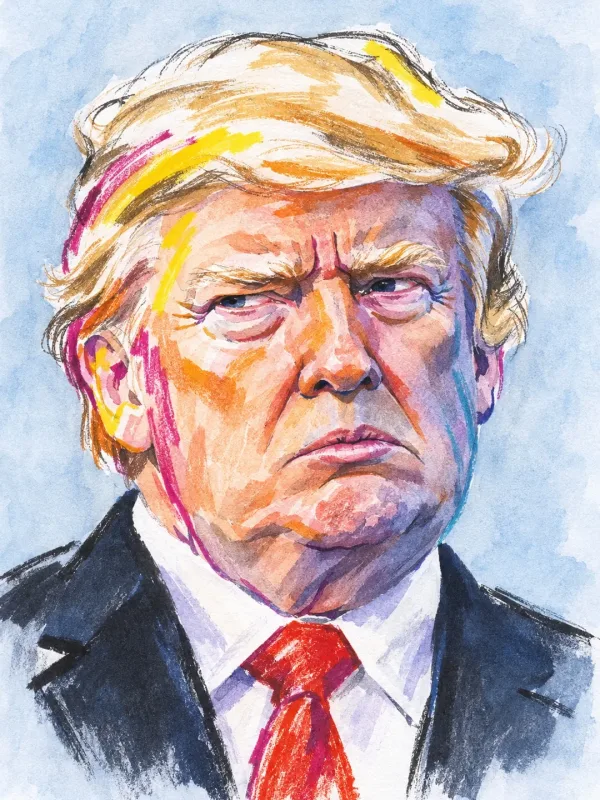
But this election decides whether President Trump can pass the laws he wants during his remaining two years. That is why companies put so much money on it.
- What does a midterm election choose?
Midterms are congressional elections held in the middle of a president's four-year term. Congress has two chambers, the House and the Senate, and a new law or budget must pass both.
This time all 435 House seats and 35 Senate seats are up. It takes 218 seats for a House majority and more than 50 for a Senate majority (if the Senate splits 50 to 50, the vice president casts the tiebreaking vote).
It is like a shareholder meeting that elects a new board (Congress) while leaving the CEO (the president) in place. However much the CEO wants to do, no money comes if the board objects.
- Why does this election matter to Trump?
Right now President Trump's Republicans hold a majority in both the House (218 Republicans, 214 Democrats) and the Senate (53 Republicans, 47 in the Democratic bloc). That makes it hard for Congress to block the tax and budget laws Trump wants.
If Democrats win even the House alone, things change. If the House objects, new laws and budgets are blocked. The chain goes like this. The majority in Congress changes → the president's tax, spending and regulation bills are blocked or changed → the profits each industry expected change → stock prices reflect it.
History is against the president, too. The president's party often loses seats in midterms. In 2018, during President Trump's first term, Republicans lost 41 House seats.
- Where did companies put their money?
The group that received the most corporate money was the pro-Trump group MAGA Inc. ($141 million), followed by the crypto-industry group Fairshake ($106.9 million). By company, Ripple (the company behind the coin XRP) gave $49.6 million and Coinbase (the largest US crypto exchange) $37.2 million. The AI-industry group Leading the Future also received $50.1 million.
The crypto industry is the one to watch. The 32 House candidates Fairshake backs are 19 Republicans and 13 Democrats, so it spreads its money across both parties. What they share is that all 32 voted for the crypto market bill the House passed in July 2025 (a law that decides who oversees crypto and under what rules).
Put simply, the crypto industry did not back a party to win. It put its money on keeping people in Congress who will support its law, whoever wins. It is like a resident who wants to change the apartment building's rules and gets both candidates for the residents' council to promise support.
- What result is expected now?
Forecasts converge on "Democrats take the House, the Senate is close." Silver Bulletin, the forecast of election analyst Nate Silver, put the chance of Democrats winning the House at about 95% on Nov. 1, with an average gain of 25 seats.
On Polymarket, a prediction market where people bet on election results, the chance that Democrats win both the House and the Senate was 66%, and that Republicans keep both was 8% (cited by Man Group, a British asset manager).
Put simply, many people already expect President Trump to lose the House. The real contest is the Senate. But these numbers are all forecasts, and no result is out yet.
- What happens depending on the result?
If Democrats win both the House and the Senate, Man Group expected healthcare and retail stocks to rise and investment bank and brokerage stocks to fall. Investment bank Piper Sandler calculated that Democratic pledges to scrap tariffs and reverse cuts to health insurance for low-income Americans would add $5 trillion to the deficit over the next 10 years.
If the House goes to Democrats and the Senate to Republicans, big laws rarely change. US asset manager Ameriprise said such a ‘divided Congress’ has generally been fine for stocks, with technology and industrials doing well. If Republicans keep both, Ameriprise said energy and financial stocks could benefit from hopes of deregulation.
The case markets are least prepared for is a slow result. Man Group calculated that the options market (insurance-like products investors buy against big price swings) expects US stocks to move on Nov. 4 only about 1.2 times as much as on a normal day. In 2022 the Senate majority was not settled until December.
- BITPRESS Insight
Looking at history alone, midterms have not been bad for stocks. After all 19 midterms since 1950, the S&P 500 was higher a year later (an average of 15.1%, excluding dividends). But Man Group noted that this time Treasury yields are at multiyear highs and AI worries are large.
So what could move stocks on election night is less who wins than how far the result differs from what the market expected. A Democratic House win is already priced in. The surprises would be Republicans keeping the House, or the Senate result taking weeks to arrive.
When you read midterm news, look first at "what was different from expectations" rather than "who won."
Sources
https://news.kalshi.com/p/when-are-the-midterms-2026
https://www.usa.gov/midterm-elections
https://www.foxnews.com/politics/everything-know-house-senate-control-ballot-measures-2026-election-day-poll-closing
https://www.citizen.org/article/corporations-pour-record-smashing-737-million-2026-midterms/
https://www.cnbc.com/2026/10/05/fairshake-crypto-super-pac-house-races.html
https://www.natesilver.net/p/nate-silver-2026-midterm-election-polls-model
https://www.cnbc.com/2026/10/29/us-midterms-election-wall-street-options-markets.html
https://www.cnbc.com/2026/10/30/2026-midterm-election-wall-street-prepares-for-democratic-gains.html
https://www.ameriprise.com/financial-news-research/insights/midterm-elections-2026-key-investor-takeaways
https://www.bnnbloomberg.ca/investing/opinion/2026/10/29/us-midterms-and-stocks-can-wall-street-make-it-20-for-20-stan-wong/
https://www.presidency.ucsb.edu/statistics/data/seats-congress-gainedlost-the-presidents-party-mid-term-elections
Glossary
Midterm elections — A US congressional election held midway through a four-year presidential term, choosing the whole House and part of the Senate.
Super PAC — A political group that doesn't give money to candidates directly but helps them with ads and other spending; companies can donate to it.
Prediction market — A market where people bet on events such as election results; trading prices read like the odds people assign.
Tiebreaking vote — The vote that breaks a tie; in the US Senate, the vice president casts it.
BITPRESS articles are information to help your investment decisions, not a recommendation to buy or sell any stock or coin. Investment decisions and their results are your own responsibility.