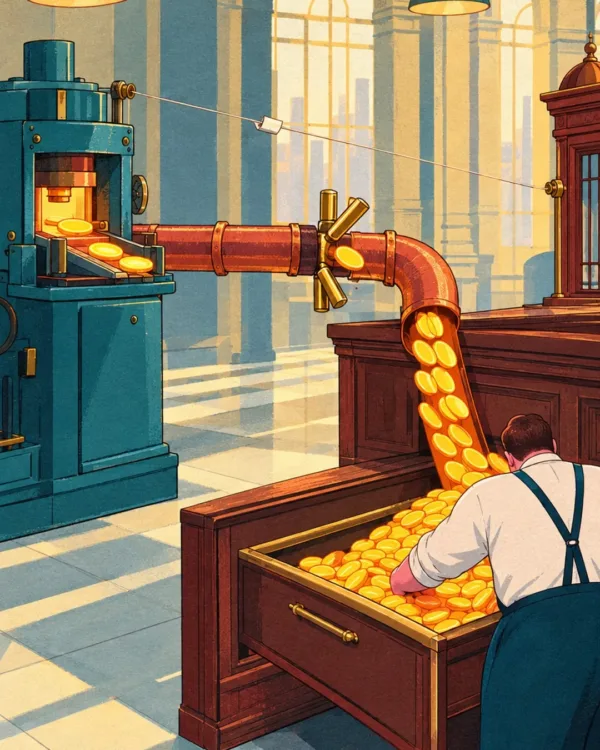

A new way to borrow dollars without selling Bitcoin has opened. Circle, the US company that issues USDC (a coin you can swap for $1 at any time), began offering Bitcoin-backed loans to institutional clients on Sept. 21.
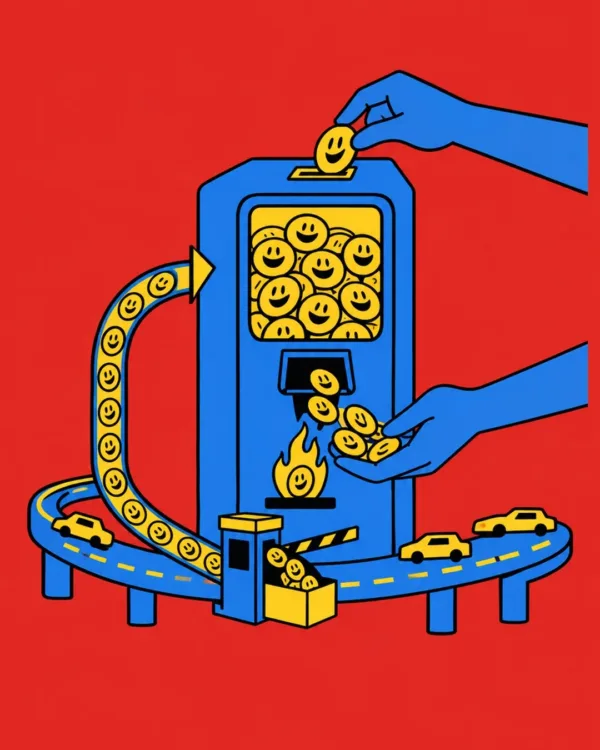
The news is often read as ‘holders won’t have to sell their Bitcoin, so less of it will hit the market.’ That is only half right. Bitcoin pledged as collateral gets sold, whatever its owner wants, once the price falls below a set line. A collateralized loan doesn’t eliminate selling; it lets the price decide when the selling happens.
- What exactly did Circle launch?
It works like a pawnshop. An institution deposits Bitcoin with Circle, and Circle issues cirBTC (a receipt coin, one for every Bitcoin deposited). The institution pledges this receipt as collateral and borrows USDC. The deposited Bitcoin is held one-for-one by Circle’s trust bank.
Circle is not the one lending the money. The first venue is Morpho (a lending marketplace where software, not a company, matches people who want to lend with people who want to borrow), and the Morpho market also sets the interest rate and the forced-sale threshold. Circle holds the Bitcoin and deposits the borrowed USDC into the client’s Circle account.
It runs on Ethereum and Arc (Circle’s own blockchain, launched Sept. 16). Clients in New York are excluded, and a connection to Aave (another lending marketplace) is planned.
- When does the deposited Bitcoin get sold by force?
This pawnshop watches the price, not a due date. On Sept. 21, the liquidation threshold in the Morpho market on Arc for borrowing USDC against cirBTC was 86%. When the debt reaches 86% of the collateral’s value, the collateral is seized and sold. This is called liquidation.
Say you deposit one Bitcoin (around $85,000 on Sept. 22) and borrow half, $42,500. If Bitcoin falls below about $49,400, a drop of about 42%, the debt exceeds 86% of the collateral’s value and the position is liquidated. The more you borrow, the closer that line gets.
So ‘not selling’ comes with a condition: the Bitcoin stays unsold only while the price stays above that line.
- Plenty of money is waiting to be lent, but little has been borrowed so far
On Sept. 21, lenders had deposited $176.99 million in this market. Of that, only $14.13 million, about 8%, had actually been borrowed. The widely quoted ‘$150 million on day one’ is also money deposited by lenders, not loan demand.
The receipts used as collateral grew quickly. About 40 cirBTC had been issued on Ethereum in mid-August; by Sept. 20, the total, including Arc, had reached about 949. The venue and the collateral are ready, but the borrowers have not fully arrived yet.
The retail market showed the demand first. Coinbase, the largest US crypto exchange, has offered Bitcoin-backed loans to retail customers through Morpho since January 2025, and by May 2026 cumulative loans, including those backed by other coins, had passed $2.3 billion. Circle has opened the same path to institutions.
- Why is Circle doing this if it isn’t even lending the money?
Circle earns more the more USDC people hold. The dollars people pay to buy USDC are invested as reserves, and Circle collects the interest. Of its $701 million in second-quarter revenue and reserve income, $668 million, about 95%, was this reserve interest.
Collateralized lending gives both sides a reason to hold USDC. Lenders deposit USDC in the market to earn interest, and borrowers receive USDC instead of selling their Bitcoin. But the USDC being lent is not newly minted money; it is money someone deposited, so lending does not directly increase the amount of USDC issued.
USDC in circulation stood at $73.3 billion at the end of the second quarter. What Circle is after is not loan interest but new uses that will grow this number.
- How was the Bitcoin once locked up as collateral released?
The crypto-backed lending market has already swelled and shrunk once. According to Galaxy Research, the research arm of crypto investment firm Galaxy, outstanding crypto-collateralized loans fell 40%, from $78.69 billion in the third quarter of 2025 to $56.16 billion in the second quarter of 2026.
This decline came from borrowers cutting their own debt. By contrast, in the second quarter of 2022, collateralized lending collapsed by more than 55% in a single quarter because of a chain of forced liquidations. With the same kind of loan, Bitcoin trickles out slowly when borrowers pay down debt themselves, but pours out all at once when liquidations cascade.
- BITPRESS Insight
Collateralized loans don’t eliminate Bitcoin selling. They just turn it into a reserved sell order: ‘sell if the price falls below this line.’
So as more Bitcoin is locked up as collateral, the market changes character. When prices rise, even people who need cash borrow instead of selling, so fewer coins come up for sale. When prices fall sharply, collateral that hits its liquidation line gets sold one after another, deepening the drop.
Circle’s venue is still small, with only $14.13 million borrowed, so it is not big enough to move prices right now. But from here on, news that ‘more Bitcoin is not being sold’ does not mean the supply has disappeared. It means the supply is waiting with a price tag attached.
Sources
https://cointelegraph.com/news/circle-launches-bitcoin-backed-usdc-borrowing-for-institutional-clients
https://cryptoslate.com/circle-now-lets-institutions-borrow-usdc-against-bitcoin-but-morpho-still-sets-the-rules/
https://en.cryptonomist.ch/2026/09/22/btc-backed-usdc-borrowing/
https://coingape.com/usdc-issuer-circle-rolls-out-bitcoin-backed-loans-for-institutions/
https://cryptobriefing.com/morpho-cirbtc-arc-lending-markets/
https://www.circle.com/pressroom/circle-reports-second-quarter-2026-results
https://cryptobriefing.com/galaxy-crypto-lending-q2-2026-decline/
https://www.theblock.co/post/373032/coinbase-tops-1-billion-in-bitcoin-backed-onchain-loans-via-morpho
https://www.theblock.co/post/400980/coinbase-solana-loans-morpho-borrow-100000
Glossary
Collateralized loan — Borrowing money worth part of the value of an asset you pledge; you get the asset back once you repay the debt.
Liquidation — When a falling collateral price pushes the debt past a set ratio, the collateral is taken and sold regardless of the owner’s wishes.
Liquidation threshold of 86% — Liquidation begins the moment the debt reaches 86% of the collateral’s value; the less you borrow, the more room you have before liquidation.
cirBTC — A receipt coin issued one-for-one for each Bitcoin deposited with Circle, which can be pledged as collateral in on-chain lending markets.
Morpho — A blockchain lending marketplace where software, not a company, matches people who want to lend with people who want to borrow.