
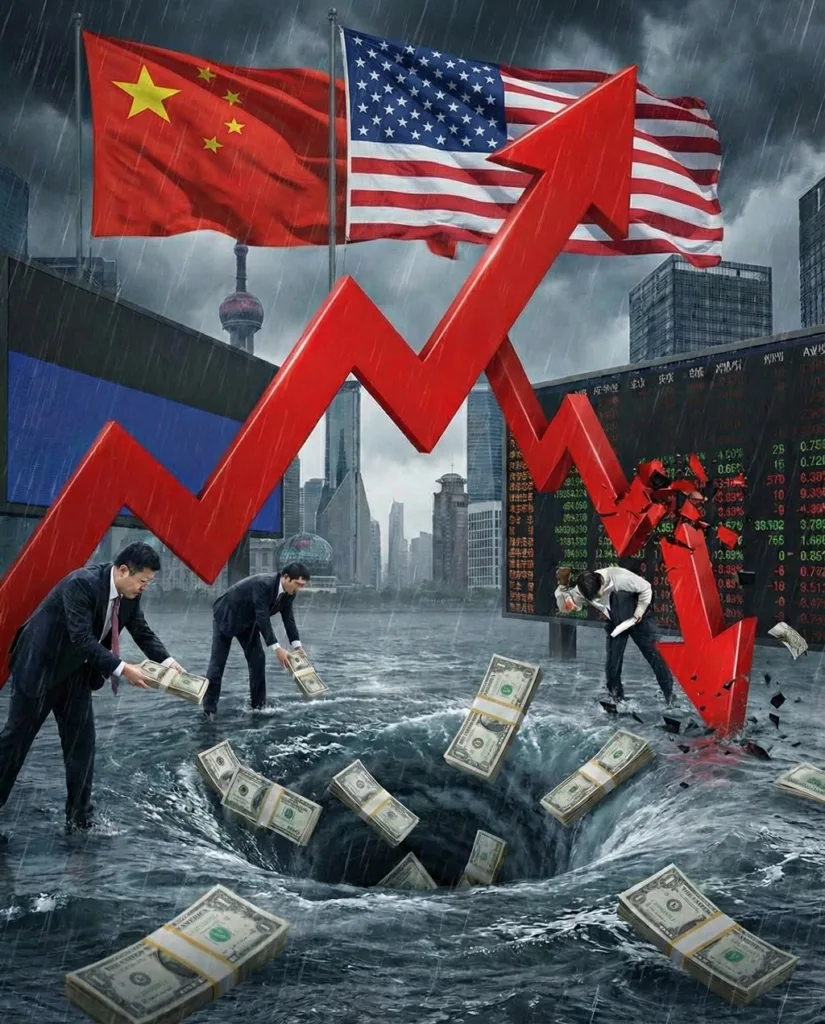
Chinese banks have reportedly been told to sell U.S. Treasurys. Is this simple risk management, or a signal flare for the end of dollar dominance? If China sells Treasurys, prices fall and it hurts itself too, so why make this decision now? How will it affect the U.S. stock market and the Korean economy? And what is China really after behind all this?
Selling Treasurys hurts China, and so does holding them. So why order a sell-off?
China’s financial regulators have told major commercial banks to cut their holdings of U.S. Treasurys. Global bond markets reacted immediately. Everyone knows the dilemma: if China dumps Treasurys in bulk, prices collapse and the value of its own holdings takes a hit. So why did China make this call anyway? Behind it lie U.S. fiscal instability and deep doubts about dollar dominance.
Why now? Signs of anxiety that go beyond risk management
Chinese regulators have in recent weeks told banks to limit new purchases of U.S. Treasurys and reduce existing positions, Bloomberg reported. The instructions were given verbally, with no specific targets or deadlines.
Authorities describe the move as “managing concentration risk” and “responding to market volatility.” But the timing is suspicious. It comes as the U.S. fiscal deficit widens, questions swirl over the Fed’s independence, and uncertainty grows under the Trump administration. China’s cut of its official Treasury holdings by almost half from their 2013 peak, to $683 billion (as of November 2025), can be understood in the same context.
Key question: is this a simple portfolio adjustment, or a bigger signal?
The dilemma trap: selling hurts, holding is risky
The dilemma if Chinese banks sell Treasurys in bulk is clear. A large sell-off would push Treasury prices down, eroding the value of China’s own holdings. Indeed, right after the report, the 10-year U.S. Treasury yield rose (meaning prices fell) and the dollar weakened.
But holding on carries big risks too. With deepening U.S. fiscal instability, inflation worries and potential geopolitical conflict, fundamental questions are being raised about whether Treasurys are still a “risk-free asset.” UBS’s Paul Donovan noted, “Chinese banks are not major players in the Treasury market, but the market is paying attention to the fact that international investors are becoming less willing to invest in Treasurys.”
Key question: is China really ready to exit “at a loss”?
Market reaction: how far will the chain reaction go?
The direct impact of the instruction may be limited. Chinese banks hold about $298 billion in dollar-denominated bonds (as of September 2024), a tiny amount compared with the entire U.S. Treasury market (about $28 trillion).
The psychological impact is another matter. The move coincides with a broader BRIC trend of moving away from Treasurys. India cut its holdings from $234 billion in November 2024 to $186.5 billion in November 2025, and Brazil is showing a similar decline.
Key question: can retail and institutional investors fill the gap?
The impact on U.S. stocks and Korea
Rising Treasury yields weigh directly on stocks. They raise corporate borrowing costs, pressure valuations and can hit the growth-heavy Nasdaq especially hard. A weaker dollar helps U.S. exporters in the short term, but a reshuffling of global capital flows adds to instability across the U.S. stock market.
The impact on Korea is mixed. A weaker dollar means a lower won-dollar exchange rate, which can help stabilize import prices. But rising Treasury yields add upward pressure on rates in Korea’s bond market and could make foreign capital more volatile. In particular, if China shifts from Treasurys into gold or other currency assets, a risk-off mood toward won-denominated assets could spread.
Key question: how should Korea position itself for this shift?
The opening act of “Sell America”?
Chinese authorities stress that the move is not driven by geopolitical conflict or distrust of U.S. credit. The market, however, reads it differently. A recent NBER (National Bureau of Economic Research) paper warned that a large-scale Chinese sale of Treasurys could trigger a U.S. financial crisis, though that scenario holds only if U.S. debt levels are soaring.
More important is China’s long-term “de-dollarization” strategy. A bigger share of gold in central bank reserves, the push to internationalize the yuan and this latest instruction to banks all point in the same direction.
Key question: is this a temporary adjustment, or the start of a reshaping of the global financial order?
Outlook: ahead of the National People’s Congress in March
China is expected to announce more aggressive policies to boost domestic demand at the National People’s Congress (NPC) in March 2026. The instruction to cut Treasury holdings fits with this domestic policy direction. For a China trying to reduce its reliance on exports and shift to a consumption-driven economy, managing the risk of its foreign reserve assets is essential.
Yet the market’s questions remain open. When, how fast and how far will China cut its Treasurys? And who will fill the gap?
BITPRESS Insight
The real meaning of this move lies not in its “speed” but in its “direction”
China selling Treasurys is nothing new. It has steadily reduced its holdings since 2013, and since 2022 official figures have been below the $1 trillion mark. But this time is different. The fact that regulators instructed banks directlyis the key point.
This means two things. First, China is no longer managing Treasury risk only at the central bank level but is extending it to the entire financial sector. Second, the verbal instructionis a classic Chinese monetary policy tool that keeps policy flexible while still putting pressure on the market.
The most important insight: China is not making a “full exit” but a “gradual rebalancing.” With $683 billion in official holdings, China is still the second-largest foreign holder of Treasurys (after Japan). But China is now reclassifying Treasurys from a “strategic asset” to a “tradable asset.” That gives it an option it could use right away for financial retaliation if U.S.-China relations sour.
Another insight: the market is more worried about “who will buy” than about China’s selling. With the U.S. fiscal deficit growing, who will step in to buy if China puts Treasurys on the market? Japan already needs dollars for currency intervention because of the weak yen. Middle Eastern oil producers are also seeing less dollar inflow as oil exports fall. In the end, the Fed may need to resume quantitative easing, or U.S. domestic investors may need to hold more bonds. That would ease upward pressure on U.S. rates but, at the same time, test the U.S. economy’s capacity for “self-sufficiency.”