
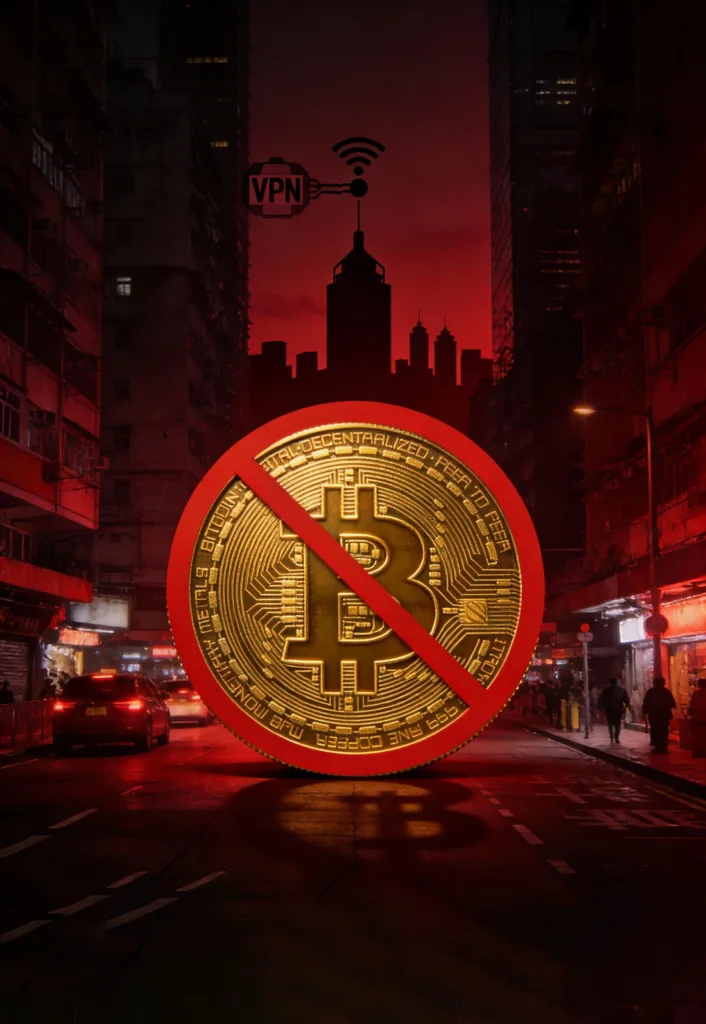
- The truth behind China's firmly shut gates
The official reasons the Chinese government tightly controls the crypto market are financial stability and crime prevention. Behind that, however, lies a strong determination to defend the value of the yuan and stop capital from leaving the country. China strictly enforces foreign exchange controls to keep its citizens' assets from flowing abroad, and crypto is the most powerful tool for getting around them.
- Three things Chinese authorities truly fear
The first is losing monetary sovereignty: Beijing is deeply wary that if decentralized crypto goes mainstream, the central bank's control will weaken. The second is spreading social discontent: it wants to prevent a scenario in which volatile crypto investments lead to huge losses and turn public opinion against the government. The last is securing a monopoly for the digital yuan: as of 2026, China is even paying interest to promote the digital yuan, and it does not want it competing with crypto.
- Quiet moves in the shadows
Crypto is officially banned, yet China remains a major player in the global crypto market. The Chinese government is believed to hold a huge amount of Bitcoin seized from criminal groups in the past and to manage it as part of state assets. Data showing that a large share of global Bitcoin mining hashrate still comes from inside China also suggests that private crypto activity has not been fully stamped out.
- Hong Kong as a window, and the wall that blocks mainlanders
Hong Kong now serves as China's crypto testbed, building out a range of spot ETFs and a stablecoin framework. But mainland residents are still legally barred from investing directly in Hong Kong's crypto financial products. Some wealthy individuals invest indirectly through overseas entities or residency rights, but for the general public, the door to investing through Hong Kong has not yet opened.
- When and how China might allow crypto again
The only trigger for China to open up fully would be if the U.S. turning Bitcoin into a strategic asset became a real threat to the yuan's standing. As of 2026, with the U.S. accelerating its pro-crypto moves, voices inside China are calling for a review of deregulation to stay technologically competitive. Experts see the most likely path as a gradual opening between 2027 and 2028, extending Hong Kong's success to some special zones on the mainland.
- China opening up, and how the U.S. is likely to respond
If China officially opens its crypto market, the U.S. will likely take an even stronger opposing or competitive stance to keep it in check. To avoid losing leadership of the crypto market to China, the U.S. is likely to loosen its own regulations further or strengthen a new dollar-dominance strategy built on Bitcoin. In the end, crypto looks set to become more than an investment vehicle: a new battleground in the U.S.-China fight for tech supremacy.
- Useful insight for investors
China's crackdown has weighed on the market in the short term, but over the long run it has sped up the market's reshaping around the U.S. Chinese capital flowing in would bring enormous liquidity, but also the uncertainty of a market that swings on a single word from Chinese authorities. Investors should therefore watch not only official changes in Chinese policy, but also how mature Hong Kong's market becomes and how fast the digital yuan spreads internationally, and plan their strategy accordingly.