At 10:16 a.m. on Nov. 5, Korea Exchange triggered a sell sidecar (a switch that briefly pauses program trading when stock index futures fall sharply) on the KOSPI (South Korea's main stock index) market. Mini KOSPI 200 futures (small-size futures that follow the KOSPI 200 index) stayed 5.21% lower, at 843.96 against a base price (the previous day's set starting price) of 890.44, for one minute. At 2:27 p.m., a sell sidecar hit the KOSDAQ market too.
Many investors who see the breaking news take it to mean that trading has stopped. They worry that their own sell orders will be stuck for five minutes too.
But the key point is different. A sidecar halts only program trading orders, the ones a computer places automatically. Sell orders that individuals place themselves are filled as usual.
- What exactly does a sidecar stop?
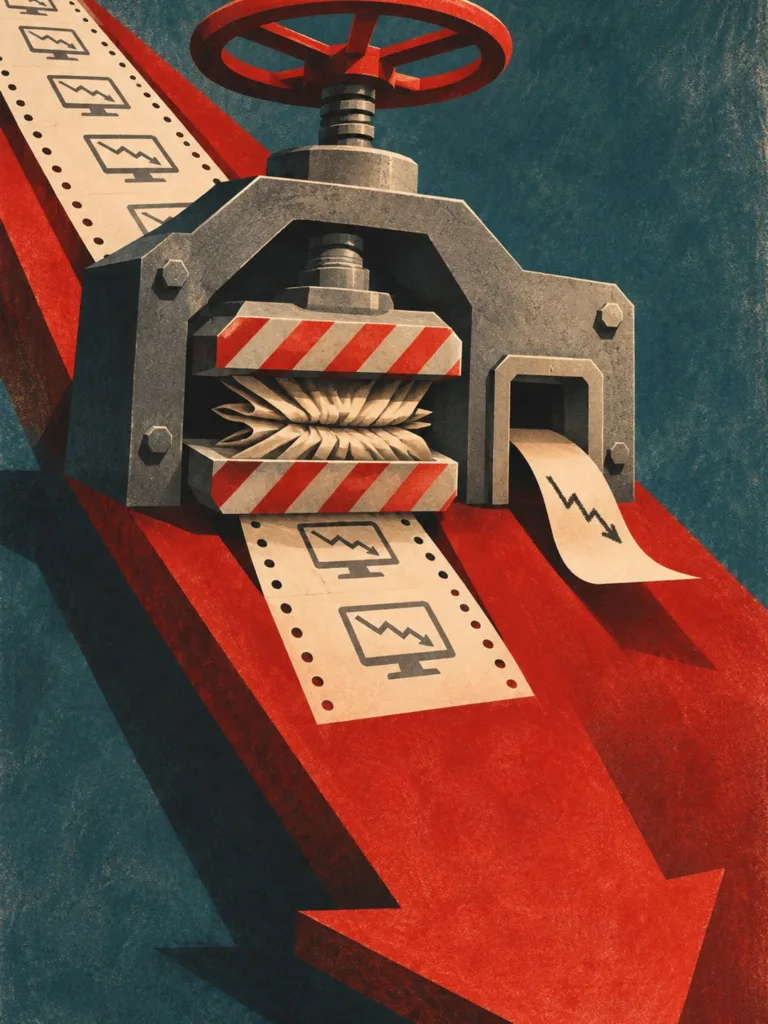
A sidecar is a "temporary pause switch for program trading." It triggers when the price of the nearest-month KOSPI 200 futures contract (the one that expires soonest) stays 5% or more away from its base for one minute. Once triggered, program trading orders are suspended for five minutes, and the pause lifts automatically afterward.
It applies only once a day and does not trigger in the first five minutes after the open or in the last 40 minutes before the close. When it triggered that day, net program selling was 660.8 billion won. Net selling is the difference between what was bought and sold, meaning more was sold than bought.
- Whose orders are program trades?
Program trades are not orders that a person picks stock by stock and clicks. A computer places them automatically when preset conditions are met, and they are used mainly by institutions and foreign investors.
In a sharp sell-off, if these automatic orders pile in all at once, the shock to the market grows. In its explanation for the KOSDAQ market, the exchange describes the sidecar as a device meant to ease the impact program trading has on the market.
Think of a highway that blocks only big trucks from entering for five minutes. Cars keep driving. The trucks do not turn back, though; they wait at the toll gate.
- Halted program sell orders do not disappear
According to the exchange's KOSDAQ-based explanation, program orders halted during the five-minute sidecar can be neither canceled nor changed. After five minutes, these orders enter trading in the order they were received.
Put simply, a sidecar does not erase the computers' selling; it delays it by five minutes. It gives people time to catch their breath, but it does not wipe out the sell volume itself.
- My sell order is still filled
A sell order an individual places directly in a brokerage app keeps trading regardless of the sidecar. You can buy and sell during a sidecar, and the fill price is the market price at that moment.
[Calculation] For someone holding 10 million won of Samsung Electronics, a 5% drop would cut the value by about 500,000 won (an assumed calculation). Your order is not blocked, but nothing stops it from selling at the lower price.
Only a circuit breaker stops my orders too. It triggers in stages when the index falls 8%, 15% or 20% from the previous day's close. In stages 1 and 2, all trading stops for 20 minutes, followed by 10 minutes of single-price trading; in stage 3 (20%), trading ends for the day. That day, KOSPI slid from 5,586.46 at the open to 5,387.72 at 2:40 p.m., but did not reach the 8% stage 1 level.
- The 56th this year: how common have sidecars become?
This year's KOSPI sidecars total 56: 29 sell and 27 buy. That already exceeds the 26 in all of 2008. Since their introduction in 1996, sidecars have triggered 116 times in total.
[Calculation] About 48% of the 30-year total came in this one year (a hypothetical calculation). Put simply, a sidecar is no longer a rare emergency signal but more like a speed bump that appears on every day of big swings.
- BITPRESS Insight
A sidecar alert easily sounds like "the market has stopped." So some people see the alert and rush to hit the sell button. But even then, my order is filled as usual, and the only thing briefly missing is the computers' selling.
Also, the halted program sell orders come back in order after five minutes. And a lifted sidecar does not mean the selling pressure is over. A sidecar does not change direction; it slows the speed.
When "sidecar" shows up in the news, only computer orders are delayed by five minutes; only a "circuit breaker" stops my orders too.
Sources
https://weekly.hankooki.com/news/articleView.html?idxno=7192334
https://www.pressian.com/pages/articles/2026110514391036918
https://global.krx.co.kr/contents/GLB/06/0602/0602020204/GLB0602020204T3.jsp
https://kbthink.com/investment/101/sidecar.html
Glossary
Sidecar — A switch that pauses only program trading orders for five minutes when futures stay 5% or more away from their base for one minute.
Program trading — Orders a computer places automatically when preset conditions are met, used mainly by institutions and foreign investors.
Circuit breaker — A device that triggers in stages when the index falls 8%, 15% or 20% from the previous close; stages 1 and 2 halt all trading for 20 minutes and stage 3 ends trading for the day.
Nearest-month contract — Among futures of the same kind, the one that expires soonest and is traded most actively.
Single-price auction — A method that gathers orders for a set time and fills them all at one price.
BITPRESS articles are information to help your investment decisions, not a recommendation to buy or sell any stock or coin. Investment decisions and their results are your own responsibility.