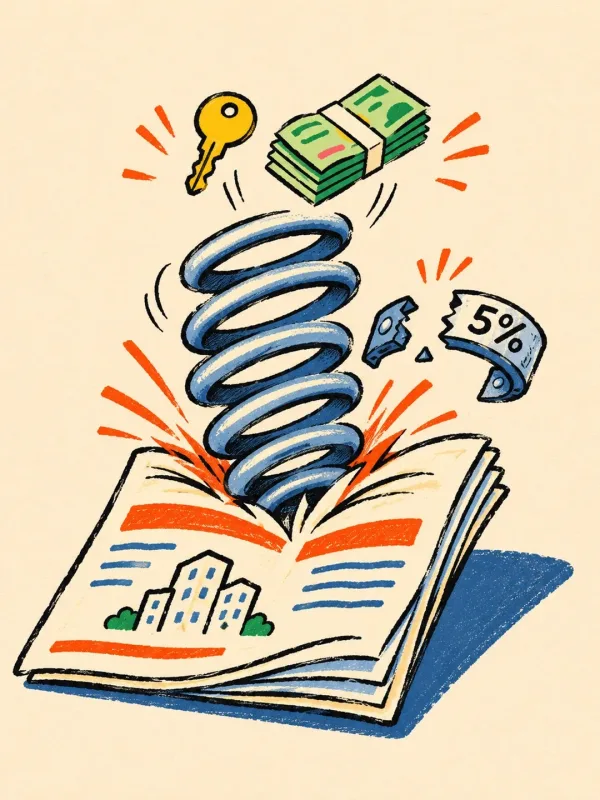
From January to September this year, apartment monthly rents in Seoul's Nowon district rose 12.88%. That is the biggest increase among Seoul's 25 districts. Seongbuk was next at 11.82%, and the Seoul average was 7.68%. Gangnam rose just 2.62% over the same period.
The common reading is that this is part of a citywide rise in Seoul rents. Many people also assume monthly rents climb faster in expensive Gangnam and the city center. But the numbers say the opposite. Researcher Nam Hyuk-woo of Woori Bank's real estate research institute pointed to outer-district jeonse leases signed cheaply three to four years ago, when jeonse prices fell. As those leases expire now, he says, some tenants are paying the difference as monthly rent.
- Did rents really rise more in cheaper neighborhoods?
The result is clear when we compare last December with this September using the Korea Real Estate Board's integrated monthly rent index, which tracks apartment rent levels on a consistent basis each month. The Seoul average of 7.68% is nearly double last year's full-year increase of 3.94%.
| Market | Apartment rent increase (Dec. 2025 to Sept. 2026) |
|---|---|
| Nowon | 12.88% |
| Seongbuk | 11.82% |
| Seoul average | 7.68% |
| Seocho | 5.86% |
| Gangnam | 2.62% |
Put simply, the fastest monthly rent growth in Seoul this year came not from the priciest neighborhoods but from the relatively cheaper outer districts in the northeast. Nowon's increase is about five times Gangnam's.
- Why now, and why the outer districts?
The Hankook Ilbo newspaper sees the outer-district rent rise as partly an effect of reverse jeonse, the jeonse price slump that ran from the second half of 2022 through 2023, when falling jeonse prices meant new deposits came in lower than the previous ones. High interest rates pushed home prices and jeonse prices down together. Nowon's apartment jeonse price index fell 14.7%, from 101.6 in June 2022 to 86.7 in January 2023.
In the outer districts at that time, quite a few tenants signed new jeonse leases with lower deposits than the previous contracts. A two-year lease plus a two-year renewal makes four years. Leases signed from the second half of 2022 into early 2023 are now reaching their expiry. The renewal is already used up, so the next contract has to be signed at today's market price.
It is like a season pass bought on sale that has run out and must be bought again at full price. The difference is that the full price for jeonse has risen sharply in just a few years.
- How much more does it cost to sign again?
Nowon's jeonse price index rose 21.5%, from 86.7 in January 2023 to 105.3 this September. Over the same period Seongbuk rose 20.1% and the Seoul average rose 15.2%. The outer districts where tenants got in cheaply face a wider gap when they sign again.
Suppose a Nowon jeonse home rented in early 2023 with a 300 million won deposit rose in line with the index. Getting the same home again would then cost about 364 million won. That means finding another 64 million won by the expiry date.
- Where does the missing deposit go?
Some tenants cover the difference with monthly rent instead of a loan. Nam Hyuk-woo of Woori Bank's real estate research institute said, “When tenants who signed during the reverse jeonse period find it a burden to cover the extra amount with a loan, some choose to pay the difference as monthly rent rather than raise more deposit.”
The researcher's explanation boils down to this. A four-year lease ends, the deposit falls short, and some tenants who find a loan burdensome pay the difference as monthly rent. A loan would generally mean paying interest. He said some tenants who find a loan burdensome choose to pay the gap as monthly rent instead of raising more deposit.
- What changes next spring?
Nam forecast that "demand from expiring leases, including those that have used up their renewals, could rise sharply around February and March next year as it coincides with the peak moving season," and that "rent increases could continue or deepen, centered on Seoul's outer northeastern districts, and affect the jeonse and monthly rent market."
In 2022-23, falling jeonse prices favored tenants moving in. This time, tenants who got in cheaply then must sign again at the higher price. The same lease has come back four years later with the opposite outcome.
- BITPRESS Insight: Why You Should Watch When Leases End, Not Just Market Prices
This year's monthly rent increases did not follow the ranking of neighborhoods by price. Rents in Gangnam, the priciest district, rose 2.62%, while rents in Nowon, a cheaper one, rose 12.88%. The outer districts, where many leases were signed low four years ago, also face a bigger jeonse price gap at renewal than the Seoul average. Researcher Nam Hyuk-woo explained that some tenants pay part of that gap as monthly rent.
For a tenant, knowing that today's prices are low may be only half the picture. If cheaply signed leases in that neighborhood end around the same time, part of the missing deposit can turn into demand for monthly rentals.
When looking for a home, first ask when the cheap leases signed in that neighborhood a few years ago will end in a cluster, rather than whether current prices look cheap.
Sources
https://www.reb.or.kr/r-one/portal/stat/easyStatPage/A_2024_00054.do
https://www.reb.or.kr/r-one/portal/stat/easyStatPage/A_2024_00050.do
https://www.hankookilbo.com/news/article/A2026110111160002385
Glossary
Jeonse price slump (reverse jeonse) — A situation in which falling jeonse prices make a new jeonse deposit lower than the one in the previous contract.
Integrated monthly rent index — An index built by the Korea Real Estate Board to compare apartment rent levels on a consistent basis each month; its percentage change is the rent increase.
Jeonse price index — An index that compares apartment jeonse prices on a consistent basis each month; when it rises, renting the same home on jeonse costs more.
Lease renewal — When a two-year jeonse lease ends, the tenant can extend it once in the same home; after that is used, the next contract is signed anew at market price.
BITPRESS articles are information to help your investment decisions, not a recommendation to buy or sell any stock or coin. Investment decisions and their results are your own responsibility.