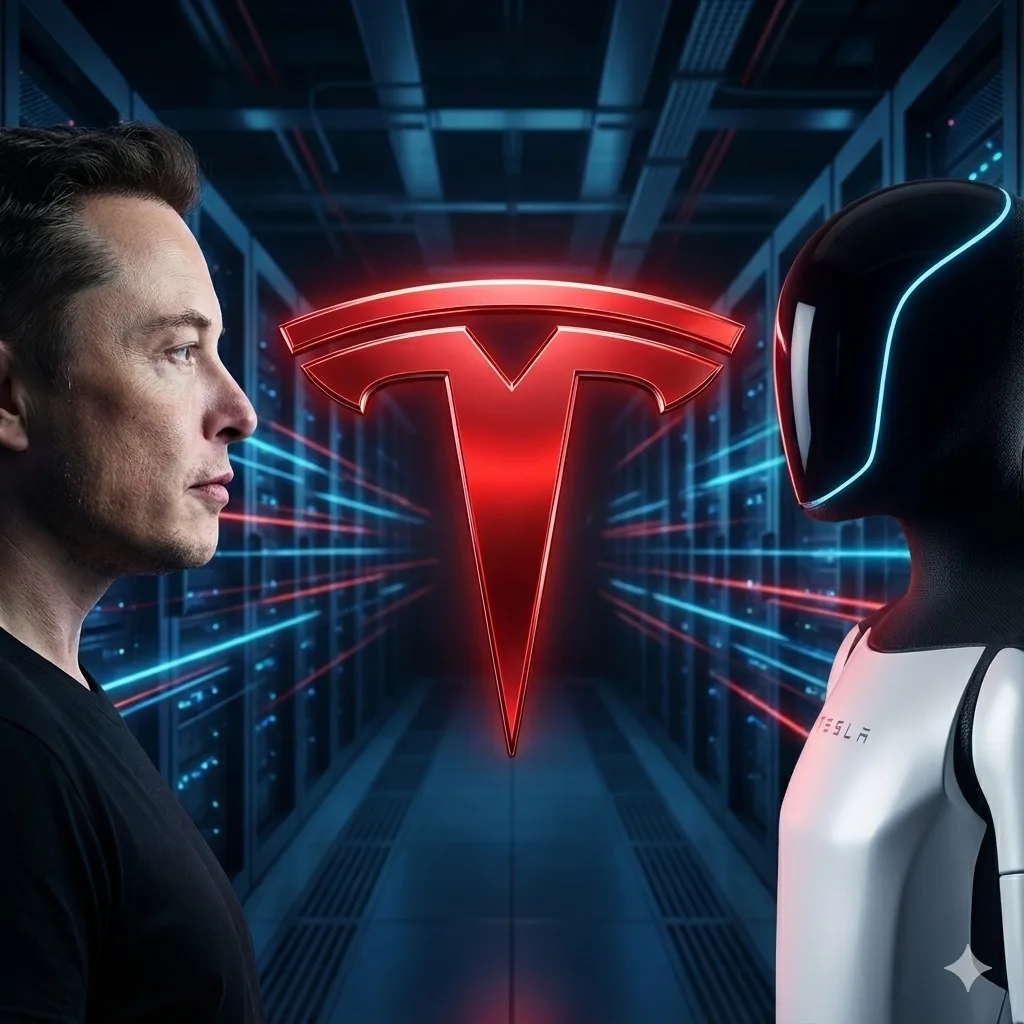
2026 looks set to be a historic turning point when Tesla fully transforms from a simple EV maker into an **‘AI and robotics ecosystem company’**. Combining information released so far (as of late 2025) with industry forecasts, here is a summary of Tesla's key 2026 roadmap and expected news.
1. 2026 new vehicle and product launch roadmap
2026 is the year the largest number of new form factors in Tesla's history enter mass production.
- Cybercab (robotaxi) mass production begins:
- Period: Production start targeted for April 2026.
- Features: A fully self-driving vehicle with no steering wheel or pedals. Using its ‘Unboxed’ manufacturing process, it aims to slash per-unit production costs and target a price under $30,000. A ramp-up to 50,000–100,000 units per month is expected by the end of 2026.
- Entry-level model (tentatively ‘Model 2’) takes hold in the market:
- Period: Full-scale deliveries begin in late 2025 to early 2026.
- Details: A key model priced around $25,000 that will explosively increase Tesla's sales volume. A simplified, efficiency-maximized version of the Model Y design, it is expected to lead Tesla to a record annual delivery total in 2026.
- Tesla Semi mass production:
- Period: Full-scale mass production at Giga Nevada in mid-2026.
- Details: Moving past the prototype stage into mass production of 50,000 units a year, it will accelerate the electrification of the logistics industry.
- Next-generation Roadster debut:
- Period: Unveiling scheduled for April 1, 2026 (per Musk).
- Details: With ultra-high-performance specs such as a ‘hovering (briefly floating)’ feature developed with SpaceX, it will be a model that symbolizes Tesla's technology.
2. AI and robotics: commercialization of Optimus V3
This is the year visible results emerge in robotics, the field expected to account for the largest share of Tesla's future value.
- Optimus third generation and mass production:
- In early 2026 Optimus V3is expected to be unveiled, and by combining with Grok AI it is likely to go beyond carrying out simple commands to understanding context and holding conversations.
- By the end of 2026, an annual production capacity of 1 million units is the target, and the robots will first be deployed inside Tesla factories to start replacing labor.
- Mass production of its in-house AI chip ‘AI 5’:
- The next-generation self-driving/AI chip produced with Samsung Electronics and TSMC will start going into actual vehicles and robots in 2026, further reducing reliance on Nvidia.
3. Self-driving (FSD) and regulatory approval outlook
2026 is a pivotal period when self-driving moves from ‘supervised’ to ‘unsupervised.’
- Unsupervised FSD rollout in the US: The goal is to commercialize FSD requiring no driver intervention across the US by the end of 2026.
- Entry into the European market: Through talks with the Dutch regulator (RDW), February 2026is the target for a demonstration of FSD regulatory compliance in Europe. If approved, the service is likely to expand to major European countries in the second half of 2026.
4. Expected major news headlines for 2026 (hypothetical news)
“Tesla's energy profits overtake autos … no longer just a car company”
- Megapack production capacity passes 50GWh, cementing the No. 1 share of the energy storage system (ESS) market.
“Cybercab debuts on Texas roads … ushering in the era of 20 cents per mile”
- The robotaxi network officially launches, presenting a new paradigm for the sharing economy.
“Optimus V3 goes on sale to general manufacturing plants … $20,000 per robot, cheaper than a Model 3”
- Emerging as a game changer that solves labor shortages in industry.
💡 Summary and investment points
2026 will be the year Tesla's margin structure shifts sharply from a **‘hardware-sales-based company’** to a **‘software and service-subscription-based company’**. Rather than the number of vehicles sold, FSD subscription rates, robotaxi network utilization and cuts in Optimus robot production costs will become the key metrics of the company's value.