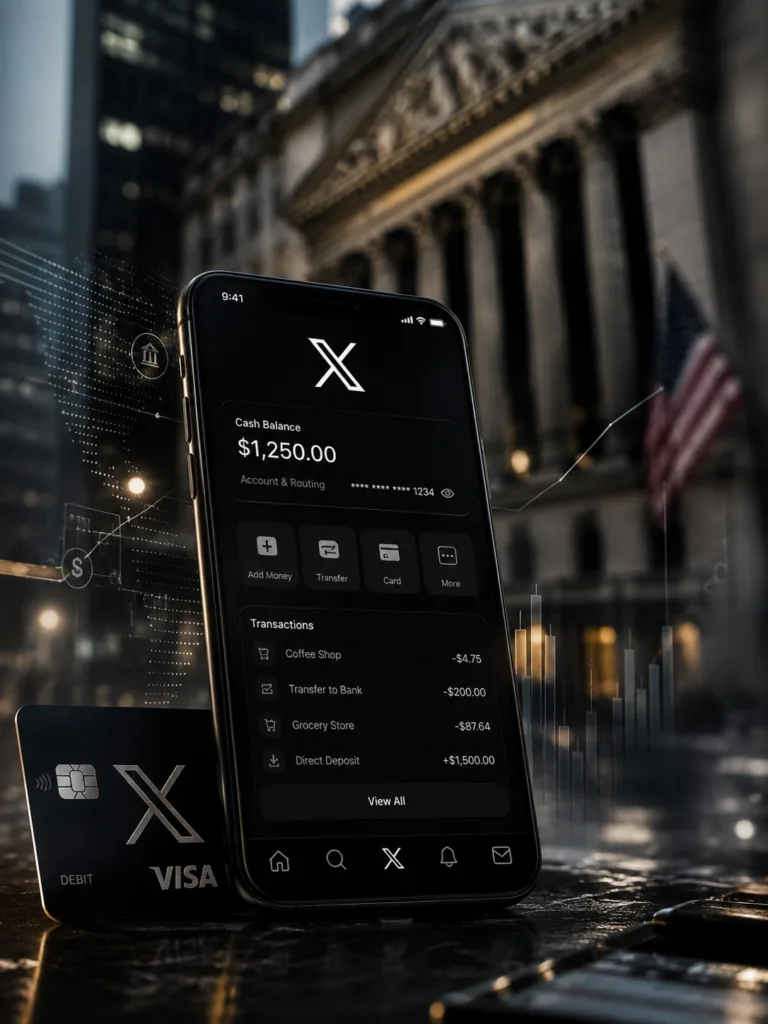
In March 2026, American actor William Shatner posted a screenshot on X. Best known as Captain Kirk from Star Trek, he had just logged into a new service: X Money. One number stood out: annual percentage yield (APY), 6%.
JPMorgan Chase's standard savings rate is 0.01%. X Money offered 600 times that. The post did not go especially viral, but it caused quiet ripples in finance and the crypto industry.
- What is X Money?
X Money offers a 6% annual yield, a metal Visa debit card engraved with your X handle, no foreign transaction fees, 3% cash back on purchases, P2P transfers, and FDIC deposit insurance of up to $250,000 (about KRW 360 million) per person.
On features alone, it aims to replace PayPal, Venmo and Cash App at once. It is not just a payments app; it is the core of a plan to build a super app that unifies social media, payments and finance on the X platform, which has about 600 million monthly active users.
There is historical context too. Elon Musk founded the online bank X.com in 1999, which later merged into PayPal. When he bought Twitter in 2022, he explicitly described the platform as an accelerant for building “X, the everything app.” It amounts to restarting an ambition 27 years in the making.
- Where does the 6% come from?
6% is about 15 times the U.S. national average savings rate. Skepticism is natural. But X Money's argument is clear.
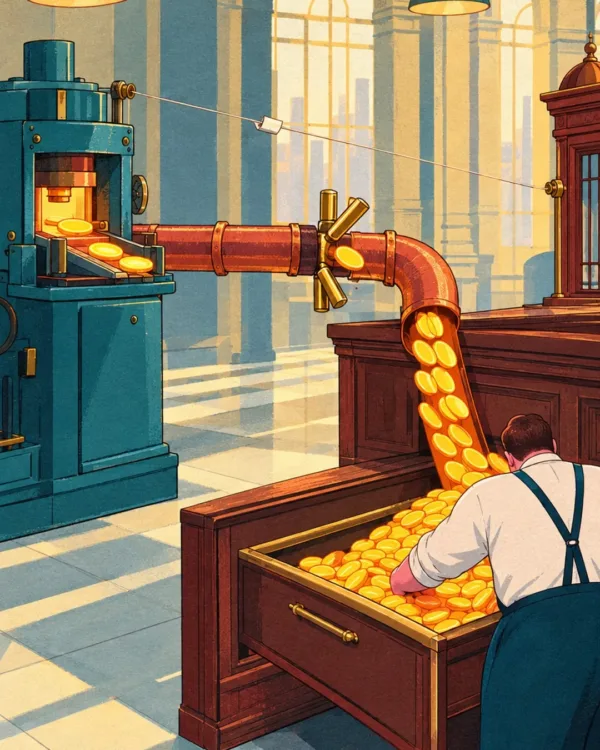
Traditional big banks carry huge fixed costs: branch networks, tellers, ATMs and decades-old IT systems. The basic argument is that X Money, as a cloud-native, API-based platform with no physical branches or legacy infrastructure, can pass that structural cost difference back to customers as interest.
Still, it is unclear whether this rate will last after the official launch. It has not yet been confirmed whether this rate, higher even than those of fintech rivals SoFi and LendingClub, is a temporary perk to attract early beta users or a structurally sustainable level. Sen. Elizabeth Warren raised the issue directly in a letter, writing that “it is unclear what risky investments, invasive data monetization, or gimmicks X Money or Cross River Bank are willing to use to pay this yield.”
- How does it work without a bank charter?
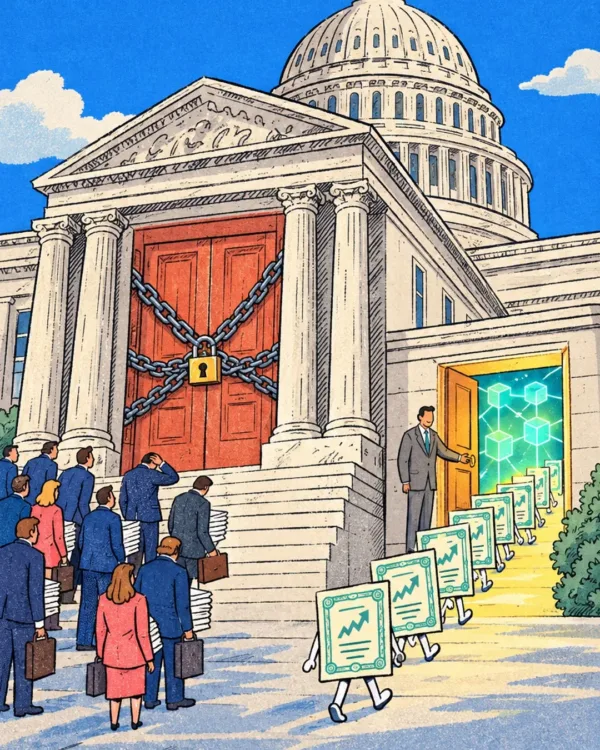
X Money is not currently a licensed bank. X's subsidiary X Payments has obtained money transmitter licenses in 40 U.S. states. Transfers and payments are possible without a banking license, but taking deposits and paying interest requires a different structure.
The solution is a partnership with Cross River Bank. Users' deposits are held by Cross River Bank, an FDIC member bank, and through this structure X Money provides deposit insurance and interest payments.
FDIC: The Federal Deposit Insurance Corporation. A U.S. federal agency that protects depositors' funds up to $250,000 per person even if a bank fails.
But Cross River Bank itself is controversial. It was sanctioned by the FDIC twice, in 2018 and 2023, for unfair and deceptive practices and improper fair-lending operations.
On the infrastructure side, it runs on the Visa Direct network through a partnership with Visa, which supports real-time fund transfers and payments at merchants worldwide. In effect, the payment rails themselves use the same infrastructure as the existing financial system.
New York, a key market, remains a question mark. New York state lawmakers sent an open letter to the state's Department of Financial Services (DFS) urging it to deny X a license. Their reasons included Musk's track record with regulators, weak identity verification on the X platform, and allegations that CFPB consumer payment data was accessed during DOGE's activities.
- Will it adopt stablecoins?
X Money draws particular attention in the crypto industry because it might adopt stablecoins. Musk has mentioned “crypto integration,” but X Money has not officially confirmed direct crypto payment features.
If it issues or integrates a stablecoin, hundreds of millions of social media users would gain a path to using crypto naturally within the platform, without a separate exchange. That could be meaningful momentum for mainstream crypto adoption.
But there is a regulatory barrier. The GENIUS Act, which took effect in July 2025, explicitly bans payment stablecoin issuers from paying interest or yield to holders.
GENIUS Act: the Guiding and Establishing National Innovation for U.S. Stablecoins Act. A U.S. stablecoin law signed by the Trump administration in 2025. It sets issuance requirements and operating standards for payment stablecoins.
The 6% APY X Money offers today is based on fiat deposit accounts, so it does not directly conflict with the GENIUS Act. But if it later adopts a stablecoin while also trying to offer a yield, it would collide head-on with the rules. Musk has not yet publicly said how he will resolve this dilemma.
- The controversy over a regulation's architect starting a business under it
The conflict-of-interest controversy is the weightiest part of this story.
X Money launched about a year after Musk effectively dismantled the CFPB, the very agency that oversees consumer financial products like X Money.
CFPB (Consumer Financial Protection Bureau): An independent U.S. regulator that protects financial consumers, overseeing consumer financial products across the board, including loans, payments and deposits.
Sen. Warren pointed out that the GENIUS Act contains a special provision allowing X, a private company, to issue stablecoins without some of the approval and safety requirements imposed on listed financial companies. She also called on Congress to determine whether Musk or those working with him influenced the drafting of that provision.
In an open letter, Warren directly asked whether Musk or DOGE staff had accessed competitors' confidential supervisory information at the CFPB. Musk did not formally respond by the April 21, 2026 deadline.
- How are competitors responding?
X Money most directly threatens PayPal, Venmo, Cash App and fintech companies offering high-yield savings accounts. The 6% yield is not just a number; it gives users of existing finance apps a direct incentive to switch platforms.
Meanwhile, payments expert Richard Crone noted that “Musk promised this vision two years ago and said he would deliver it within a year. The window of opportunity may have already closed.” With the fintech market already close to saturation, the possibility that a late entry proves fatal cannot be ruled out.
One variable unique to X, however, is AI. Musk's plan is to integrate Grok, X's AI, not as a simple chatbot but as a financial agent. It would suggest investments based on real-time information on the platform, allocate funds automatically, and include a smart cashtag feature that switches instantly to a trading interface while you scroll your feed. If this happens, it would be a differentiator no existing fintech service has.
BITPRESS Insight
X Money is facing three uncertainties at once.
The first is whether the 6% is sustainable. The argument based on a structural cost advantage is not unpersuasive, but whether this yield will last beyond the beta, and how it would clash with regulation if stablecoins are adopted, remain open questions.
The second is regulatory risk. Whether it gets a New York license, and the conflict-of-interest controversy over dismantling the CFPB and shaping the GENIUS Act, are not mere political sparring. If allegations that DOGE accessed competitor information through the CFPB are confirmed, X Money could be caught up in legal battles from the start.
The third is timing. It remains to be seen whether X Money, a latecomer to a market where PayPal, Venmo and Cash App are already entrenched, can pull enough users over with a 6% yield alone.
Even so, the reason to watch is clear. The moment social media, finance and AI combine on one platform, the service becomes not just a payments app but an operating system for the user's entire everyday economic life. That is the real reason the crypto industry should keep a close eye on X Money.
Sources
https://www.bloomberg.com/news/articles/2026-04-26/musk-vies-to-turn-x-into-super-app-with-banking-tool-near-launch
https://finance.yahoo.com/personal-finance/banking/article/x-money-elon-musks-fintech-app-130000383.html
https://almcorp.com/blog/x-money-beta-payments-platform/ https://www.banking.senate.gov/newsroom/minority/warren-presses-musk-ahead-of-x-money-launch-warns-of-consumer-national-security-and-financial-stability-risks-a-year-after-trump-dismantling-of-cfpb https://www.banking.senate.gov/imo/media/doc/20260414lettertomuskrexmoneylaunch.pdf https://www.paymentsdive.com/news/warren-pounds-x-money-plans/817555/ https://www.benzinga.com/crypto/cryptocurrency/26/04/51837543/elizabeth-warren-grills-elon-musk-on-x-money-with-serious-questions-about-privacy-scams-frauds
https://www.kucoin.com/news/flash/x-money-offers-6-apy-challenging-traditional-banks
https://www.firmknow.com/elon-musks-x-money-declares-war-on-traditional-banks-with-6-apy/ https://en.sedaily.com/finance/2026/04/28/musks-x-launches-financial-app-with-6-percent-interest-3