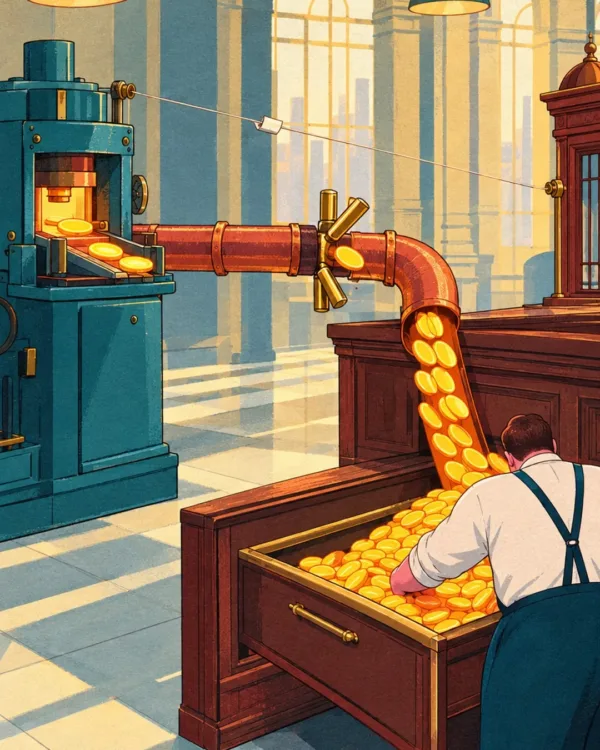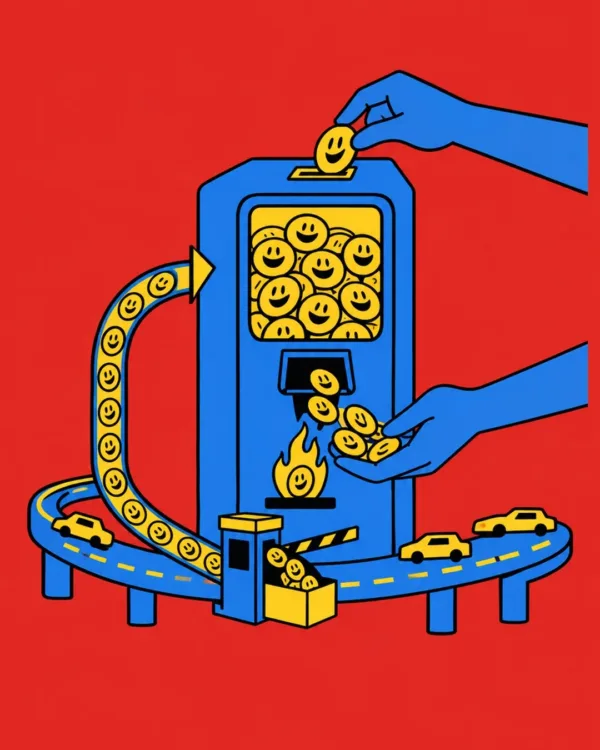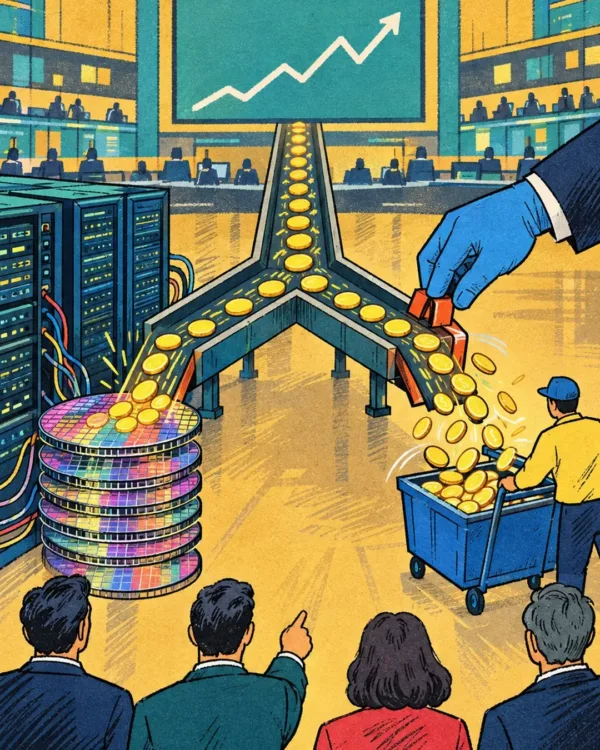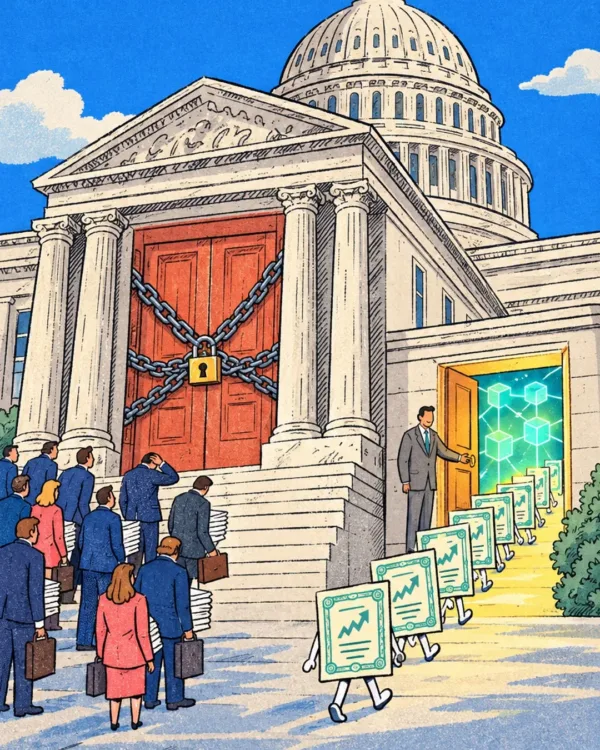

When we want to borrow money or earn interest, we naturally go to a bank. Banks manage our assets and guarantee our transactions with sturdy vaults and complex review processes. But what if people could transact with each other directly, without a bank acting as the middleman?
In the crypto market, this already happens every day on a scale of tens of trillions of won, and we call it DeFi. If you've started investing in crypto and moved beyond simply buying and selling on an exchange, DeFi is a concept you are bound to run into. Today, from an investor's point of view, let's take a clear, logical look at what DeFi actually is and the opportunities and risks that come with it.
- What DeFi really means, and smart contracts
DeFi is short for decentralized finance. Put simply, it means financial services that run on blockchain networks without a central party that controls everything and takes responsibility, like the exchanges or commercial banks we commonly use.
This is where beginner investors start to wonder: with no one reviewing applications and no institution guaranteeing anything, how can you trust a financial transaction with a stranger? The secret lies in a technology called smart contracts.
A smart contract is computer code that automatically executes an agreement once certain conditions are met. Just as a vending machine always gives you a cola when you insert 1,000 won and press the button, it works exactly according to pre-agreed rules without error, so there is no need for a person to step in.
- Three ways money flows in DeFi
The DeFi ecosystem offers almost every service available in traditional finance, but investors most often encounter three main types.
The first is decentralized exchanges. Unlike centralized exchanges, where someone holds customers' assets, these let users connect their personal wallets directly and swap coins one-to-one. Uniswap is the best-known example.
The second is deposit and lending services. You can deposit your crypto into something that acts as the system's vault and earn interest, or, conversely, put up your coins as collateral and borrow a different kind of coin.
The third is a distinctive investment method called yield farming. For a new DeFi service to run smoothly, it needs a large supply of coins for users to swap. If you provide that supply first, you are rewarded, in exchange for helping sustain the ecosystem, with the service's own token as interest.
- DeFi's critical risks
Because there are no intermediaries, fees are relatively low and anyone in the world can access it without discrimination based on credit ratings. These are DeFi's huge advantages. But investors must also look carefully at the serious risks hidden behind them.
Commercial banks have a solid safety net: if you send money to the wrong place by mistake or lose your password, you can recover access by verifying your identity. In the world of DeFi, however, the moment you lose your personal wallet's password or are tricked by a hacker's phishing site into handing over permissions, your assets are gone for good, and the responsibility rests entirely with you.
You should also keep in mind that no matter how flawless the code running the system appears, brilliant hackers regularly find holes in it and drain every coin from the vault.
BITPRESS Insight
DeFi is a new frontier of finance created by blockchain technology, and it is innovative in that it frees you from central institutions' control and puts full authority over your assets in your own hands. But great freedom always comes with harsh responsibility.
Behind the high double-digit yields DeFi offers in place of ordinary bank interest lie both the risk of hacks caused by code flaws and the market risk that the price of the coins you receive as rewards could crash.
So when you start investing in DeFi, never put in a large sum at once just on someone's word. At first, we recommend setting up a personal wallet with a very small amount you can afford to lose, and making the goal simply the experience of moving and approving assets yourself. In the end, only investors who understand the market's bigger picture and can control their own risk will avoid being blinded by flashy returns and capture the technology's real value.