
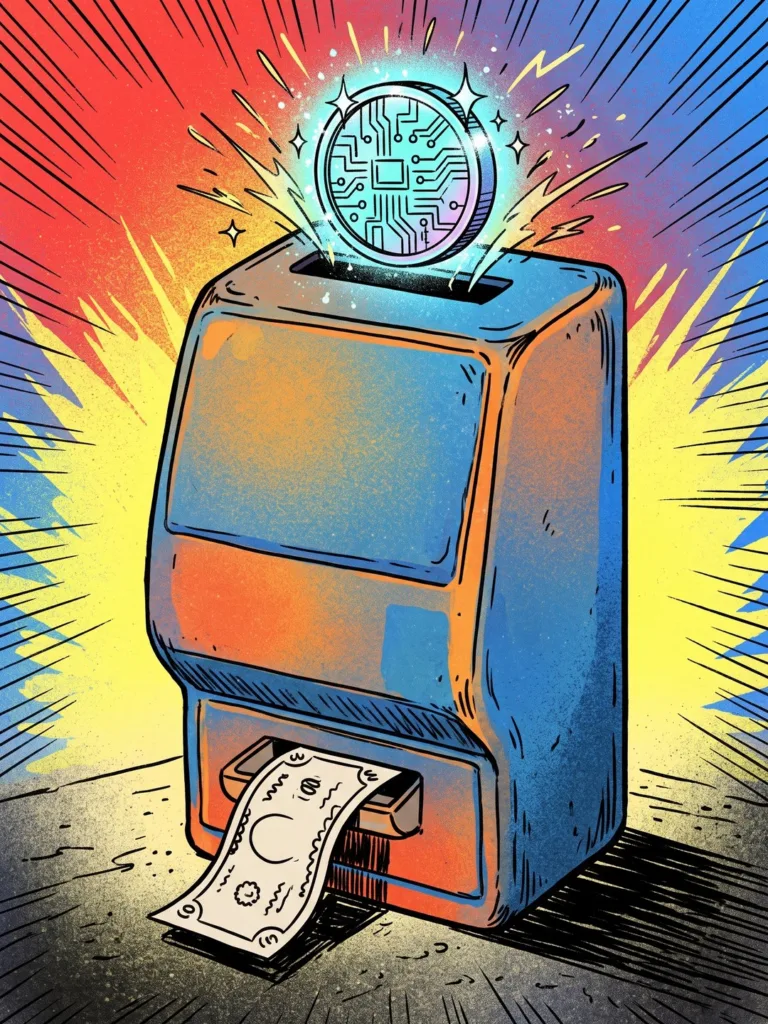
On Oct. 20, Shinhan Card (a major Korean credit card company) signed a business agreement in Tokyo with two affiliates of Japan's SBI Group. They will test how Japanese tourists can pay with yen stablecoins. A stablecoin is a coin whose value is pegged to a fiat currency, so that one coin equals 1 yen or 1 dollar.
If a customer pays in coins, it looks as though the shop must receive coins too. But the real point lies elsewhere. Shinhan Card and SBI have not said how shops will be settled, and in similar payments that are already live, the shop receives its own country's currency instead of coins. What is new is not at the shop's register but in the middle step that turns coins into money.
- What are Shinhan Card and SBI testing?
The partners are SBI VC Trade (a Japanese exchange that handles stablecoins such as USDC) and SBI XDC Network APAC (a blockchain company focused on trade finance). The three companies will test stablecoin card payments, wallet-to-wallet transfers and cross-border trade payments, and will also check anti-money-laundering and fraud detection.
This is still a proof-of-concept stage. They did not say which yen coin will be used, how currency exchange and shop settlement will work, or when a commercial launch will come. There is also no data comparing fees with existing payments.
- Three agreements in a month: how much has the customer base grown?
On Sept. 30, Japan's SBI Digitrust, NICE Information & Telecommunication (a Korean payments company) and DSRV (a blockchain infrastructure company) agreed to verify, through the end of December, how Japanese users can pay by QR code at Korean merchants. SBI said NICE supports about 1.2 million merchants nationwide. On Oct. 13, KB Kookmin Card disclosed that it had signed an agreement with SBI affiliates and would look at ways to connect Japanese tourists' stablecoins to payments in Korea.
The number of customers has grown too. From January to August, 2,698,857 Japanese visited Korea, up 17.5% from the same period a year earlier. Card spending in Korea by foreign visitors from all countries over the same period was 14.018 trillion won, up 48.5%. Put simply, what foreign visitors spend by card in Korea has grown by nearly half in a year.
- In coin payments already live, the shop gets its own country's currency
In Japan, since Sept. 30, qualified overseas visitors can pay in crypto through Binance Pay (the payment service of the crypto exchange Binance) at PayPay (a Japanese QR payment service) merchants. Behind the scenes it is settled in USDT, a dollar stablecoin, and the shop receives yen. Participating merchants do not need to apply separately or hold any coins.
In Korea, BC Card completed a pilot for foreign visitors at the end of last year. A fintech firm converts USDT from an overseas wallet into dollars and loads them onto a prepaid card, which is then used by QR code at Korean cafés and convenience stores. The coin had already turned into money before it reached the shop. The structure card companies are watching also converts stablecoins into won behind the scenes and settles in won.
Think of it like a Japanese tourist swiping a yen card and the shop's bank account receiving won. The only difference is that a coin payment adds one more step in front: turning the coin into money.
- So the new slot is in the middle
Tourist's coin → an intermediary turns it into money → the payment company settles with the shop in its own country's currency. In the Binance Pay case, Binance Pay settles in USDT behind the scenes, and PayPay settles with the shop in yen through HIVEX, the network that links overseas QR payments to PayPay merchants. The money the shop receives is the same local currency as usual, and what is new is the exchange step in the middle of the arrows.
Why does that step matter to card companies? A Korean report in February named, as the reason card companies are investing in coin payments, the chance to cut the fees they pay today to VAN companies (firms that relay card payment approvals) and PGs (payment gateways) in the existing payment network. NICE is also looking at the business case for stablecoin settlement in this verification. But no announcement says how much the fees would actually fall.
- With no won-coin rules, Korea needs the coin turned into won to reach the shop
Japan regulates fiat-pegged stablecoins as electronic payment instruments, and on June 1 it also introduced a registration system for firms that intermediate them. As of early October, Korea was still drafting its won stablecoin rules. So in Korea, a yen coin does not become a won coin; it has to be turned into won to reach the shop. The string of tie-ups between Korean card and payment companies and SBI reads as a move to stand close to that exchange step (BITPRESS's reading).
Another route has been tested. In September, Kyobo Life and SBI completed a pilot swapping tokens representing yen and won directly, without going through the dollar. But no real institutional money moved, and there is no commercial timetable.
- BITPRESS Insight
Shinhan Card and SBI have not said what shops will receive. But the Binance Pay and PayPay service already live, and the structure card companies are watching, both turn the customer's coins into money in the middle and give the shop its own country's currency. Even if yen coin payments open up, it is unlikely that Korean shop owners will end up holding coins (BITPRESS's reading).
If the structure is that a tourist's coin passes through an intermediary, becomes money and is settled with the shop, then what is new is that exchange step. In Korea, with no won-coin rules, a yen coin has to become won to reach the shop. When you read coin payment news, who runs the middle step that turns coins into money tells you more about where the money is heading than what the shop receives.
Sources
https://crypto.news/shinhan-card-sbi-yen-stablecoin-payments/
https://cointelegraph.com/news/shinhan-sbi-japan-korea-travel-yen-stablecoin
https://www.wikitree.co.kr/articles/1163790
https://biz.sbs.co.kr/amp/article/20000339628
https://crypto.news/binance-pay-brings-crypto-spending-to-millions-of-paypay-merchants-in-japan/
https://cointelegraph.com/news/binance-pay-usdt-paypay-merchants-japan
https://www.heraldk.com/article/2026022714330026149
https://crypto.news/sbi-wants-stablecoin-qr-payments-for-japan-korea-travel/
Glossary
Stablecoin — A coin built so that one coin holds a steady value equal to a fiat currency, such as 1 yen or 1 dollar.
USDT — A dollar stablecoin issued by Tether, pegged at $1 per coin.
VAN company — A company that relays payment approvals between a shop's card terminal and the card company.
PG (payment gateway) — A payment processor that handles payments with card companies on a shop's behalf.
Electronic payment instrument — A category Japan created in its payment services law to regulate fiat-pegged stablecoins.
BITPRESS articles are information to help your investment decisions, not a recommendation to buy or sell any stock or coin. Investment decisions and their results are your own responsibility.