The Bank of Korea raised its base rate by 0.25 percentage points in both July and August. After the two rate hikes (when the central bank raises the base rate, bank loan and deposit rates follow upward), the base rate went from 2.50% to 3.00% a year. Ahead of the Oct. 22 Monetary Policy Board meeting (the Bank of Korea meeting that sets the base rate), all 10 brokerage experts surveyed by News1 expected a hold (leaving the rate unchanged) this time.
The common reading is "two hikes done, so now a breather." But in the same survey, most experts expected one more hike each in November and the first quarter of next year, taking the rate to 3.5%.
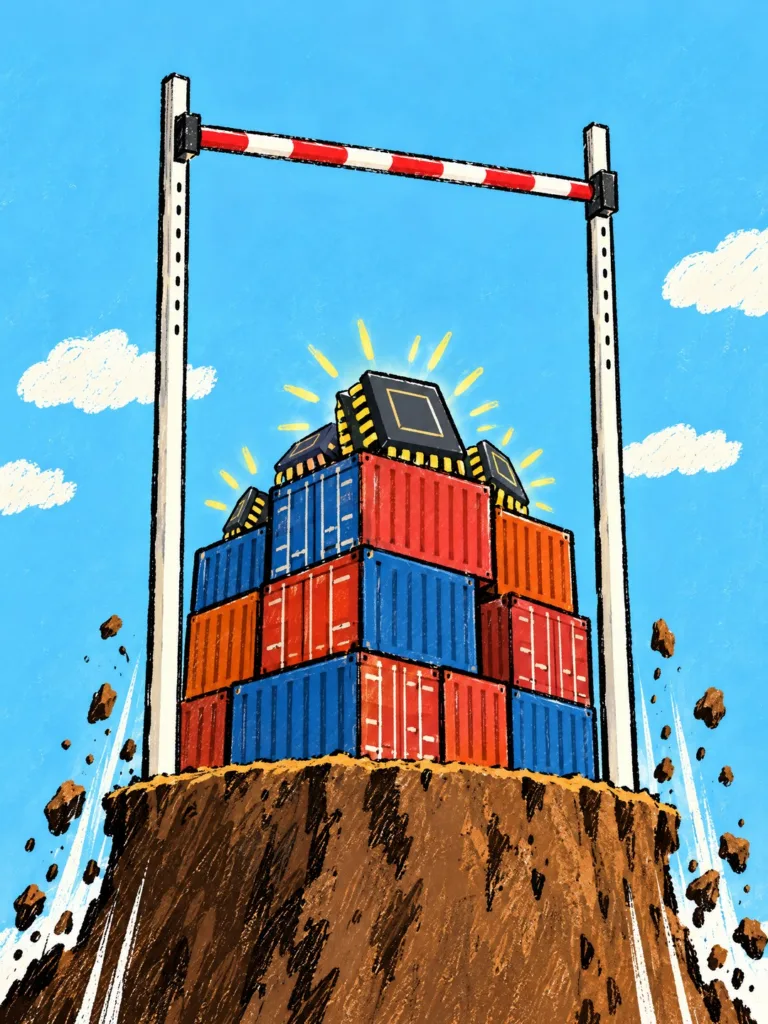
The real point lies elsewhere. The benchmark for judging whether 3% holds the economy back enough, the neutral rate, is moving. If that benchmark rises, the same 3% restrains the economy less.
- Why does the neutral rate come as a range, not a single number?
The neutral rate is the interest rate that neither speeds up nor slows down the economy. When the base rate is above it, borrowing becomes a burden and the economy cools; when it is below, the economy heats up.
The problem is that this rate can't be measured directly. In a written answer to lawmakers in July, the Bank of Korea said the neutral rate is unobservable, so estimates are uncertain and differ widely by method. The five studies the bank cited put it between 1.8% and 3.3%.
Think of it not as a number you read off a bathroom scale, but as a value you infer backward from inflation and growth trends. By these studies, 3% sits in the upper part of the range, but you can't say it has moved outside it.
- How did the Bank of Korea assess 3%?
At a Sept. 10 briefing, Park Jong-woo, assistant governor of the Bank of Korea (an executive ranking below the governor and deputy governor), said of the current base rate: “If we go by the neutral rate we estimated earlier, it is around the upper end.”
There was a caveat. Because economic conditions have changed sharply, the bank is re-estimating potential growth (the growth rate a country can sustain without strain) and the neutral rate. So it is hard to say how much policy is holding the economy back now, and the bank said it will give a new assessment once the results are in.
Put simply, the bank is building a new ruler, so it can't yet say whether the height it measures is tall.
- Why would strong exports push the benchmark up?
According to preliminary Korea Customs Service data, exports from Oct. 1 to 20 were $61.612 billion, up 105.4% from a year earlier and a record for that period. There were 2.5 more working days, but even per working day exports rose 65.9%. Semiconductors made up $27.516 billion, or 44.7% of the total.
The Bank of Korea said that "a rise in potential growth acts as upward pressure on the neutral rate." If chip-led growth lasts rather than fading quickly, potential growth rises → the neutral rate goes up → the same 3% holds the economy back less.
Think of riding a bike downhill. On a steeper slope, the same grip on the brakes slows you less. The difference is that you can see a slope, while the neutral rate can only be estimated.
- Why do markets expect hikes even after a hold?
In a Korea Financial Investment Association survey, 93 of 100 bond market professionals expected a hold this time, on the view that the bank will check the effects of its two hikes. Kim Sung-soo of Hanwha Investment & Securities also said, "The rate-hike stance remains valid, but now is the time to watch the effects of the back-to-back hikes."
Board members' projections also leaned toward hikes. Of the 21 six-month rate projections they gave in August, 10 were 3.25% and 6 were 3.50%, while 5 were today's 3.00%. That is why many don't see this hold as the end of hikes.
- How does this reach your loan interest?
According to Bank of Korea data, a 0.25-percentage-point rise in mortgage rates adds KRW 1.8 trillion a year to the interest paid by all borrowers.
Suppose you borrow KRW 300 million for 30 years with equal monthly payments of principal and interest (a hypothetical calculation). If the loan rate rises from 4.5% to 5.0% a year, the monthly payment goes from about KRW 1.52 million to about KRW 1.61 million, an increase of about KRW 90,000. That is the case where the base rate rises 0.5 percentage points to 3.5% and loan rates rise by the same amount.
- BITPRESS Insight
Two hikes alone don't tell you whether rates are high enough. High or low is decided by comparison with a benchmark, the neutral rate, and that benchmark is being redrawn right now.
If strong exports lift growth for a long stretch, the benchmark rises and 3% restrains the economy less than it seems. That is why markets expect hikes in November and early next year even while expecting a hold now. For anyone carrying a loan, this hold may not signal that rising interest is over.
One rule of thumb: read rate news not as "raised or paused" but as "how far above the benchmark." If growth is strong and rates pause, there is still room for your loan interest to rise.
Sources
https://www.metroseoul.co.kr/article/20260910500256
https://www.heraldk.com/article/2026073020411412571
https://www.fnnews.com/news/202610180605279651
https://www.mt.co.kr/stock/2026/10/20/2026102013505140105
https://www.etoday.co.kr/news/view/2638235
Glossary
Neutral rate — The interest rate that neither speeds up nor slows down the economy; it can't be measured directly, so it is only estimated as a range from inflation and growth trends.
Benchmark rate — The policy rate set by the Bank of Korea; rates on bank loans and deposits move with it.
Potential growth — The growth rate a country can sustain by fully using its workers and equipment without pushing up inflation.
Monetary Policy Board — The Bank of Korea meeting that decides whether to raise, cut or hold the base rate.
Equal monthly payments — A loan repaid in equal monthly installments that cover both principal and interest.
BITPRESS articles are information to help your investment decisions, not a recommendation to buy or sell any stock or coin. Investment decisions and their results are your own responsibility.