The Nasdaq Composite fell 4.5% over the five days from Oct. 12 to 16, its worst week since late June. Yet the biggest drop on any one of those days was only 2.1%.
A 2.1% drop in a day is usually shrugged off as a routine pullback. It looks even more routine because the Dow actually rose 0.7% that week.
But the point is not the size of any single day. What made the weekly total was how many days the slide lasted and what fed it.
- How a 2.1% worst day became a 4.5% week
Day by day, the index fell 0.4% on Monday, 0.2% on Tuesday and 1.9% on Wednesday, rose 0.1% on Thursday, then fell 2.1% on Friday. It dropped on four of the five days and closed the week 1,226 points lower, at 26,140.
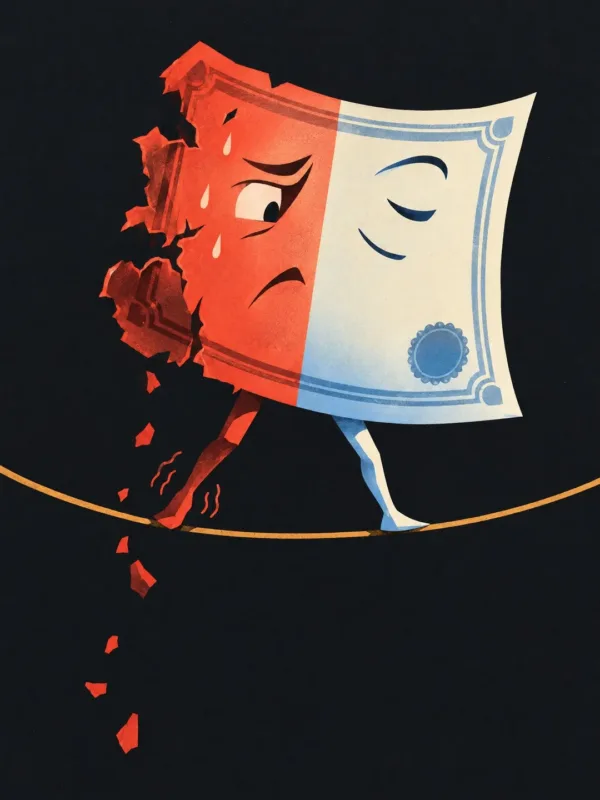
Put simply, it was a series of low steps that added up to a full flight of stairs.
If you had put 10 million won into a Nasdaq index fund, you would have lost about 450,000 won in a week. The loss on Friday, the worst day, was less than half that, around 200,000 won. It is like a loan whose small monthly interest charges feel big once they add up to a year's worth. The difference is that stock prices can swing the other way the next day.
- The slide began in earnest with Wednesday's inflation report
The September U.S. consumer price index (CPI, a gauge of how the prices of goods and services consumers buy are changing), released on Oct. 14, showed prices up 3.7% from a year earlier. That was above the 3.6% forecast and up from 3.4% in August. More than half of the month's increase came from gasoline.
The index had slipped a little on Monday and Tuesday too, but the selling grew from this day. With prices rising faster than expected, the odds that the Federal Reserve would raise rates by a quarter of a percentage point jumped from 22.1% to 41.5% in a single day on the 14th. By Friday, the odds of an October hike, based on bond futures, had eased back to about 15%. The Nasdaq fell 1.9% that day, and AI stocks dragged the market down the most.
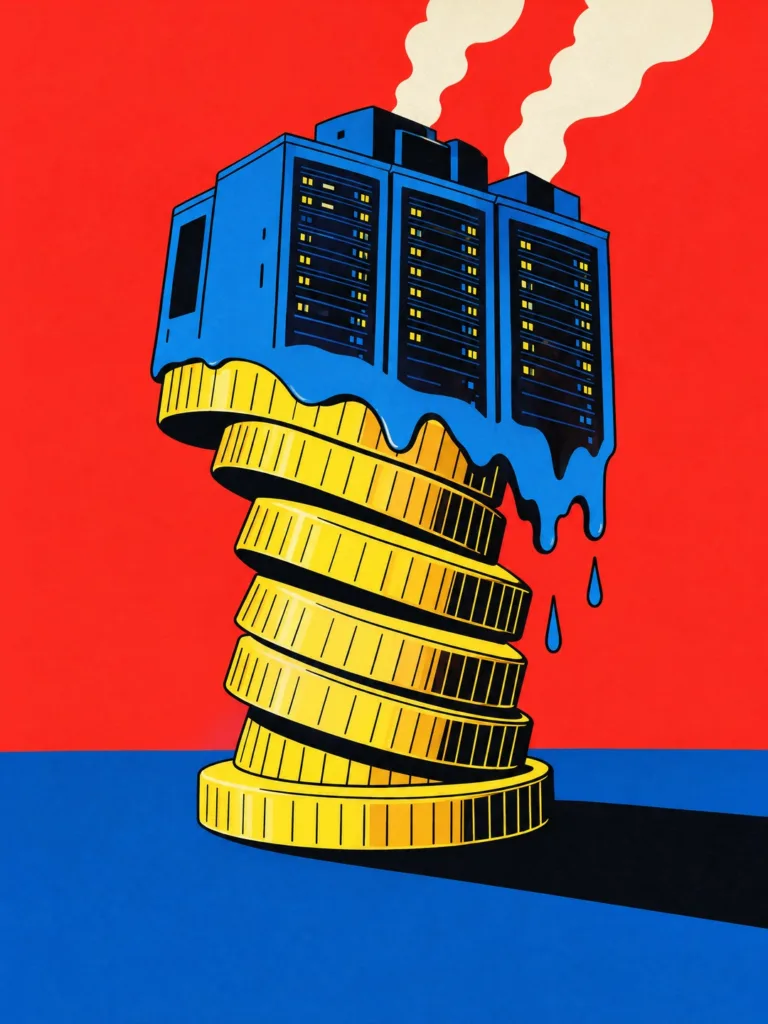
Prices rise, so worries about rate hikes grow; borrowing gets more expensive; and AI companies that borrow to build data centers may have to slow down. That worry weighed most heavily on AI stocks that day.
- That same week, AI company CoreWeave's borrowing cost touched 15%
CoreWeave, an AI cloud company backed by Nvidia, has bonds due in 2032 that pay 9.625% interest a year. This week their yield rose to about 14.8% and briefly touched 15%. A bond yield is the interest rate worked out from the price at which an existing bond trades in the market. When the yield rises, the bond's price has fallen, which means the market sees more risk in lending to the company.
CoreWeave's stock fell about 16% on Wednesday. It is like a lender telling someone who borrowed at 9.625% that it would now want 15% to lend again. The interest on the money CoreWeave has already borrowed does not change right away; what changed is the borrowing cost the market assigns the company. It is one company, but that week worries were growing over the enormous debt companies are taking on to build AI equipment.
- Memory chips and oil kept the slide going into Friday
That week there were also reports of technical progress at ChangXin Memory, a Chinese memory chipmaker. Over the week, Micron fell 14.6%, Samsung Electronics 17.8% and SK hynix 24.3%. The worry is competition from China. Those drops are several times larger than the Nasdaq's 4.5% for the week.
Brent crude futures, the global oil benchmark, rose 4.7% over the week and touched $110 a barrel on Friday as Iran stepped up attacks around the Strait of Hormuz. It was the first time since May. Higher oil feeds through gasoline prices back into inflation.
Friday's 2.1% drop was driven mainly by worries about AI stocks, and the rise in oil prices was also cited as a factor that soured the mood. How much the memory chip reports weighed on Friday alone was not reported.
Put simply, chip stocks had one more worry stacked on top of rate worries: competition from China.
- The Dow rose that week, so why did only the Nasdaq fall hard?
The Dow rose 0.7% that week while the S&P 500 fell 1.9%. On Thursday, strong earnings from U.S. companies lifted the Dow 1.1%, but the Nasdaq managed only a 0.1% gain.
That means the losses were concentrated in AI and chip stocks, not spread across the whole market. It is like seeing customers leave only one type of shop on a street: you look at that industry's troubles before you blame the neighborhood economy.
- What does the next week's one-day rebound tell us?
The Nasdaq rose 1.1% on Monday, Oct. 19, and barely moved on Tuesday, Oct. 20. That wins back 1.1% of the 4.5% it gave up in a week.
One day's rebound does not mean the worries about inflation, borrowing costs and oil have gone away. Just as the drop built up over four days, whether the reasons behind it ease will show over several days, not one.
- BITPRESS Insight
What changes this week is the yardstick for a decline. A 2.1% day is not a shocking number and is easy to wave off, but stacked over four days it became the worst week since late June.
What matters more is what fed the slide. This one grew after Wednesday's inflation report as worries spread from interest rates to the debt burden of AI companies, and it was concentrated in the AI and chip stocks that borrow to build data centers.
More important than how much the market fell in a day is how many days in a row it has been falling, and whether the slide started with inflation, debt or oil before reaching the stocks you own.
Sources
https://www.lanacion.com.ar/usa/how-major-us-stock-indexes-fared-friday-10162026-nid16102026/
https://www.lanacion.com.ar/usa/how-major-us-stock-indexes-fared-monday-10122026-nid12102026/
https://www.lanacion.com.ar/usa/how-major-us-stock-indexes-fared-tuesday-10132026-nid13102026/
https://insurancenewsnet.com/oarticle/how-major-us-stock-indexes-fared-wednesday-10-14-2026
https://www.lanacion.com.ar/usa/how-major-us-stock-indexes-fared-thursday-10152026-nid15102026/
https://www.lanacion.com.ar/usa/how-major-us-stock-indexes-fared-monday-10192026-nid19102026/
https://www.lanacion.com.ar/usa/how-major-us-stock-indexes-fared-tuesday-10202026-nid20102026/
https://www.investing.com/news/stock-market-news/nasdaq-futures-edge-lower-as-ai-spending-fed-rate-concerns-weigh-4952930
https://www.foxbusiness.com/economy/cpi-inflation-september-2026
https://investinglive.com/stocks/coreweave-bonds-trade-like-distressed-debt-as-ai-spending-outpaces-balance-sheets/
https://finance.yahoo.com/markets/live/stock-market-today-dow-sp-500-nasdaq-futures-mixed-amid-volatile-week-112939401.html
Glossary
Nasdaq Composite — An index that tracks nearly all the stocks listed on the U.S. Nasdaq exchange, with a heavy weighting in tech stocks.
Consumer price index (CPI) — A gauge of how much the prices of the goods and services consumers buy have changed.
Bond yield — The annual return you would earn by buying an existing bond at today's price and holding it to maturity; it rises when the bond's price falls.
CoreWeave — A U.S. AI cloud company backed by Nvidia that rents out computing power for AI and borrows to build that capacity.
Brent crude — Crude oil from the North Sea, used as the global benchmark for oil prices.
BITPRESS articles are information to help your investment decisions, not a recommendation to buy or sell any stock or coin. Investment decisions and their results are your own responsibility.