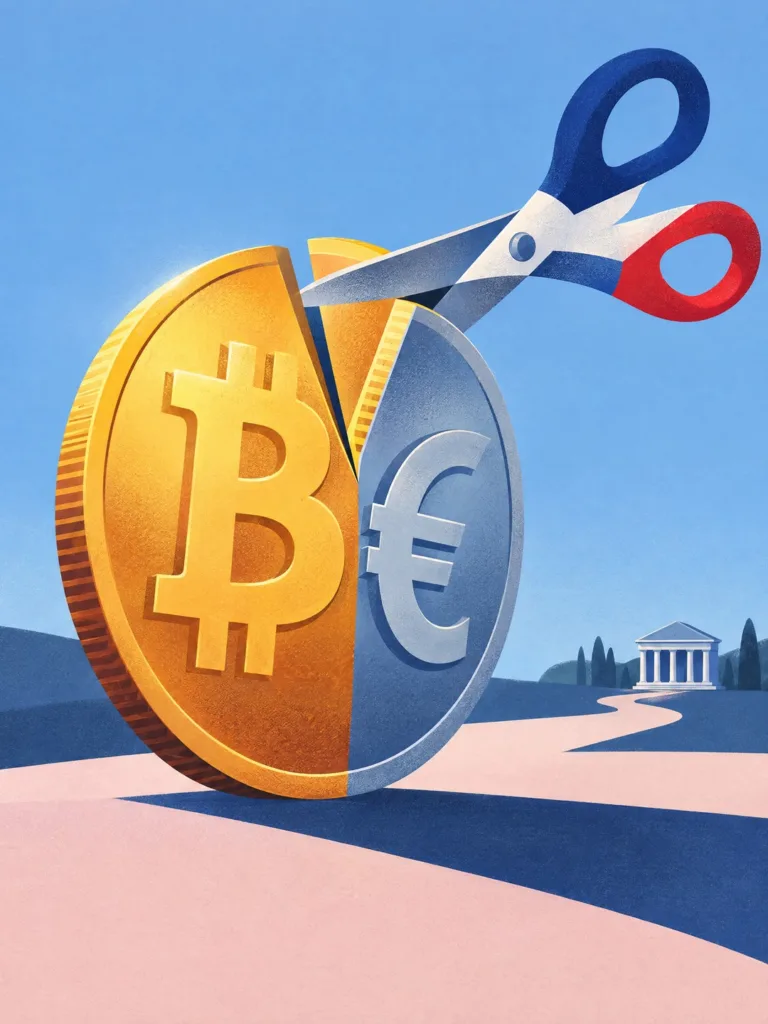
On Oct. 16, France's lower house, the National Assembly, passed a budget amendment by 38 votes to 37, a single vote, that would tax crypto the moment it is swapped into a stablecoin. It would apply to trades from Jan. 1, 2027, and gains would face the default 31.4% rate.
At first glance, this looks like "France raises crypto taxes again." But the rate is the one France already applies to investment income.
The real change lies elsewhere: the timing. Until now, a gain counted once the investor received cash. This amendment would count it as locked in the moment the investor moves into a coin whose value is fixed like cash.
- When does France tax crypto today?
Right now in France, swapping one cryptocurrency for another is not taxed as long as no euros change hands. The tax is put off and worked out when the investor sells for cash or buys something. This is called tax deferral.
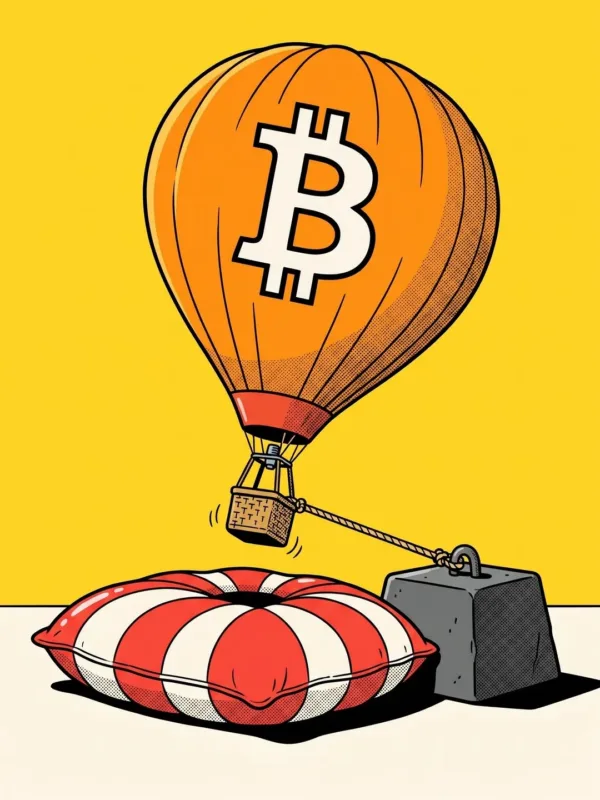
The problem is stablecoins, coins built to stay worth exactly one euro or one dollar. Someone who made money on bitcoin and swaps into a stablecoin no longer faces price swings, so in effect they are holding their gain as cash. Yet as long as they don't move it to a bank, the tax keeps getting pushed back.
It is like converting dollars you earned abroad into your home currency and leaving them in your bank account. You haven't spent them, but how much you made is already settled. The difference is that a stablecoin sits in a crypto wallet, not a bank account.
- Why treat a stablecoin swap as a sale?
Nicolas Sansu, a lawmaker from the left-leaning GDR group (Democratic and Republican Left) who led the amendment, argued that stablecoins are just an ordinary investment vehicle. He said that moving profits into stablecoins lets people avoid tax through a ‘legal loophole.’
So the target is narrow. The amendment covers swaps into e-money tokens as defined by MiCA, the EU's crypto rulebook, meaning stablecoins pegged to a single government currency such as the euro or the dollar. Not every crypto swap is covered.
Put simply, the test for taxing shifts from "did money land in a bank?" to "is the value now fixed like cash?"
- What does the 31.4% apply to?
The tax falls only on the gain, not on the whole amount swapped: the value of the stablecoins received minus what the investor paid for the coins given up. The 31.4% is France's default rate on investment income. It rose from 30% after France's 2026 social security financing law lifted social charges on capital income from 17.2% to 18.6%.
Say you bought bitcoin for KRW 10 million and swapped it into a stablecoin when it was worth KRW 15 million (a hypothetical, simplified to won). Today, there is no tax until you cash out. Under the amendment, the moment you swap, a gain of KRW 5 million is taxed at 31.4%, or about KRW 1.57 million.
The math changes too. Today the whole crypto portfolio is treated as one block when working out gains. Under the amendment, the purchase price of the coins sold counts, averaged if the same coin was bought more than once. If you bought one bitcoin for KRW 20 million and another for KRW 40 million, each would be treated as costing KRW 30 million.
- It passed by one vote, and the government is against it
Of the 100 deputies who took part, 38 voted for, 37 against and 25 abstained. Leaving out abstentions, 75 votes were cast, and 38 was exactly a majority.
Public Accounts Minister David Amiel asked for the amendment to be withdrawn. Stablecoins first need a legal definition, he argued, and the state must be able to trace how coins move within a portfolio. The finance committee's rapporteur general also favored keeping the current deferral, citing how much crypto prices swing.
There are also worries about where trading could go. Chainalysis's regional sales director for France said the levy could push traders toward DeFi (services that let people trade crypto directly without a bank), peer-to-peer deals and offshore exchanges outside international tax-reporting arrangements.
It is not law yet. It still has to clear the budget's remaining stages and could be changed or dropped along the way. As of reports on Oct. 20, the Assembly was due to vote on the full revenue section before sending the budget to the Senate.
- South Korea is set to treat even coin-to-coin swaps as gains from 2027
Under its current income tax law, South Korea is set to start taxing crypto gains on Jan. 1, 2027. Gains above a KRW 2.5 million basic deduction would be taxed at 22% (a 20% tax plus a 2% local income tax), and 2027 income would first be reported in May 2028.
As South Korea's tax rules have been explained, the line there is broader than in the French amendment. Swapping bitcoin for ether or for Tether, a dollar stablecoin, would also count as selling the original coin and locking in a gain. The calculation starts at the swap, even if nothing is turned into won.
The question France is fighting over by a single vote is when a gain counts as locked in. South Korea's tax law has already answered: at the swap. That law could still change in the National Assembly before it takes effect.
- BITPRESS Insight
The French amendment is about timing, not the rate. Once you move into a coin pegged to a government currency, you no longer carry price risk, so the argument is that the gain is already locked in at that moment.
If that logic takes hold, the plan of parking in a stablecoin now and paying tax later stops working. Moving into stablecoins to ride out a downturn becomes the start of the tax calculation itself. On the other hand, the government says such moves are hard to trace, and Chainalysis warns trading could shift to DeFi or offshore; that is the amendment's weak spot.
One rule of thumb: tax is worked out not on the day money lands in your bank, but on the day you lock in a gain by swapping into something whose value is fixed.
Sources
https://www.coindesk.com/policy/2026/10/20/france-s-parliament-approves-vote-to-hit-crypto-to-stablecoin-trades-with-31-levy
https://decrypt.co/381413/french-lawmakers-back-stablecoin-swap-tax-by-just-one-vote
https://www.ddaily.co.kr/page/view/2026080615003604537
Glossary
Stablecoin — A coin built to stay worth exactly one unit of a government currency such as the euro or the dollar.
Tax deferral — Letting a gain go untaxed for now and collecting the tax later, for example when the investor cashes out.
MiCA — The EU law that regulates issuing crypto assets and running crypto exchanges.
E-money token — A type of stablecoin defined by MiCA whose value is tied to a single government currency.
DeFi — Short for decentralized finance: software-run services for trading and lending crypto without a bank or exchange in the middle.
BITPRESS articles are information to help your investment decisions, not a recommendation to buy or sell any stock or coin. Investment decisions and their results are your own responsibility.