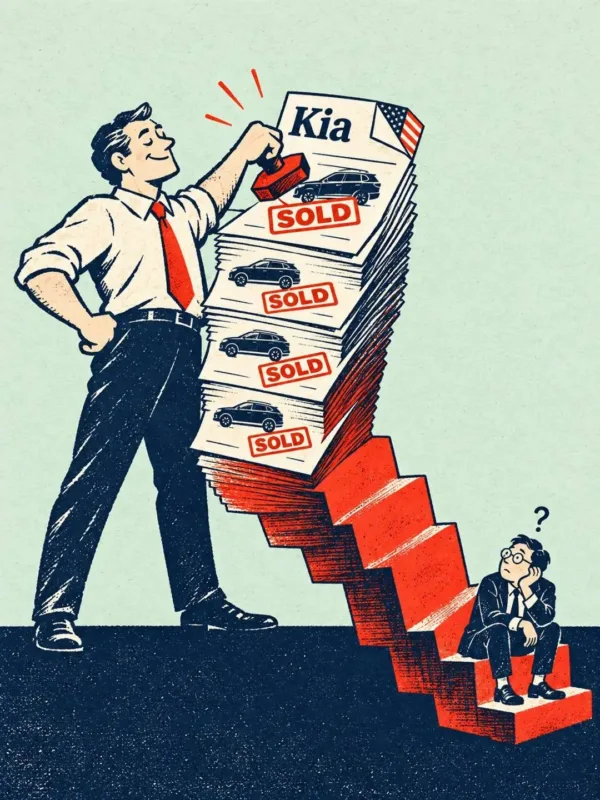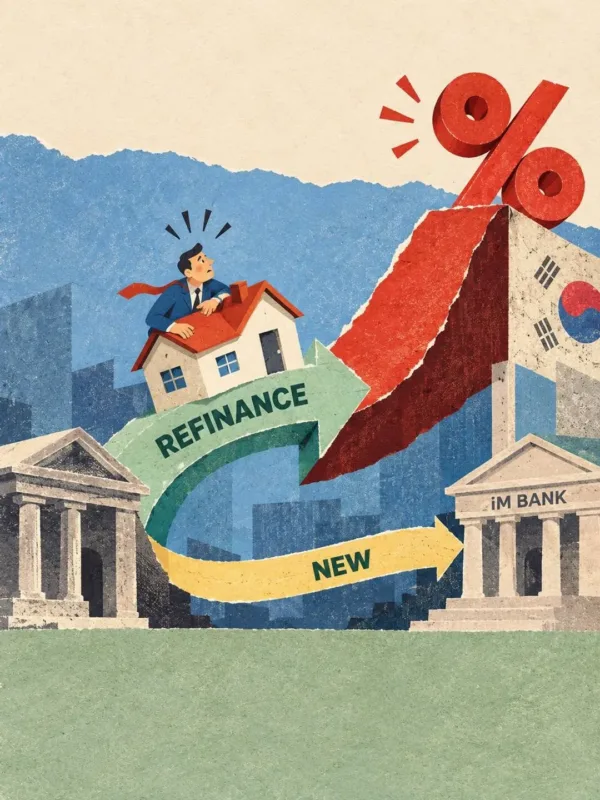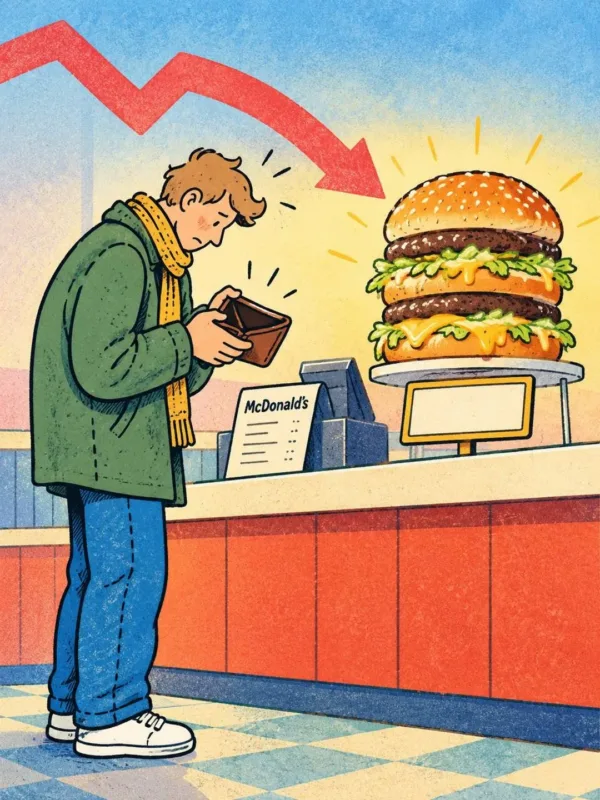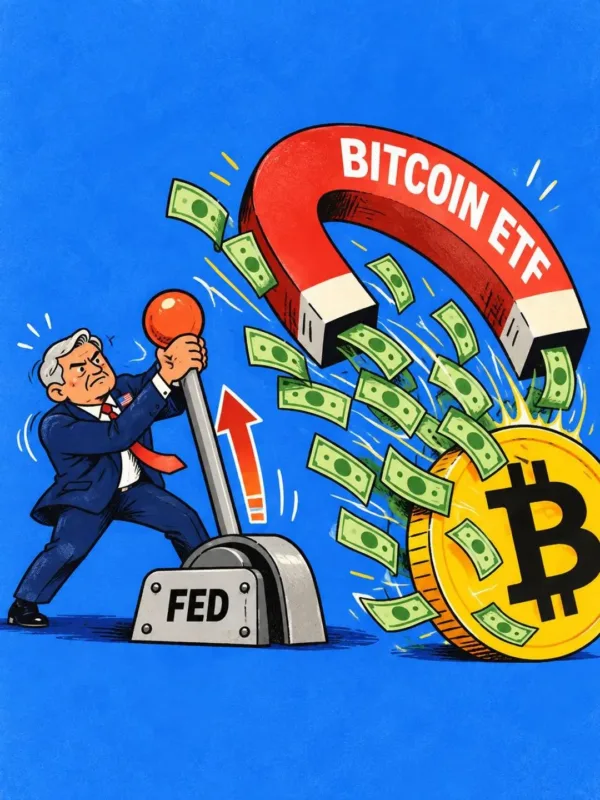
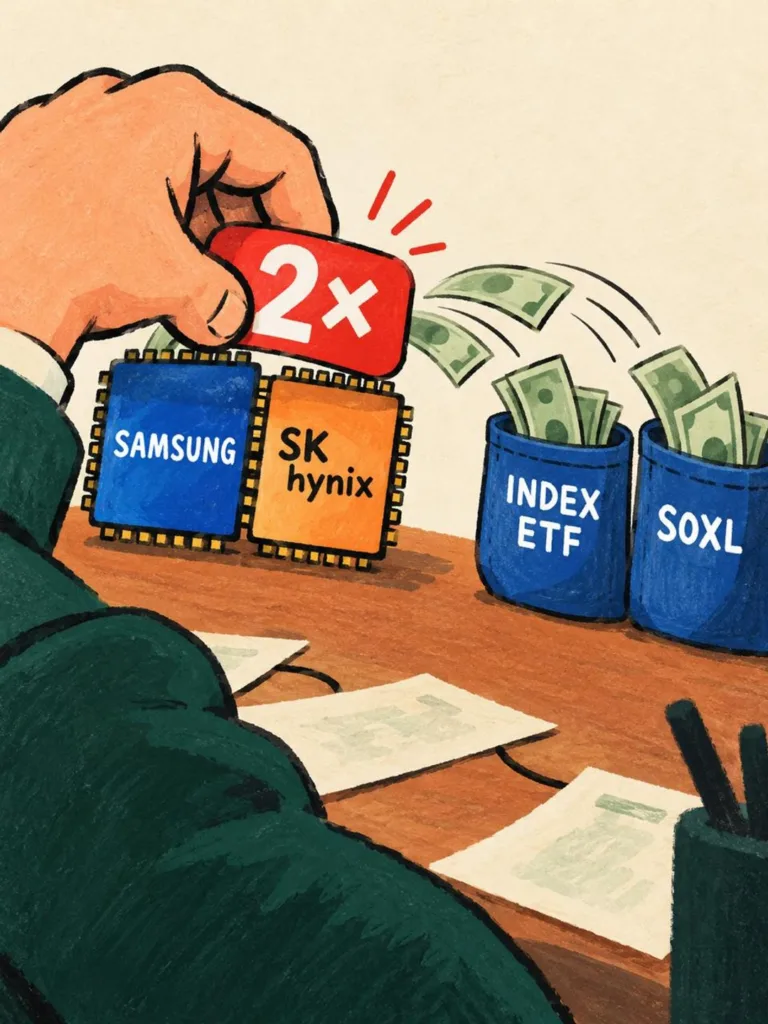
Trading in ETFs that move twice the daily change of Samsung Electronics or SK hynix shares fell to less than a tenth in a single month. Average daily trading in these 16 single-stock leveraged and inverse ETFs went from KRW 12.25 trillion in the month before the new rule to KRW 990 billion in the month after. That is a drop of about 92%.
On the numbers alone, it reads as "the 2x betting craze has cooled." But follow the money and a different picture appears. The risky bets did not disappear. They moved to similar products the rule doesn't reach, and to the U.S. market.
- Triple the entry bar, and trading grinds to a halt
From July 31, Korea's financial regulators raised the minimum deposit for these products (the money an individual must put in their account before buying for the first time) from KRW 10 million to KRW 30 million in cash. From Aug. 19, new individual buyers also had to complete at least five hours of simulated trading.
The effect was immediate. According to Korea Exchange data analyzed by the office of Kim Yong-man, a member of the National Assembly's Political Affairs Committee, daily trading in the 14 leveraged ETFs fell 91%, from KRW 8.64 trillion to KRW 800 billion. The two inverse 2x ETFs, which bet twice on a decline, fell 95%, from KRW 3.6 trillion to KRW 190 billion.
Turnover (daily trading as a share of the funds' total size) also dropped from 43.6% to 5.9%. Individuals had been net buyers for five straight weeks before the rule, then net sold KRW 1.0706 trillion on July 31 alone, the day it took effect.
- Why regulators went after these products first
A leveraged ETF tracks twice the daily return, not the long-term return. To keep that ratio, it buys more when the stock rises and sells more when it falls. In a volatile market, this trading can push prices further in the same direction and amplify swings.
Just before the rule, on July 28-29, the KOSPI triggered circuit breakers (a pause in trading during a sharp fall) two days in a row. Brokerages say the combination of that sell-off and the deposit rule quickly shrank individuals' high-leverage investing.
- Some of the money went to 'the whole market'
Part of the money individuals pulled from leverage went somewhere less risky. In the week of Aug. 4-10, individuals net sold KRW 1.2598 trillion of the 14 single-stock leveraged ETFs. The same week, they bought KRW 152.5 billion of TIGER US S&P500 and KRW 100.1 billion of KODEX 200.
Lee Sang-heon, an analyst at iM Securities, said part of the money moved into products that spread investments across a whole market, such as the S&P 500, KOSPI or KOSDAQ. That much is exactly what the rule intended.
- The rest moved next door, where the bar stayed low
The rule applied only to products that track a single stock at 2x. KODEX Semiconductor Leverage, which tracks the whole chip sector at 2x, still requires a deposit of only KRW 10 million. Yet in the index it follows, Samsung Electronics makes up 39% and SK hynix 23%. It lets investors make nearly the same bet with a lower bar.
"Unlike single-stock leveraged ETFs, trading in semiconductor leveraged ETFs has risen since the rule took effect, which suggests a balloon effect from the regulation," said Chung Hyun-jong, an analyst at Korea Investment & Securities. The balloon effect is what happens when squeezing one side makes the other side swell.
The U.S. market told the same story. From Aug. 1 to 18, leveraged products made up 43.4% of Korean investors' settlements in their top 50 U.S. stocks. Of that, SOXL, which tracks three times the daily move of the Philadelphia Semiconductor Index, accounted for $5.29833 billion, or 76.2%. Settlements in leveraged products rose 8.9% from the same period a year earlier.
- Money in 3x products moved in and out even faster
One analysis found that net buying of 3x products actually fell in the three weeks right after the rule. Individuals also net sold $1.1056 billion (about KRW 1.4938 trillion) of SOXL from Aug. 28 to Sept. 3. But from Sept. 14 to 17, they turned around and net bought KRW 1.1411 trillion.
Within three weeks, more than a trillion won flowed out once and flowed back in once. Because 3x products track three times the daily return, losses grow quickly when chip stocks swing hard.
- BITPRESS Insight
The 92% drop is a trading number for one type of product, not the total risk individuals carry. The demand to bet 2x on Samsung Electronics and SK hynix is still there, and part of it moved to a sector 2x product with a KRW 10 million bar and to a U.S. 3x product this deposit rule doesn't reach.
Kim Yong-man also said, "The fact that trading has fallen does not by itself mean investor protection is complete." The sector 2x product's bar of KRW 10 million is a third of the single-stock one, but 62% of what it holds is the same two companies. The names differ; the direction of the swings is nearly the same.
The rule of thumb fits in one line: when regulation blocks one product, the real report card is whether trading rose in unregulated products that sell the same risk.
Sources
https://www.hankyung.com/article/2026092774067
https://biz.heraldcorp.com/article/10885180
https://www.fnnews.com/news/202608111824071647
https://www.dt.co.kr/article/12077261
https://www.polinews.co.kr/news/articleView.html?idxno=740726
https://supple.kr/news/cmt3na2rp004aqrzurffortxo
https://www.wowtv.co.kr/NewsCenter/News/Read?articleId=A202609050289
https://www.g-enews.com/article/Securities/2026/09/202609191640596311e30fcb1ba8_1
https://www.sedaily.com/article/20070170
Glossary
Leveraged ETF — A listed fund built to track two or three times an asset's daily return. Because it resets the ratio every day, holding it for a long time gives results that differ from a simple multiple.
Inverse 2x — A product that bets twice on a decline, rising 2% when the underlying asset falls 1% in a day.
Minimum deposit — The minimum amount an individual must put in their account before buying a risky product for the first time.
Turnover — The share of a product's total size that is bought and sold in a day.
Balloon effect — When regulation squeezes one area, demand shifts to another area outside the rule, which then swells.
KOSPI — Korea's main stock index, made up of the largest companies listed in Seoul; KOSPI 200 tracks its top 200 stocks.
BITPRESS articles are information to help your investment decisions, not a recommendation to buy or sell any stock or coin. Investment decisions and their results are your own responsibility.