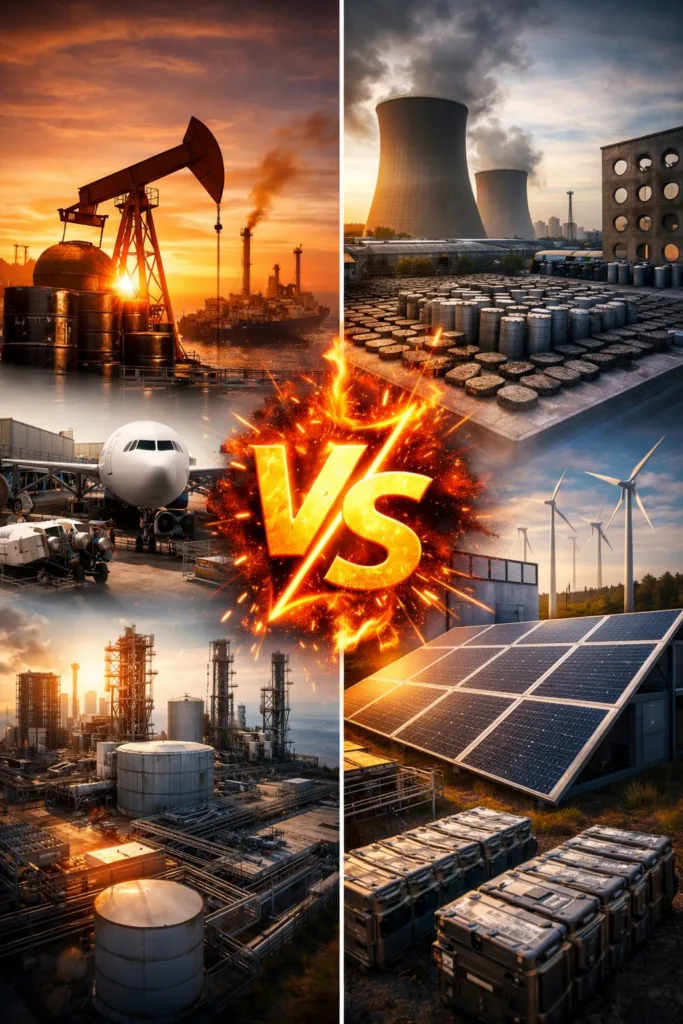
Scenario A: if the war is resolved – six sectors set to open a “golden age of peace”
1. Petrochemical beneficiaries: a plastics empire freed from the naphtha shock
Once the blockade of the Strait of Hormuz lifts, the petrochemical industry will be the first to breathe easier. Yeochun NCC has declared force majeure and cut operations to a minimum, and Lotte Chemical and LG Chem have notified customers of supply delays. With Korean petrochemical makers relying on imports for as much as 70% of their naphtha, there have even been warnings that this crisis could raise production costs by up to 11.8%.
Key beneficiaries:
- S-Oil (086790): Yuanta Securities said “the Hormuz blockade could turn out to be a blessing in disguise,” noting that the Shaheen project, due for completion in June, will start operating just as naphtha purchasing problems in Hormuz cause shortages of petrochemical products. If the war ends early, this ‘paradox of timing’ could actually work in its favor.
- Lotte Chemical (011170), LG Chem (051910), Hanwha Solutions (009830): naphtha prices stabilize and production of basic chemicals such as ethylene and propylene returns to normal
- Yeochun NCC (011790): after normal operations resume, output is expected to jump to meet pent-up demand
2. Shipping and logistics beneficiaries: from soaring freight rates back to normal
The Shanghai Containerized Freight Index (SCFI) has hit an eight-month high, and shipping costs to the Middle East are more than three times pre-conflict levels. Freight rates for VLCCs (very large crude carriers) have hit record highs.
Key beneficiaries:
- HMM (011200), Pan Ocean (028670): earnings improve as freight rates normalize and cargo volumes recover. Still, since they surged on war demand, there is a risk of a correction
- Korea Line (005880), Hyundai Glovis (086280): volumes secured as logistics through the Middle East resume
- Korean Air (003490), Asiana Airlines (020560): jet fuel costs stabilize and Middle East routes resume
3. Semiconductor beneficiaries: steadier helium supply and lower production costs
Helium, essential to semiconductor wafer processing, is a byproduct of LNG processing, and there were concerns about supply disruptions if the Strait of Hormuz were blockaded. If the war ends, stable helium prices are expected to lower chip production costs.
Key beneficiaries:
- Samsung Electronics (005930), SK hynix (000660): more stable production thanks to secure supplies of specialty gases such as helium
- Wonik IPS (240810), Tesna (131970): recovering demand for chip equipment
4. Auto and tire beneficiaries: plastic and synthetic rubber supply returns to normal
The auto and tire industries depend heavily on petrochemical products such as synthetic resins and synthetic rubber. With naphtha supply disrupted, production problems were unavoidable, from car interiors to tires.
Key beneficiaries:
- Hyundai Motor (005380), Kia (000270): production lines stabilize as parts supply normalizes
- Kumho Tire (073240), Nexen Tire (002350): margins improve as synthetic rubber prices stabilize
- Hyundai Mobis (012330): steadier supply of plastic parts
5. Food, beverage and retail beneficiaries: the packaging crisis eases
There were concerns that polyethylene, the raw material for packaging and containers for instant noodles, snacks, drinks and cosmetics, could become hard to source, so these companies benefit from stabilizing packaging prices if the war ends.
Key beneficiaries:
- Nongshim (004370), Ottogi (007310), CJ CheilJedang (097950): lower packaging costs
- Amorepacific (090430), LG H&H (051900): stable costs for cosmetics containers
- E-Mart (139480), CJ Logistics (000120): logistics costs return to normal
6. Defense and construction beneficiaries: shifting from war demand to ‘reconstruction demand’
Defense stocks, which jumped 30% in a single day after the war broke out and emerged as leaders of the fertilizer sector,will see a short-term correction if the war ends, but a new growth driver awaits in Middle East reconstruction demand.
Key beneficiaries:
- Hanwha Aerospace (012450), LIG Nex1 (079550), Korea Aerospace Industries (KAI, 047810): demand from Middle East reconstruction projects and defense cooperation
- Hyundai Rotem (079160), Hyosung Heavy Industries (298050): expected contracts for Middle East infrastructure reconstruction projects
- Samsung Engineering (028050), Hyundai Engineering (000720): restoration of Middle East plants and new investment
The Korea Institute for Industrial Economics and Trade advised that “once the Middle East crisis ends, stalled infrastructure projects are expected to resume and food-security investment to expand,” and that Korea should move early to secure opportunities for industrial cooperation in materials and construction.
Scenario B: if the war drags on – six sectors that still make money amid the “flames of hell”
1. Alternative energy beneficiaries: the hedge against oil finally pays off
As the Middle East war heightens worries about energy supply, expectations that the shift to renewables such as solar and wind will accelerate are stirring investor sentiment. But the market is colder than you might think. Why?
Key beneficiaries:
- Doosan Enerbility (034020), KEPCO KPS (051600): renewed focus on the stability of nuclear power and surging demand for SMRs (small modular reactors)
- HD Hyundai Electric (267260), LS Electric (010120): more investment in power infrastructure
- EcoPro (086520), LG Energy Solution (373220): after a short-term correction, an explosion in long-term demand for ESS (energy storage systems)
Caution: The EV demand slowdown is likely to continue, so rather than car batteries, focus on grid-scale ESS.
2. Fertilizer and agriculture beneficiaries: a new paradigm for food security
Disruptions in the supply of anhydrous ammonia (a natural gas-based fertilizer feedstock) could spill over into higher fertilizer prices and rising food costs. Some fertilizer stocks have already jumped 30% and emerged as sector leaders.
Key beneficiaries:
- NongHyup (holding company) and fertilizer-related stocks: benefit from higher prices for natural gas-based fertilizer
- Nongshim (004370), CJ CheilJedang (097950): able to pass on costs when food prices rise
- Kakao Enterprise (357390), Naver (035420): growing demand for smart farm and precision agriculture solutions
3. Defense beneficiaries: war demand extended
Since war broke out between the U.S. and Iran, defense stocks have stayed strong. President Trump signaled the war could drag on, saying “we expected it to take about four to five weeks from the start, but we have the ability to last far longer than that” and “we haven’t even started the full-scale attack yet”.
Key beneficiaries:
- Hanwha Aerospace (012450): expanding exports of guided weapons such as Cheongung-II
- LIG Nex1 (079550), Victek (065450): growing demand for precision-strike weapon systems
- Hyundai Rotem (079160), Hyosung Heavy Industries (298050): demand for ground equipment and ammunition
- Poongsan (103140): benefits as a supplier of ammunition raw material (copper)
4. Safe-haven and infrastructure beneficiaries: winners from uncertainty
Key beneficiaries:
- Gold and bond ETFs (KRX Gold Spot, KOSEF 10-Year Treasury): stronger preference for safe-haven assets amid uncertainty
- Data center REITs (MyData, Koramco): AI power demand continues, and digital infrastructure stays essential even in an energy crisis
- Protection and security stocks (Hancom With, Fasoo): rising demand for physical and cyber security
5. Alternative feedstock and circular economy beneficiaries: when crisis becomes opportunity
Naphtha supply disruptions drive demand for substitutes such as recycled plastics and bio-based chemical feedstocks.
Key beneficiaries:
- SK Chemicals (285130), LG Chem (051910): Faster investment in bioplastics and recycled materials
- Cosmo Advanced Materials (344820), Hyosung Advanced Materials (298050): Benefit from developing substitutes for synthetic fibers
6. US refining and chemical beneficiaries: the paradox of geopolitical risk
If the Strait of Hormuz stays blocked for a long time, US crude oil and naphtha become relatively more competitive.
Key beneficiaries:
- DL(001560): Holds US refining and chemical operations; benefits from rising US domestic demand if the Hormuz blockade drags on
- US energy ETFs (XLE, VDE): Benefit from higher prices for North American crude, which depends less on the Middle East
Between the "paradox of peace" and the "paradox of war"
The Iran war hands investors a dilemma. If the war ends quickly, traditional industries such as petrochemicals, shipping and autos recover, while defense and alternative energy correct. If the war drags on, defense and alternative energy stay strong, but the broader economy is bound to shrink.
Key investment strategy:Table
| Investment horizon | Recommended beneficiary sectors | Core strategy |
|---|---|---|
| Short term (1-3 months) | Defense, fertilizers, energy infrastructure | Focus on the wartime boom |
| Medium term (3-6 months) | Petrochemicals, shipping, autos | Rotate in line with the end of the war |
| Long term (6+ months) | Construction, materials, defense | Get ahead of Middle East reconstruction demand |
The market is not simple. The end of the war will not solve everything, and a longer war will not ruin everything. Keep in mind that once the Middle East crisis is over, suspended infrastructure projects are expected to restart and investment in food security is expected to grow. The real winners are companies that make money both during war and in peace.
"When peace comes, buy petrochemicals; if the war drags on, buy defense and alternative energy. And always prepare for reconstruction."
BITPRESS Insight
The Iran war is not just a geopolitical clash. It is a 'structural crisis' that exposed how fragile the naphtha supply chain is, and a 'catalyst' that will step on the accelerator of the energy transition. The market does not move in simple ways. Not every stock rises when the war ends, and not every stock falls when it drags on. The real winners are investors who read the 'paradox of timing.' S-Oil shows a textbook case of 'crisis turning into opportunity' by starting up its Shaheen project just as the Hormuz blockade lifts. Middle East reconstruction demand is a 'second war boom' that only begins once the war ends. Investors should hold both 'wartime beneficiaries' and 'post-peace beneficiaries' in their portfolios now.