- Why did decentralized exchanges come about?
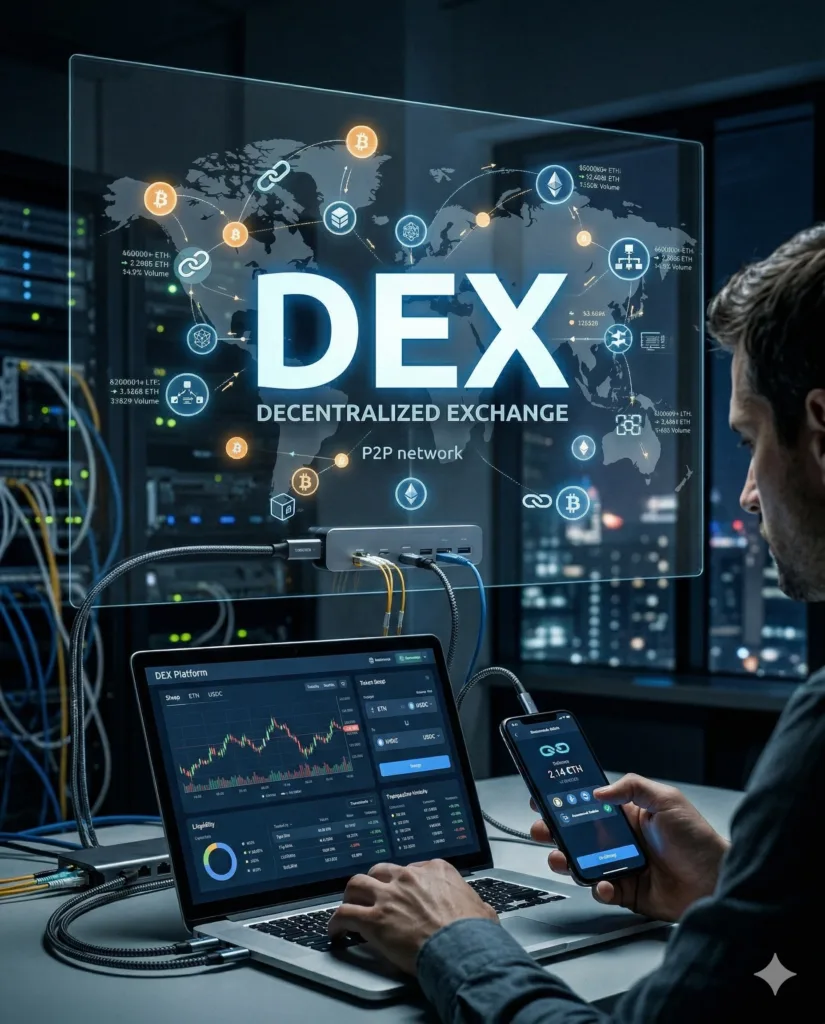
DEX = Decentralized Exchange
CEX = Centralized Exchange
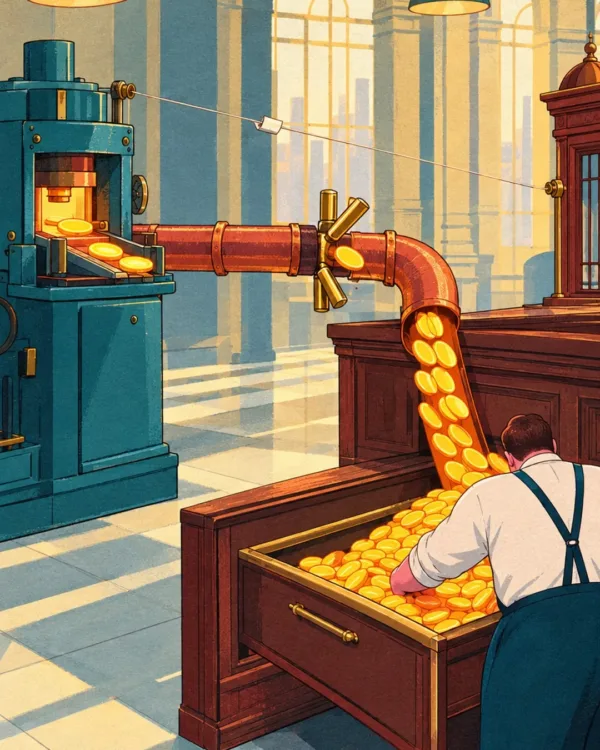
Centralized exchanges like Upbit, Binance and Coinbase already exist, so why did decentralized exchanges, or DEXs, emerge separately? The reason is clear. People wanted to trade, but they were always uneasy about handing all their assets over to an exchange company.
Centralized exchanges are convenient. You create an account, verify your identity, deposit money and start trading right away. In exchange, your coins go into the exchange’s system. With a decentralized exchange, by contrast, you usually connect your own wallet and sign trades yourself. Put simply, if a centralized exchange is “a place where you deposit money and trade,” a decentralized exchange is closer to “a place you walk into carrying your own wallet to trade.”
- How is it different from a centralized exchange?
The biggest difference is who holds the assets. On a centralized exchange, the exchange keeps custody of customer assets; on a decentralized exchange, users manage their own wallets and private keys.
Access works differently too. Centralized exchanges require sign-up and KYC by default, while decentralized exchanges can usually be accessed just by connecting a wallet. That makes DEXs freer and more open, but it also shifts more responsibility onto the user.
Trading works differently as well. On a centralized exchange, trades are matched in the exchange’s internal ledger and order system. On a decentralized exchange, trades are executed through smart contracts (note 1), often by swapping against a liquidity pool (note 2). Lately, though, DEXs offering futures and order books have been growing alongside spot swaps, so seeing DEXs as simple coin-swap counters means understanding only half of today’s market.
Note 1 Smart contract: a programmable contract that runs automatically on a blockchain.
Note 2 Liquidity pool: a pool of funds for trading, made up of two or more tokens deposited in advance.
- If you sell Bitcoin, do you get dollars?
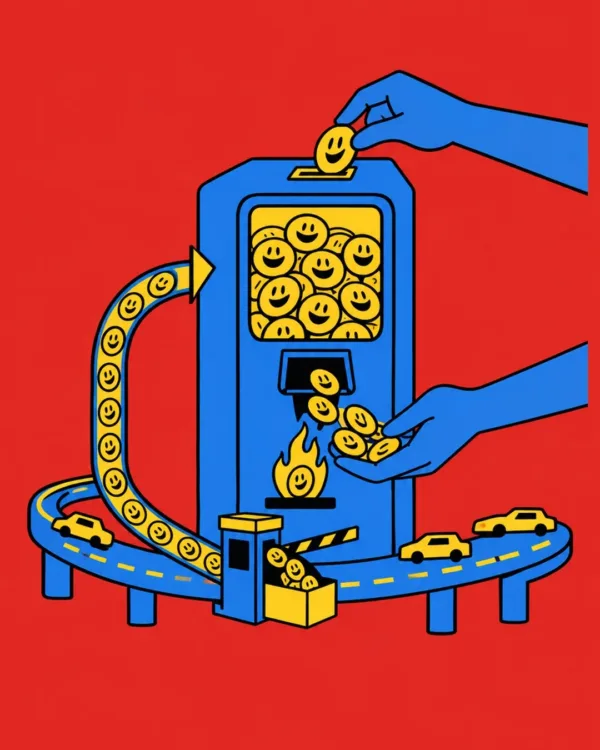
This is where beginners get confused most often. Selling Bitcoin on a decentralized exchange doesn’t put real dollars into your bank account right away. Usually it turns into a stablecoin (note 3) such as USDT or USDC. In other words, you often receive not dollars themselves but a blockchain asset designed to work like dollars.
For example, if you sell BTC and receive USDC, you have swapped it for an asset that plays the role of the dollar on the blockchain. You can then move it to a centralized exchange or a payment service to cash out. So selling on a DEX is often closer to “converting into another digital asset” than to “cashing out.”
Note 3 Stablecoin: a cryptocurrency designed to track the value of a fiat currency such as the dollar.
- Why people turn to DEXs
The biggest advantage is self-custody. Even if an exchange halts withdrawals, goes bankrupt or runs into internal trouble, in principle it isn’t holding the assets in your wallet. That is why DEXs are seen as the way of trading closest to the philosophy of “I hold my own assets.”
Censorship resistance is another advantage. It is a far cry from a setup where a particular company can freeze your account or block access citing a review. As long as you have a wallet, you can get in relatively freely.
Transparency is a strength too. Because the trade execution structure and the flow of funds are recorded on the blockchain, it is at least different from a setup where “you have no idea what happens inside the exchange’s internal ledger.” Of course, that doesn’t mean all risk disappears.
- So why is it still risky?
Here is the key point: “not entrusting assets to a central party” and “safe” are not the same thing.
The main DEX risks are, first, phishing sites. If you connect your wallet to a fake site that looks like the real exchange, your assets can be drained. Second, excessive approvals. If you grant far broader token-spending permissions than needed, those permissions can be abused later. Third, smart contract vulnerabilities. Flaws in the code can lead to hacks or funds leaking out.
There are also practical risks. Trading large amounts of a thinly traded token can widen slippage (note 4), so your order may fill at a much worse price than you expected. And unlike a centralized exchange, it is practically very hard to reverse a trade or undo a mistake by contacting customer support. You get more freedom, but responsibility for mistakes falls almost entirely on you.
Note 4 Slippage: the price difference between the moment you place an order and the moment it actually fills, or an order filling at a worse price than expected because of thin liquidity.
- Decentralized exchanges are connected to each other too
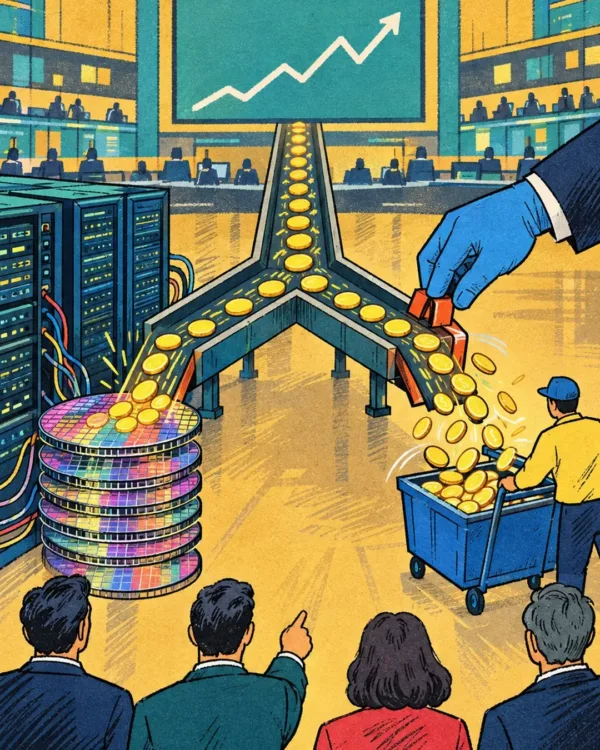
DEXs aren’t isolated islands. A user hits “trade” on a single screen, but behind the scenes the order is often routed along the most favorable path after comparing liquidity across several decentralized exchanges. So rather than DEXs trading directly with each other like people, it is closer to a structure in which liquidity from several exchanges is used together for a single order.
That is why prices stay closely linked even though the market is fragmented. If one venue is unusually cheap or expensive, other market participants quickly close the gap.
- Why is Bitcoin’s price bound to be similar around the world?
Bitcoin doesn’t have a separate price for Korea and another for the U.S. It trades on many exchanges around the world at the same time, and when price gaps widen, arbitrage (note 5) traders move in right away.
For example, if Bitcoin is cheaper on one exchange, traders buy there and sell where it is more expensive. In the process, buying piles into the cheaper venue and pushes its price up, while selling piles into the pricier venue and pushes its price down. The gap shrinks quickly. Prices in decentralized exchanges’ liquidity pools are also kept in line with global prices through this kind of arbitrage.
They don’t become completely identical, though. Temporary price gaps can open up because of country-specific rules on moving money, currency conversion structures, taxes, deposit and withdrawal delays, or a particular exchange’s won or dollar liquidity. The ‘kimchi premium’ in the Korean market is one such exception. But large gaps rarely last long, because arbitrage traders keep narrowing them.
Note 5 Arbitrage: trading that profits from price differences in the same asset by buying where it is cheap and selling where it is expensive.
- So which exchange is better?
There’s no single right answer. For beginners and everyday investors, centralized exchanges are still far more convenient, with clear strengths in won deposits and withdrawals, customer support, usability and speed.
Decentralized exchanges, on the other hand, appeal more to people who want to control their own assets, access more open markets, or use on-chain financial services directly.
Put simply, a centralized exchange is “an exchange like a banking app,” and a decentralized exchange is “an exchange where you carry the key to your own vault.” It is freer, but you need to know more, and the consequences of mistakes fall more heavily on you.
BITPRESS Insight
The essence of a decentralized exchange isn’t simply “an exchange without a middleman.” More precisely, it is “an exchange that gives up some convenience and protection in return for handing control of assets to the user.” That is why the heart of this market is not the technology but the structure of responsibility.
In the end, investors need to understand four things: who holds my money, what it turns into when I sell, why prices end up similar around the globe, and who is responsible when something goes wrong. Understanding just these four is enough for DEXs to stop looking like a strange concept and start looking like another financial tool that sits alongside centralized exchanges.
Source links
Binance Academy
https://www.binance.com/en/academy/articles/what-is-a-decentralized-exchange-dex
Coinbase Learn
https://www.coinbase.com/learn/wallet/how-to-revoke-dapp-connections-coinbase-wallet
Uniswap Docs
https://docs.uniswap.org/concepts/uniswap-protocol
Uniswap Support
https://support.uniswap.org/hc/en-us/articles/8120520483085-What-is-an-approval-transaction
1inch Help Center
https://help.1inch.com/en/articles/6200682-why-is-using-1inch-better-than-a-dex-like-uniswap-or-pancakeswap
SEC
https://www.sec.gov/newsroom/speeches-statements/cf-crypto-asset-exchange-traded-products-070125