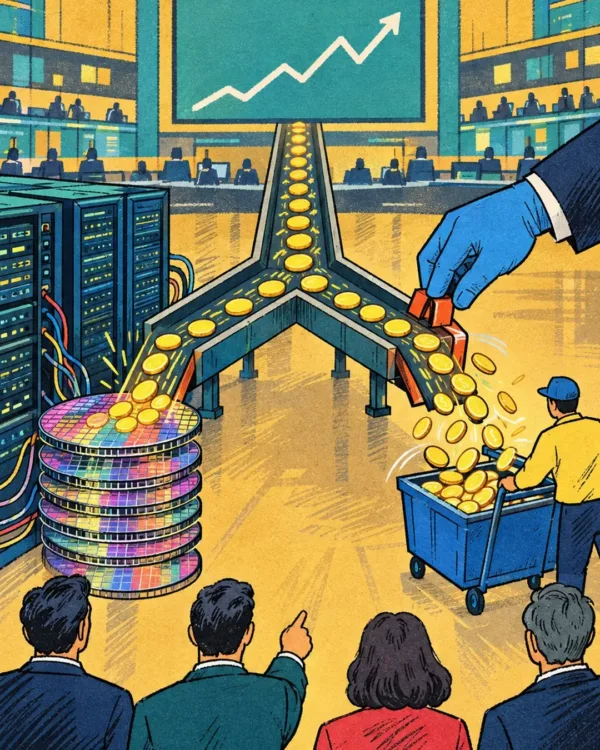
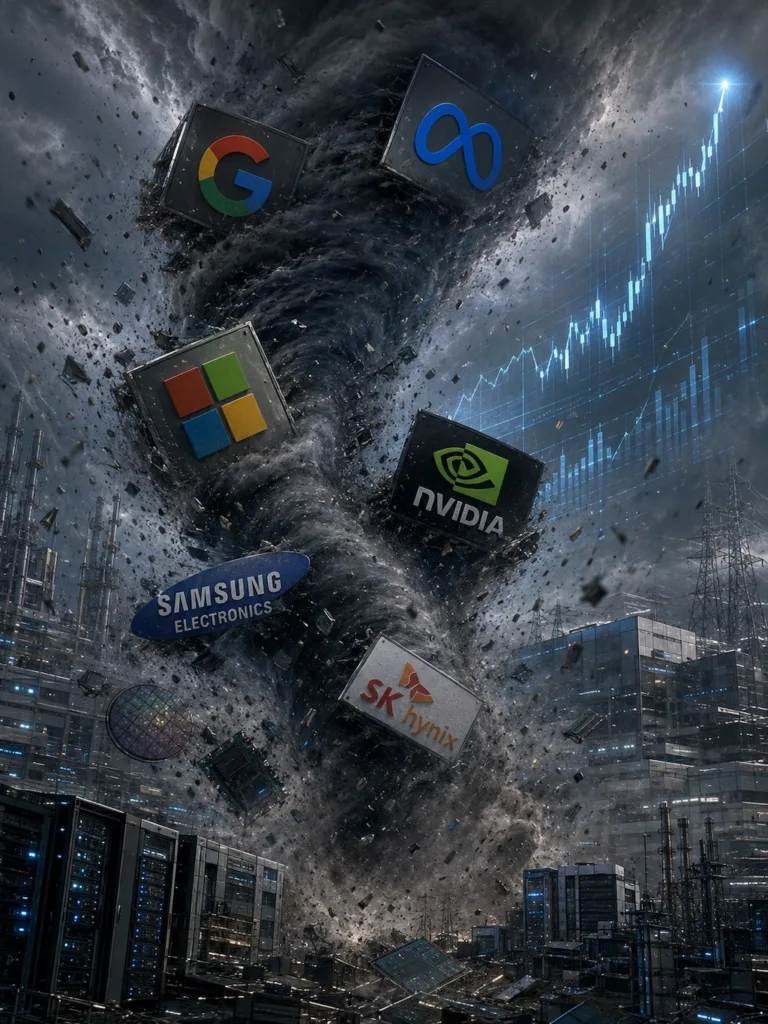
AI stocks have already risen a lot. From Nvidia, Broadcom, TSMC and SK hynix to Microsoft, Google and Meta, the market has spent the past few years quickly pricing in AI expectations.
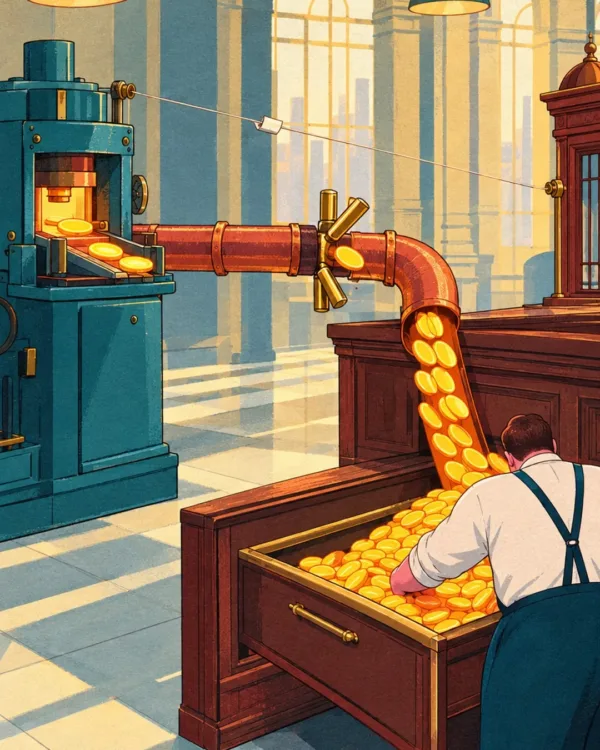
But something is odd. If this really were the tail end, the companies with the most information should be the first to cut back on investment. What is happening is the opposite. Big Tech companies such as Google, Meta, Microsoft and Amazon are still spending enormous sums on AI data centers, GPUs, in-house AI chips, network equipment and power infrastructure.
The message is simple. Share prices have already climbed a lot, but the real demand for AI infrastructure that these companies see is not over yet.
- The numbers speak first
Nvidia’s stock rose tenfold in two years. Google, Meta and Microsoft are hitting record market caps. At this point, it is natural to wonder, “Hasn’t it all gone up already?” But the story changes when you look at where these companies are actually spending their money.
Combined 2026 capital expenditures (CapEx) at Amazon, Google, Meta and Microsoft are expected to exceed $470 billion, roughly equal to Singapore’s annual GDP. Even as some say their stocks have run as far as they can, these companies are doubling and tripling their investment. M-joongang
So where does the market this investment is aimed at end up?
- How much bigger the market gets: the numbers from research firms
★ Note: CapEx (capital expenditure) — money a company spends to acquire long-term assets. Companies rarely increase it without confidence in future returns.
These are not subjective optimism but forecasts from established research firms. According to market research firm Statista Market Insights, the global AI market is expected to grow from $255 billion in 2025 to $1.219 trillion in 2030, about 4.8 times larger in five years. That is a compound annual growth rate of 36.7%. ET News
PwC forecasts that AI could contribute up to $15.7 trillion to global GDP by 2030, a figure equal to 60% of current U.S. GDP. McKinsey likewise expects AI infrastructure spending to grow to $7 trillion, and global data center investment is expected to reach $652 billion by 2030. GeniusAiTechIrobotnews
IDC expects AI-related spending to reach $632 billion in 2028, growing at an average annual rate of 29%. Within that, AI software will grow faster, at 33.9% a year. CIO
The world’s largest investment banks, consulting firms and research firms are all pointing in the same direction. Today’s stock gains reflect only the entrance to this market.
- What do they know?
Stock prices reflect future expectations, but CapEx is money actually going out the door. When a company commits real funds on a large scale, it is read as a sign that it is confident internally about recouping the investment.
Alphabet (Google) raised its 2026 CapEx guidance to $180 billion to $190 billion, and its CFO signaled that spending will rise ‘significantly’ further in 2027. Meta set its 2026 CapEx guidance at $115 billion to $135 billion, nearly double its actual 2025 spending. NewsspaceNewsspace
They are betting with money, not words. The fact that the people who best understand the market outlook are speeding up at this very moment cannot simply be dismissed.
- The decisive difference from the dot-com bubble
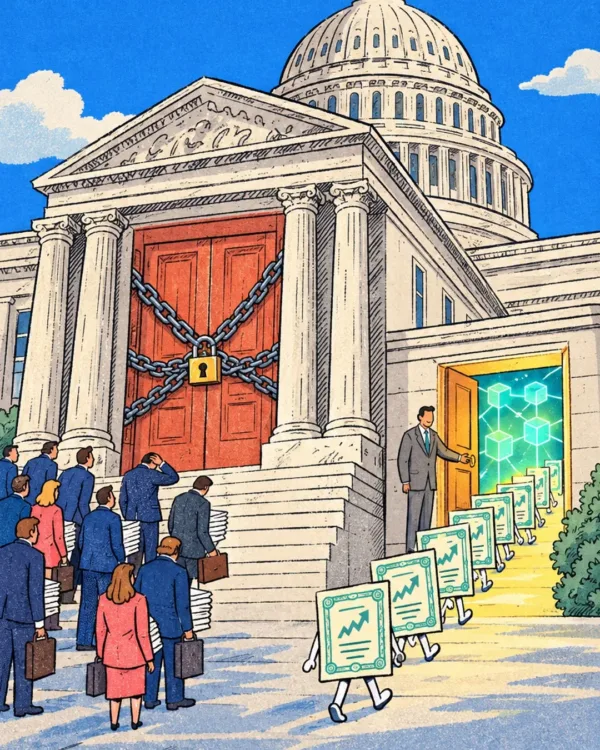
In 1999, the claim that “the internet will change the world” was not wrong either. But what propped up stock prices then was expectation, not earnings. Clicks were the yardstick of corporate value, and companies with no revenue were given market caps in the billions of dollars. In the end, a single round of Fed rate hikes sent the Nasdaq down nearly 80% from its peak.
Today is different. This rally stands apart from the past because it is backed by earnings, not just expectations. Meta keeps its operating margin in the 30% range by making its ads more efficient through AI recommendation systems. Fed Chair Jerome Powell also said, “The dot-com era was about ideas, but now companies with earnings and substance are being valued.” InvestnewsNewsspace
An era when companies sold only dreams without earnings is structurally different from today, when companies that actually make money are betting on infrastructure.
- Why the supercycle is only beginning
★ Note: Supercycle — a long growth phase in which demand for a particular industry expands structurally over years or even decades.
In early 2025, experts forecast CapEx growth of 10–20%, but it actually ended the year at 65%. Growth in 2026 is expected to be around 74%. In other words, it keeps beating market forecasts. Samsungactive
Goldman Sachs estimates that cumulative capital spending by the four biggest hyperscalers will total $5.3 trillion from 2025 to 2030, and expects investment covering computing, data centers and power to reach $7.6 trillion from 2026 to 2031. Of that, 75% will go directly into AI infrastructure. Newspim
Google’s monthly token processing volume has increased more than 100-fold since April 2024, and as AI agent services gain prominence, demand for inference is accelerating further. Handling this demand will require far more GPUs, data centers and power grid capacity than exist today. Samsungactive
★ Note: Inference — the process in which an AI model, after training, answers real questions or generates results. As AI use grows, the computing demand for inference surges along with it.
- There are risks, but
There are, of course, warnings. Morgan Stanley projects that the CapEx-to-revenue ratio of the five biggest hyperscalers will climb to 36% in 2026, 44% in 2027 and 45% in 2028, warning that the AI infrastructure investment cycle has entered overheated territory. Newsspace
When investment runs ahead of revenue, stock prices can be volatile. But that does not mean the cycle is over. Physical constraints in power grids, copper and chip supply chains are actually deepening the supply shortage, and that demand is not going away.
Amazon, which fell as much as 95% during the dot-com bubble, went on to rise more than 60,000%. A cycle built on real innovation grows bigger by absorbing its corrections.
BITPRESS Insight
The essence of this AI supercycle is not the level of stock prices but the direction and scale of investment. PwC forecasts that AI will contribute $15.7 trillion to global GDP by 2030, and Statista expects the AI market to grow 36.7% a year through 2030, becoming five times larger than today. The decisive difference from the dot-com bubble is that earnings are coming along this time. Short-term volatility and valuation pressure are certainly real. To treat the supercycle as an investment opportunity, you need a view that covers the entire infrastructure supply chain: not only GPU makers but also companies that supply power, build cooling systems, lay networks and assemble servers.
Sources
Statista Market Insights — Global AI market size outlook
https://www.etnews.com/20251223000103
GeniusAiTech — AI statistics compiled from PwC, McKinsey, IDC and others
https://geniusaitech.com/ai-statistics-2025/
iRobot News — Report on Forbes’ 2026 AI outlook
https://www.irobotnews.com/news/articleView.html?idxno=44256
CIO Korea — IDC worldwide AI spending forecast report
https://www.cio.com/article/3537508
Monthly JoongAng — Analysis of Big Tech AI investment and profit structure
https://www.m-joongang.com/news/articleView.html?idxno=402152
Samsung Asset Management KoAct Insight — Analysis of AI CapEx momentum
https://www.samsungactive.co.kr/insight/koactinsight/koactview-view.do?seqn=235
Newsspace — Alphabet’s CapEx increase and market cap analysis
https://www.newsspace.kr/news/article.html?no=13681
Newsspace — Morgan Stanley warns of overheating in AI capital spending
https://www.newsspace.kr/news/article.html?no=14294
Newspim — Diagnosing the turning point of the AI chip supercycle
https://www.newspim.com/news/view/20260609000883
Investnews — Comparing the dot-com bubble and an AI bubble
https://www.investnews.co.kr/news/articleView.html?idxno=3002057
Newsspace — Powell: “AI investment is not a dot-com bubble”
https://www.newsspace.kr/news/article.html?no=10415