



The COFIX based on new deposits for September was 3.43% a year, up 0.25 percentage points in a month. A forecast (Woori Financial Research Institute) also said the Bank of Korea will raise its base rate another 0.25 percentage points, from 3.00% to 3.25%, at its Monetary Policy Board meeting on the 26th. The hike has not been decided yet.
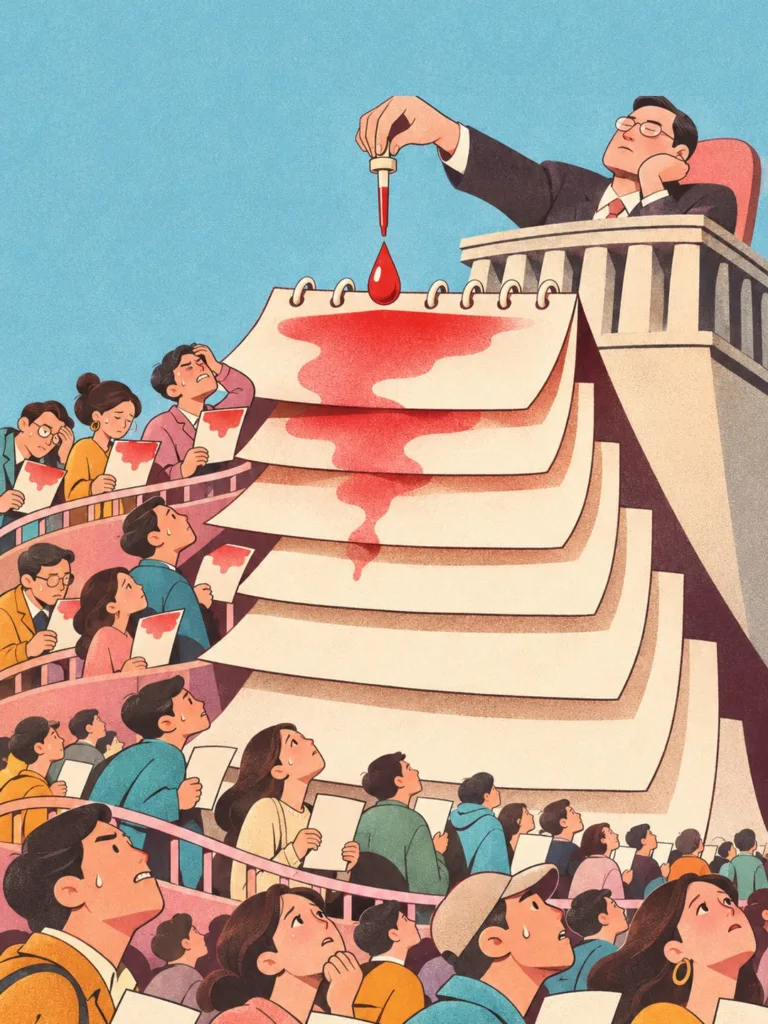
When news like this comes out, people often take it to mean “my loan interest goes up next month.” A higher base rate does mean money costs banks more to raise, and that cost does eventually pass through to loan rates. But the key point is elsewhere. That cost has to clear two gates before it leaves your bank account, and each loan clears them on a different day.
- Why don't variable-rate mortgages follow the base rate right away?
A variable-rate mortgage is priced not off the base rate but off COFIX (the average rate of what it costs banks to raise money) plus the bank's own markup, called a spread. COFIX is the weighted average rate on the funds that eight Korean banks raise through deposits, savings accounts and bank bonds.
Think of a supermarket whose shelf prices follow the average price it paid for its stock, not the farm price. On the day farm prices rise, the goods already in the warehouse still cost the same. And a bank's ‘warehouse’ is replaced only a little at a time each month with new deposits and bank bonds, so it takes time for a base rate hike to show up in COFIX.
- Even in the month the base rate rose, COFIX stayed the same
The Bank of Korea raised its base rate in both July and August. Yet the August COFIX based on new deposits was 3.18% a year, the same as in July. It only rose 0.25 percentage points, to 3.43%, in September. The September COFIX was announced in mid-October, and banks applied it to new loans from the 16th.
In short, COFIX moved after the base rate rose, and it took more than a month for that number to be announced.
- Even the same COFIX moves at different speeds depending on what your loan is tied to
There is more than one COFIX. The new-deposits version counts only the money raised that month, so changes in market rates show up quickly. The outstanding-balance and new-balance versions also include money raised earlier, so changes are more gradual.
The September figures show this. The new-deposits COFIX rose 0.25 percentage points, but the outstanding-balance version rose only 0.10 percentage points to 3.15%, and the new-balance version only 0.08 percentage points to 2.79%. It means that even if you borrowed from the same bank on the same day, a loan tied to the new-deposits COFIX, meaning one whose rate is set off that COFIX, feels a rate hike sooner and by more.
- The last gate is your loan's rate reset date
When COFIX rises, rates on existing loans do not change that day. The higher COFIX is applied loan by loan as each one's reset date arrives. For example, the variable rate on KB Kookmin Bank's mortgages linked to the new-deposits COFIX resets every six months.
Even among six-month variable loans, someone whose reset date is in December and someone whose reset date is in May receive the higher COFIX five months apart (an assumption). At last month's parliamentary audit, the head of the Financial Services Commission was told, “About KRW 165 trillion in mortgages are due for a rate adjustment in the fourth quarter this year, so countermeasures are needed.” Fixed-rate loans made up 34.2% of the mortgages newly issued in September.
- How much more a month will an extra 0.25 percentage points cost?
Suppose you borrowed KRW 300 million over 30 years with equal principal-and-interest payments, and the rate rises from 5.00% to 5.25%. The monthly payment would go from about KRW 1.61 million to about KRW 1.657 million, an increase of roughly KRW 46,000 (an illustrative calculation).
That is about the same as a phone bill rising by KRW 46,000 a month. But this money starts leaving your account not on the day the base rate is announced but from your own loan's rate reset date, and depending on which COFIX your loan is tied to, the increase could be smaller than 0.25 percentage points.
- BITPRESS Insight
A base rate hike is not a bill that arrives on the same day for every borrower. It crosses three steps: the base rate, then the banks' funding cost (COFIX), then your loan's rate reset date, and each step takes weeks to months. So even after reading the same news on the 26th, some people pay more interest at the end of the year and others not until next spring.
This lag does not let you avoid the interest, but it gives you time to work out when you will start paying and how much more. On the other hand, a loan tied to the new-deposits COFIX whose reset date is coming up soon takes the hike first and by the most.
In rate hike news, what matters is less ‘how much the Bank of Korea raised rates’ than ‘which COFIX my loan is tied to and when my next reset date is.’
Sources
https://www.getnews.co.kr/news/articleView.html?idxno=886539
https://edaily.co.kr/News/Read?mediaCodeNo=257&newsId=04490326645644080
https://news.bizwatch.co.kr/article/finance/2026/10/16/0001
https://economist.co.kr/article/view/ecn202609150039
Glossary
COFIX — The average rate on funds that eight Korean banks raise through deposits, savings accounts, bank bonds and the like. It is the benchmark for variable-rate mortgages.
New-deposits COFIX — A COFIX calculated only from funds raised that month, so changes in market rates show up quickly.
Outstanding-balance and new-balance COFIX — A COFIX calculated to include funds raised earlier, so changes in rates show up gradually.
Rate reset date — The day a variable-rate loan's rate is reset to the new COFIX. Some products reset every six months.
Equal principal-and-interest repayment — A repayment method that splits the combined principal and interest into equal amounts each month.
BITPRESS articles are information to help your investment decisions, not a recommendation to buy or sell any stock or coin. Investment decisions and their results are your own responsibility.





