



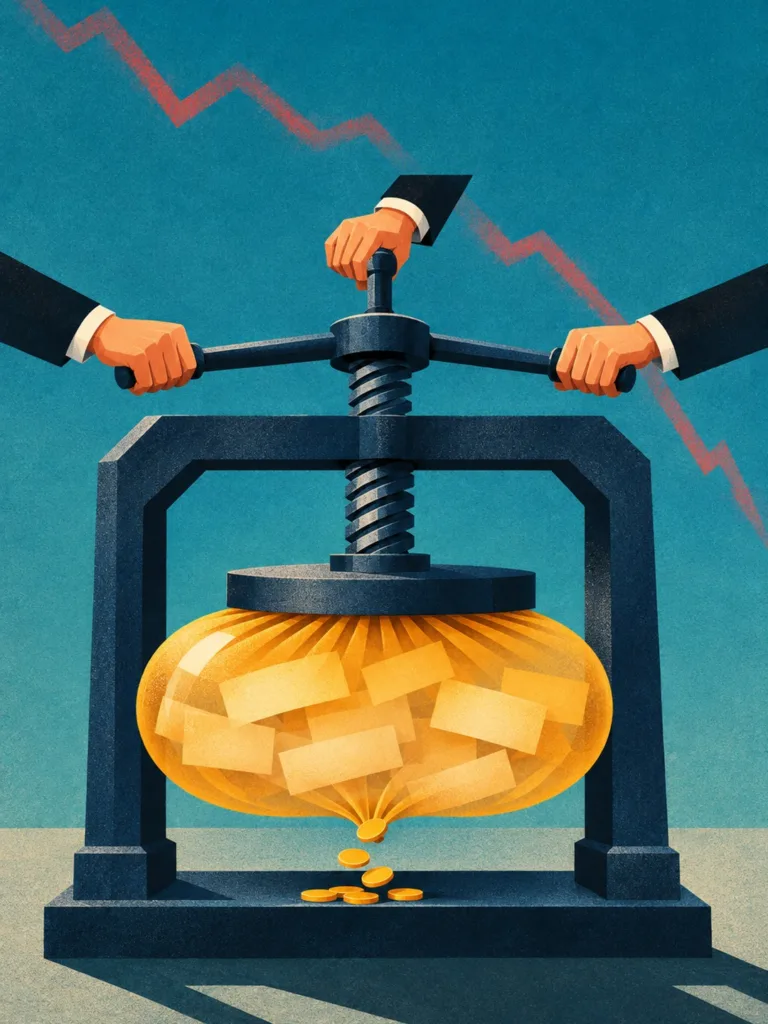
On Nov. 5, the US Nasdaq index fell 5.5% in a single day. Nvidia dropped 9.3% and AMD 17.3%. The reason cited was concern that AI investment could slow as borrowing to build more data centers gets more expensive.
Around the same time, Anthropic (the US company that makes the conversational AI ‘Claude’) is going through the process of listing on the Nasdaq. The common reading is that Anthropic is pushing ahead with its listing at the valuation it wants.
But the key point is elsewhere. The IPO price (the price of the shares first sold when a company goes public) is not set by the company alone. The underwriters collect the orders institutional investors submit, and the company and underwriters set the price taking institutional demand and market conditions into account. So the interpretation is that when the AI stocks institutions hold fall in value, the effect can reach Anthropic's IPO price through those institutional orders.
- Who sets the IPO price, and how?
Just before listing, the company and its underwriters (the brokerage that handles the listing process and sells the shares) put out a target price range. Institutional investors look at that range and place orders saying, “At this price, we would buy this many shares.” In Korea this process is called demand forecasting, and in the US the same thing happens during the roadshow (the period when the company tours institutional investors, explains its business and takes orders).
The underwriters tally the orders by price. If many orders are at high prices, the IPO price lands at the top of the range, and if few are, at the bottom. The company and underwriters then look at those results together with stock market conditions and set the final IPO price.
Think of listing something on a secondhand marketplace: if you set a high asking price and no one gets in touch, you lower it.
- Why is Anthropic's IPO price being tested now?
Anthropic filed its registration statement (the S-1, the listing document submitted to the US Securities and Exchange Commission) on Oct. 26. The amended filing it submitted on Nov. 2 also left the price range blank.
Under US rules, a company that went through confidential review can hold a roadshow only 15 days after making its filing public. If that rule applies to Anthropic, the waiting period is interpreted as ending around Nov. 10, 15 days after the filing date. According to a Nov. 4 report, Anthropic aims to start its roadshow as early as this month and list the week before Thanksgiving (Nov. 26), and plans to disclose the number of shares to be sold and the price range at the roadshow.
- How could a plunge in AI stocks reach the IPO price?
On Nov. 5, the S&P 500 fell 4.4% and the Nasdaq fell 5.5%. The Nasdaq closed 11.9% below the record high it set last month.
The AI stocks institutions hold fall in value, so they may have less reason to bid high for a new stock in the same sector. When the prices on their orders drop, the IPO price falls too. That is because institutions weigh the AI stocks they already own and the Anthropic shares they might buy on the same scale.
Earlier, according to a Nov. 2 WSJ report, large institutions expected to take part in the listing told the company that it should lower its valuation to $1.5 trillion to $1.6 trillion. That is 20% to 25% below the $2 trillion mentioned in recent months (a calculated figure). This view came out before the Nov. 5 plunge.
The valuation is the value of the whole company, so assuming the share count stays the same, the IPO price falls as much as the valuation does. A share meant to sell for $100 on a $2 trillion valuation would be $75 on a $1.5 trillion valuation (an illustrative calculation).
- Why institutions may bid low
According to the amended filing, third-quarter revenue was $17 billion, up 47% from the previous quarter ($11.6 billion). Operating results swung from a $974 million profit in the second quarter to a $567 million loss in the third.
In short, revenue is still growing, but operating results have turned to a loss. A $2 trillion valuation rests on the assumption that fast growth will last a long time. With numbers now out that put that assumption back in question, a fall in AI stock prices on top of that could lead institutions to bid lower for the same company, according to the interpretation.
According to the report, the institutions gave several reasons for lowering the valuation: an unstable market, worries that AI investment has gone too far, political backlash over data centers, and uncertainty over when large cloud companies such as Amazon and Meta will turn AI into profit.
- Has an IPO price ever come in below its range?
Neosapience (the operator of the voice AI service ‘Typecast’), which ran a demand forecast for its KOSDAQ listing in September, did. Its target range was KRW 13,800 to KRW 15,800 per share, and the institutional competition rate was 219.56 to 1.
But 426 orders were priced at the bottom of the range and 546 below it. Together they account for about 94% by the number of shares requested. The IPO price was set at KRW 10,000, 27.5% below the bottom of the range. In short, many institutions wanted to buy, but most of them bid below the price the company wanted.
What is different this time is that Anthropic has not even put out a range yet. So the effect of last week's plunge could show up first in the range the company writes down at the start, even before the final IPO price is set.
- BITPRESS Insight
Anthropic's IPO price is not set by the company's wishes alone. The company and underwriters set it taking institutional orders and market conditions into account, and the prices on those orders are tied to the value of the AI stocks institutions already hold. So Anthropic's IPO price could be affected by how AI stocks move during the roadshow.
For an IPO, what drives the price is less whether the competition rate is several hundred to one than where within the company's range, top or bottom, institutions put their bids. At the roadshow, watch where the demand forecast results and the final IPO price fall within the range.
Sources
https://www.bloomberg.com/news/articles/2026-11-09/anthropic-ipo-s-moment-of-truth-nears-as-waiting-period-expires
https://cryptobriefing.com/anthropic-prepares-to-kick-off-ipo-roadshow-next-week-report-says/
https://news.bgov.com/banking-law/anthropic-said-to-target-mega-ipo-before-thanksgiving-holiday
https://biz.sbs.co.kr/amp/article/20000344047
https://www.boston.com/news/national-news/2026/11/05/a-brutal-sell-off-for-ai-stocks-sends-wall-street-reeling-and-the-sp-500-tumbles-4-4/
https://sec.gov/newsroom/whats-new/draft-registration-statement-processing-procedures-expanded
https://www.shinhansec.com/siw/ib/ecm/ib_ecm_ipo_tab2_1/view.do
https://www.ibtomato.com/View.aspx?no=19503&type=1
https://alphasquare.co.kr/home/insight/posts/f03d7ef9-3cdd-4441-aa3d-6aaacb821d1d
https://www.vegannews.co.kr/news/article.html?no=385710
Glossary
IPO price — The price of one share that a company first sells to investors when it goes public.
Roadshow — The period just before listing when the company tours institutional investors, explains its business and takes orders saying ‘at this price, we would buy this many shares.’
Book building — The step before the public subscription for IPO shares in which institutional investors tell the underwriters how many shares they want and at what price. It is the basis for setting the IPO price.
Underwriter — The brokerage that handles a company's listing process, collects institutional orders and sells the shares.
S-1 — The filing a company that wants to list in the US submits to the SEC. It contains the business, its results and the terms of the offering.
BITPRESS articles are information to help your investment decisions, not a recommendation to buy or sell any stock or coin. Investment decisions and their results are your own responsibility.





