South Korea's KOSPI closed down 5.46% at 6,035.35 on Oct. 13. SK hynix fell 10.09% and Samsung Electronics 7.39%, and foreign investors were net sellers of 4.51 trillion won ($3.35 billion) of Korean shares in a single day. Bitcoin also slipped to just under $81,000 at 9:50 a.m. Korea time that day, but it soon climbed back above $83,000.
Many individual investors in Korea hold both stocks and crypto. So it is easy to assume that when the KOSPI drops sharply, crypto drops with it.
But the real story lies elsewhere. The bad news that dragged the KOSPI down was about AI investment returns and memory-chip competition, in other words about chipmakers. None of it bore directly on the price of bitcoin.
- What dragged the KOSPI down that day?
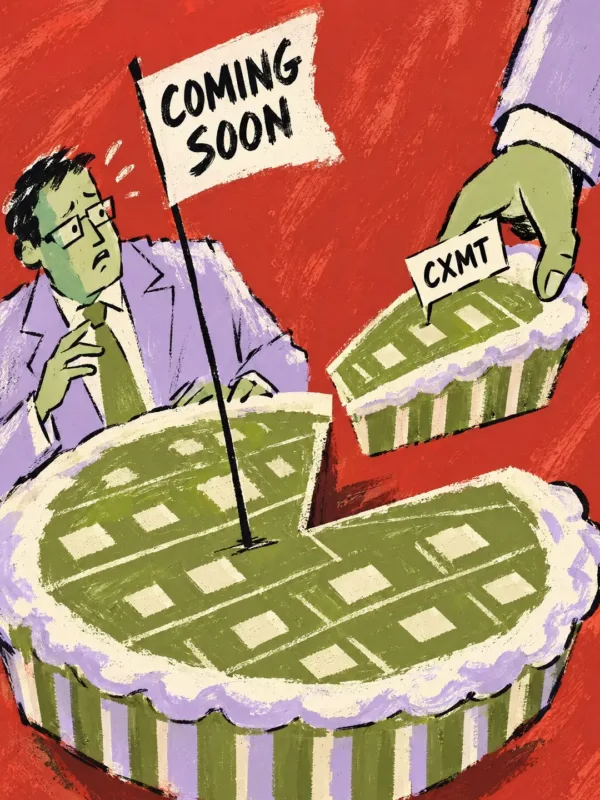
CoinDesk reported that the selloff followed a Financial Times report in which Broadcom (a U.S. chipmaker that designs custom AI chips) CEO Hock Tan likened speculative AI investing to gambling in a casino. Reports of technical progress at Chinese memory-chip maker CXMT (ChangXin Memory Technologies) added to the pressure.
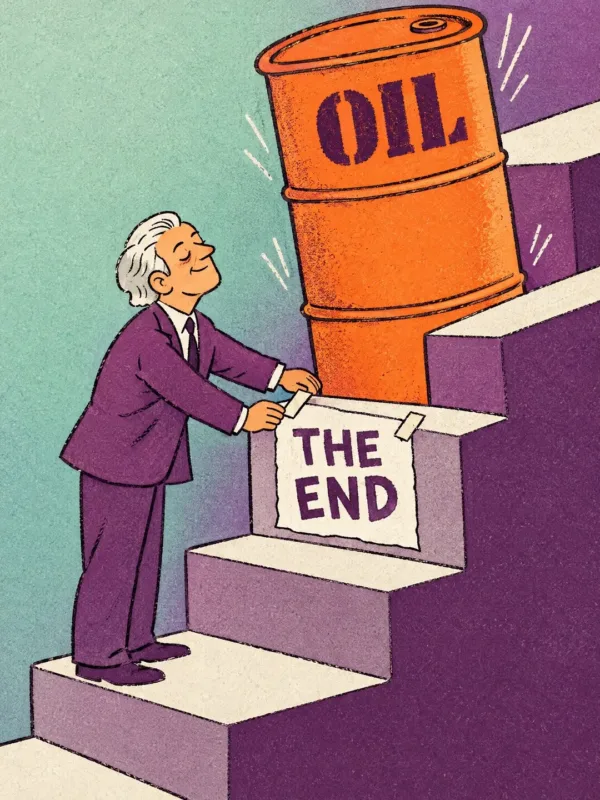
The domestic factors were about chips too. The Seoul Shinmun daily pointed to worries over intensifying memory competition, and noted that the end of Samsung Electronics' share buyback had left less support to absorb foreign selling. Kiwoom Securities analyst Han Ji-young also said concerns over OpenAI's revenue and the end of chipmakers' share buybacks weighed on tech stocks.
Someone holding $10,000 of SK hynix shares would have lost about $1,000 that day alone. Put simply, the day's bad news hinged on one question: will AI chips keep selling at high prices?
- How did bitcoin move that day?
Bitcoin dipped at first, too. According to CoinDesk data, it fell to just under $81,000 at 9:50 a.m. Korea time.
But bitcoin soon climbed back above $83,000. Going from $81,000 to $83,000 is a rebound of about 2.5%. Someone with $10,000 in a product that tracks the KOSPI lost about $550 that day. For bitcoin, $10,000 bought at the morning low would have gained back about $250 (a hypothetical calculation from the low, not a full-day gain or loss).
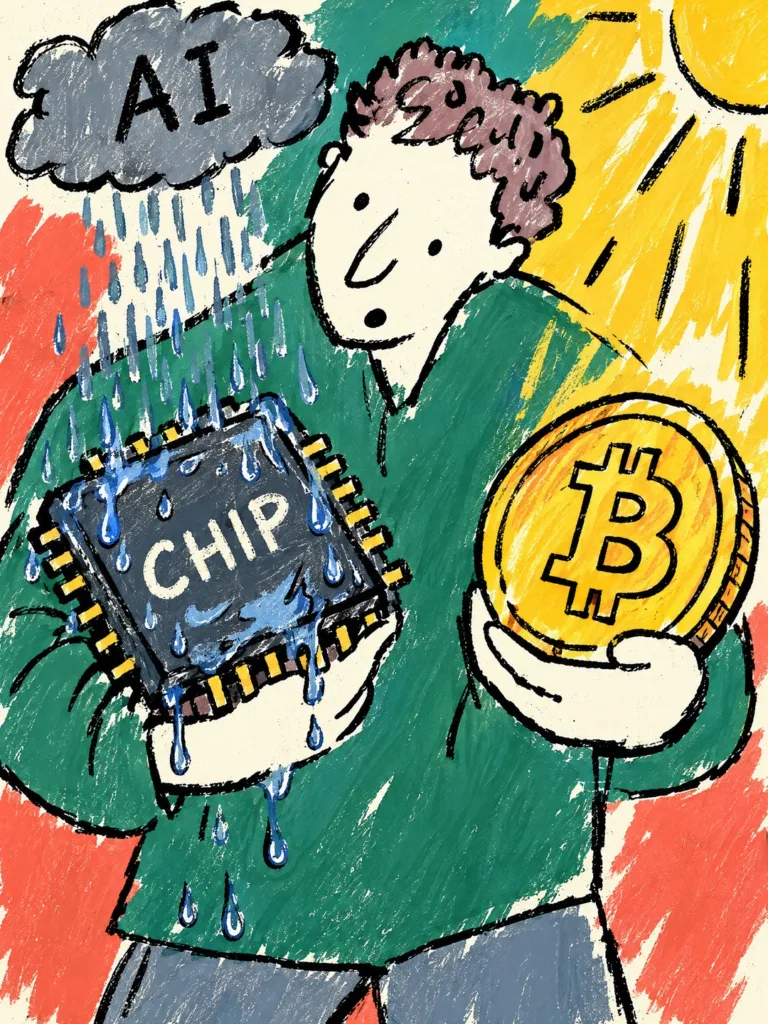
Put simply, bitcoin wobbled at the same moment Asian chip stocks tumbled, but the dip did not last.
- When did the two markets start moving apart?
The split did not start that day. According to CoinDesk, the KOSPI is about 38% below its June all-time high. Bitcoin bottomed near $58,000 shortly after the KOSPI peaked and has since climbed as high as $87,000.
CoinDesk calculates the recent correlation between bitcoin and the KOSPI at -0.41. A correlation coefficient is close to 1 when two prices always move in the same direction and close to -1 when they always move in opposite directions. CoinDesk calls -0.41 a moderately negative relationship. Like a seesaw, the two have leaned toward one rising when the other falls. But a seesaw is one plank, and a correlation is not proof that the two markets are connected.
- Did money leaving stocks move into crypto?
That is hard to say. On June 8, when the KOSPI fell more than 8% right after the open, bitcoin was at $63,168, up 3% from 24 hours earlier. The Block reported that the heavy overlap between Korea's retail stock investors and crypto investors might suggest a big shift of money, but that analysts thought it unlikely.
"The KOSPI's plunge didn't cause bitcoin's rebound, but it highlights the same macro forces driving risk markets," said Dominick John of Zeus Research. His explanation: stocks were pricing in fear, while bitcoin had already fallen so far that it had room to bounce. A record of two markets not moving together is not the same as money moving from one to the other.
- They fell together in July. What was different this time?
Bitcoin has not always held up. On July 28, after news that a Chinese company had begun mass-producing its own deep ultraviolet (DUV) chipmaking tool, the KOSPI closed down 10.8%, and bitcoin fell about 2.7% to roughly $63,000. The next day, as the KOSPI was halted by a circuit breaker, bitcoin rose 1% to above $64,000. Bitcoin.com said the pattern suggested bitcoin's tight correlation with chip and AI stocks may be loosening.
This time, the headwind CoinDesk flagged for bitcoin was not chips. CoinDesk noted that with WTI crude near $92.67 a barrel and Brent around $106, inflation worries were rising, which could raise the odds of U.S. rate hikes and weigh on crypto. Paul Howard of market maker Wincent expected institutional investors to add protection through derivatives rather than sell their crypto ahead of Thursday's U.S. consumer price report.
- BITPRESS Insight
"Risky assets fall together" holds best when bad news hits the whole market. If it is the kind of news that moves the price of everything, like interest rates or inflation, someone holding both stocks and crypto can easily lose on both. When the bad news is about AI chip profits and memory competition, as it was this time, the KOSPI, dragged down by chip stocks, can fall sharply on its own.
So for someone holding both stocks and crypto, the protection from diversifying is not always the same size. On July 28, both fell. And bitcoin holding up this time does not make it a safe haven. If U.S. inflation and interest rates wobble, crypto can wobble too.
Whether your crypto will fall on a day the KOSPI crashes is easier to judge by asking which industry the day's bad news hits, rather than whether crypto is a risky asset.
Sources
https://www.coindesk.com/markets/2026/10/13/bitcoin-diverges-from-south-korean-stocks-as-ai-concerns-deepen-the-kospi-selloff
https://www.coindesk.com/markets/2026/10/13/bitcoin-rebounds-above-usd83-000-as-it-decouples-from-tumbling-korean-stocks-and-nasdaq-futures
https://www.seoul.co.kr/news/economy/securities/2026/10/13/20261013500225
https://www.koreajoongangdaily.com/business/kospi-plunges-5-as-tech-stocks-tumble/12918482
https://www.theblock.co/post/403919/bitcoin-recovers-63000-kospi-plunges
https://news.bitcoin.com/featured/kospi-back-to-back-circuit-breaker-bitcoin-decouples/
Glossary
Correlation coefficient — A number between -1 and 1 showing how much two prices have moved in the same direction; it does not mean one causes the other.
Share buyback — When a company buys its own shares on the market, which also helps absorb shares that others are selling.
Lithography tool (DUV) — A machine that uses light to draw circuits onto silicon wafers; DUV models use deep ultraviolet light.
Circuit breaker — A mechanism that briefly halts all trading when an index falls more than a set percentage in one day.
Derivatives — Contracts such as futures and options whose gains and losses depend on another asset's price, often used to hedge against falling prices.
BITPRESS articles are information to help your investment decisions, not a recommendation to buy or sell any stock or coin. Investment decisions and their results are your own responsibility.