Under current law, starting Jan. 1, 2027, anyone who makes more than KRW 2.5 million (about $1,870) a year from crypto will pay 22% tax on the amount above that. Unless the National Assembly changes the law this year, it will start as planned.
The common view is "it'll be pushed back again," since it has already been delayed three times. But the real story is elsewhere. The tax plan the government released in August included neither a delay nor a repeal. The rate is set, yet critics say there is still no system to track trades on overseas exchanges. In the end, the question is less "will it start?" than "whose gains will it actually catch?"
- What will apply to my coins from 2027?
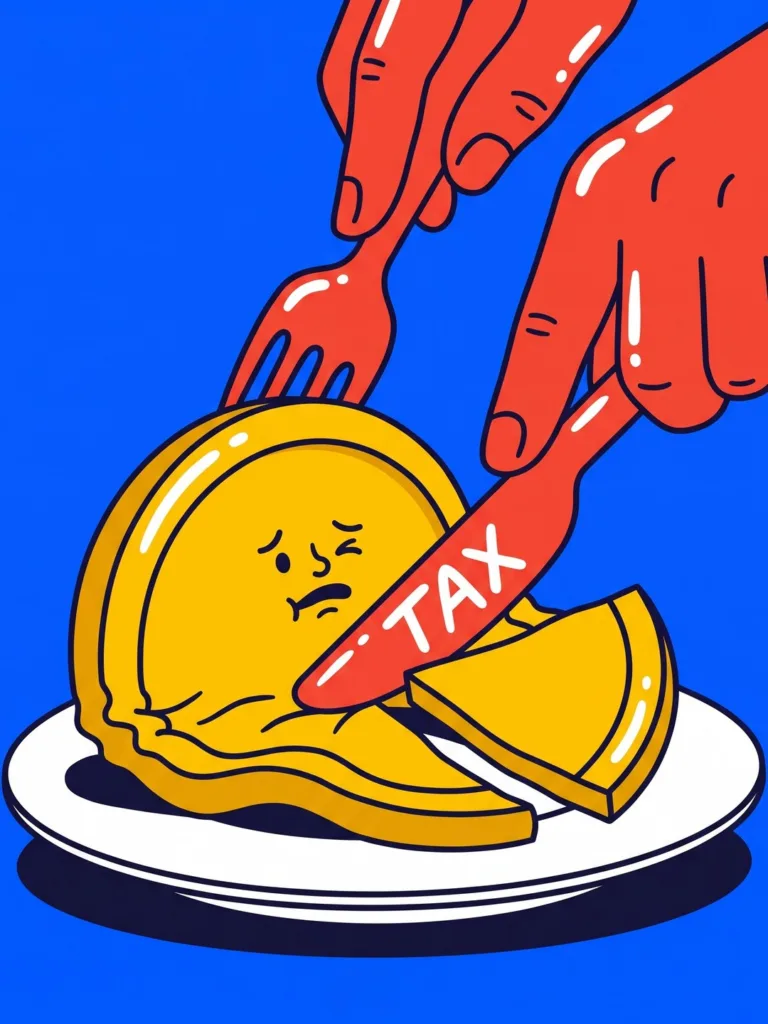
Money made by selling or lending crypto is classed as "other income" (income taxed separately from wages). Gains and losses over a year are added up, KRW 2.5 million is subtracted, and 22% (20% income tax plus 2% local income tax) is charged on the rest.
If you made KRW 10 million (about $7,470) from crypto in 2027, you would subtract KRW 2.5 million and pay 22% of the remaining KRW 7.5 million, or about KRW 1.65 million (about $1,230; example). If you made KRW 2.5 million or less, you pay nothing. You file yourself during the May income tax filing period the following year, so 2027 gains are filed in May 2028.
Put simply, crypto gains will be taxed too, but the first KRW 2.5 million each year is let off.
- Why has it never been collected until now?
The tax was written into law in December 2020 and was set to start in January 2022. It was then delayed three times: in November 2021, December 2022 and December 2024.
The last delay was decided at a plenary session of the National Assembly on Dec. 10, 2024, about three weeks before the start date then in force (Jan. 1, 2025). On the same day, the financial investment income tax that was to apply to stock and fund gains was scrapped altogether. That is where the backlash "They killed the investment tax but tax only crypto at 22%?" comes from.
- How will the coins I already own be counted?
Under current law, coins bought before 2027 will be valued at the higher of what you actually paid or the price on Dec. 31, 2026. If a coin you bought for KRW 10 million is worth KRW 15 million that day, your cost will be KRW 15 million. The KRW 5 million it rose until then is not taxed (example).
It is like valuing a used car as if you had bought it new at its price the day before a tax kicks in. And if the price that day is lower than what you paid, what you actually paid is used, so coins sitting at a loss are not put at a disadvantage.
Losses can only be deducted within the same year. If you lose KRW 100 million in 2027 and make KRW 10 million in 2028, you pay tax on the KRW 10 million gain in 2028. That is because there is no loss carryforward, which would let last year's loss be deducted next year.
- What is still not ready?
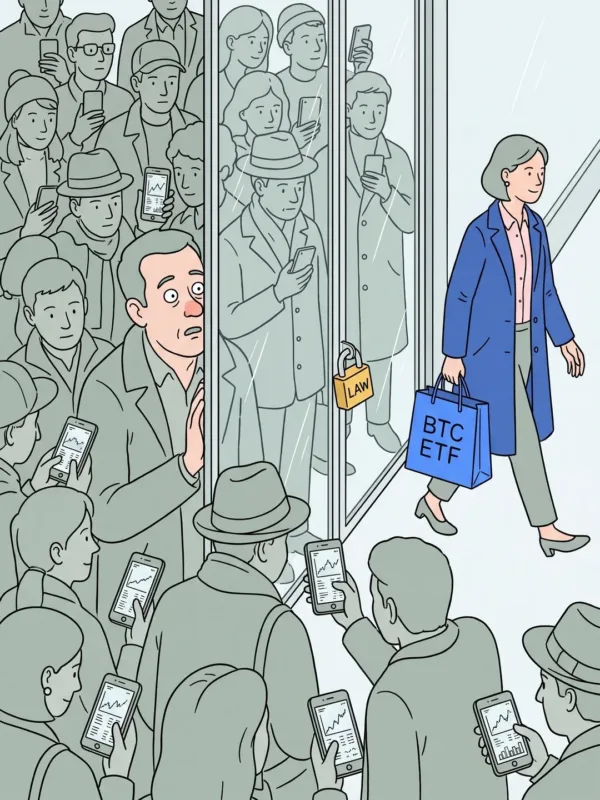
A bill to push the start back to 2029 gives this reason: there is not enough of a tax system to track trades on overseas exchanges, decentralized exchanges (places where software swaps coins without a company in the middle) and person-to-person deals.
There is an international rule, CARF, under which countries automatically swap crypto trading data every year, and Korea signed it in November 2024. But the data swap only begins in 2027, the same year as the first tax year.
Some rules are still blank. Critics say it has not been settled whether rewards for locking up coins (staking) are taxed at the price on the day they are received or the day they are sold. The industry says that "if money moves to overseas platforms to avoid the filing burden, it may not help either tax revenue or market transparency."
- Will it be delayed again?
The government's tax plan has no delay, and the Democratic Party also leans toward carrying out the law as written. On the other hand, as of early September, the National Assembly had one bill to scrap the tax and two to delay it to 2029 or 2030. On Sept. 29, another bill to delay it to 2030 was filed.
In 2024, it was delayed about three weeks before it was to start. What is different this time is that the government plan has no delay. Unless the National Assembly changes the law this year, it is set to start on Jan. 1, 2027.
- BITPRESS Insight
The rate and the deduction are set. What is not settled is "which gains, traded where, will actually be caught." If critics are right that there is no system to track overseas exchanges and person-to-person trades, then even with the same KRW 10 million gain, people who made it where records are clear may be the first, and the most accurately, taxed.
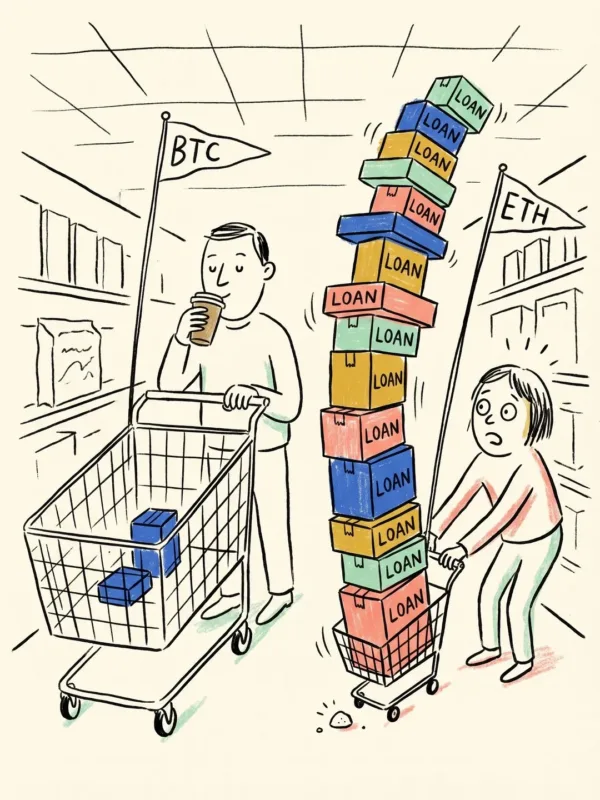
So for crypto holders, the question is not "will it be delayed again?" The test is whether your gains top KRW 2.5 million a year, and whether you can show records of what you first paid. Coins that moved back and forth between overseas exchanges and personal wallets may leave you to work out on your own what you first paid.
Sources
https://www.tossbank.com/articles/coin-tax
https://m.dailian.co.kr/news/view/1685459/
https://www.dailian.co.kr/news/view/1659396
https://www.taxtimes.co.kr/news/article.html?no=275357
https://biz.sbs.co.kr/amp/article/20000206343
https://www.etoday.co.kr/news/view/2543997
https://www.heraldk.com/article/2026010117300000268
https://www.pinpointnews.co.kr/news/articleView.html?idxno=491046
Glossary
Other income — Income taxed separately from wages and business income; crypto gains fall into it.
Basic deduction — The amount subtracted before tax is charged; for crypto it is KRW 2.5 million a year.
Loss carryforward — A rule that lets this year's loss be deducted from next year's gains; Korea's crypto tax does not have it.
CARF — An international rule under which countries automatically share data on each other's residents' crypto trades every year.
Decentralized exchange — An exchange where software swaps coins without an operating company.
BITPRESS articles are information to help your investment decisions, not a recommendation to buy or sell any stock or coin. Investment decisions and their results are your own responsibility.