Samsung Electronics will release its preliminary third-quarter results this week (around Oct. 7-8, 2026). Analysts expect its third-quarter operating profit to top KRW 110 trillion. If it does, that would be its highest quarterly figure ever.
With profits this strong, you might expect foreign investors to have been buying too, but their numbers point the other way. From Jan. 2 to Oct. 2, 2026, foreign investors were net sellers of KRW 84.5702 trillion of Samsung Electronics stock (net selling is the value sold minus the value bought).
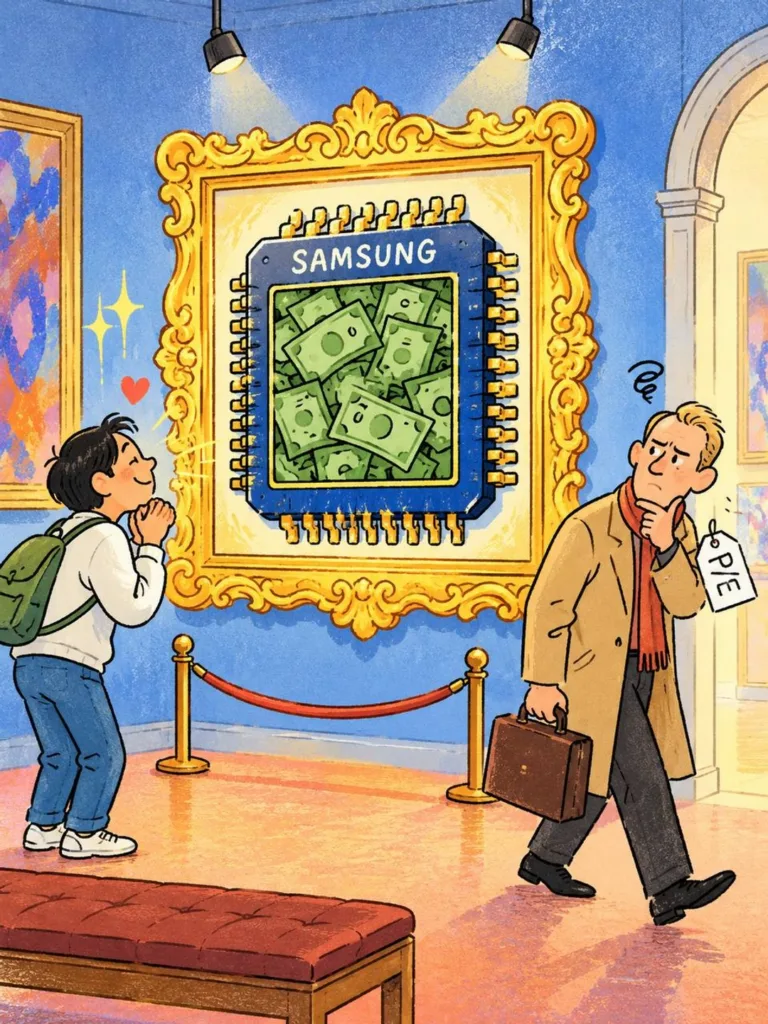
Even so, the share price rose 130.19%, from KRW 119,900 at the end of 2025 to KRW 276,000 on Oct. 2. Looking at who bought the shares foreign investors sold, and why foreign investors sold, changes which numbers to watch in this earnings release.
- When foreign investors sold, retail investors and institutions bought
Over the same period, individual (retail) investors were net buyers of KRW 43.1143 trillion of Samsung Electronics stock and institutions KRW 11.6193 trillion. Together that is KRW 54.7336 trillion, about 65% of foreign investors' net selling. This is only a rough comparison of totals by investor type, though, and the data doesn't show who bought the rest.
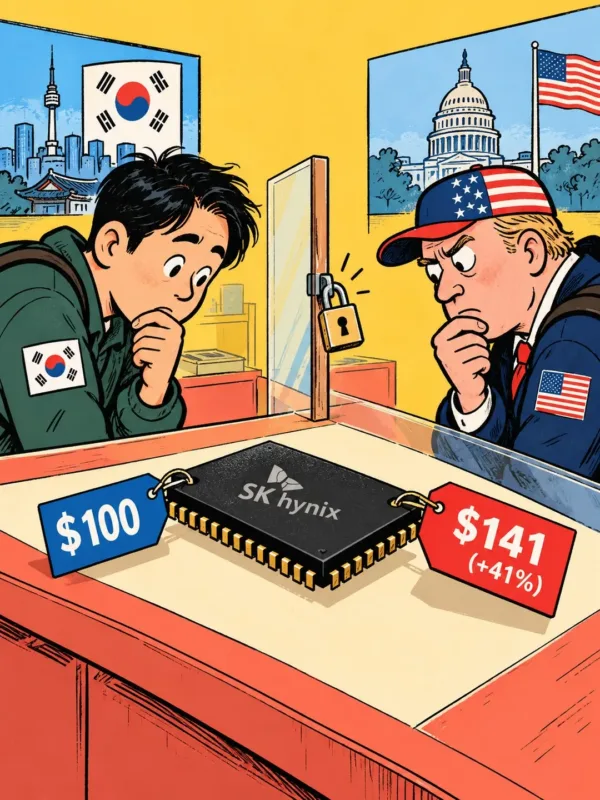
SK hynix shows the same pattern. Foreign investors sold KRW 82.504 trillion of its stock, while retail investors bought KRW 39.5028 trillion. Meanwhile, SK hynix shares rose 182.80%, from KRW 651,000 to KRW 1,841,000. Put simply, this year's big chip stocks were bought by domestic investors while foreign investors sold, and prices rose in the meantime.
- Analysts point to profit-taking, rebalancing and the exchange rate
According to reports citing Korea Exchange data, foreign investors' net selling of Samsung Electronics in the first half of 2026 came to KRW 72.6 trillion. That figure excludes ETFs and similar products.
Analysts cited profit-taking after the share price surge, portfolio rebalancing (buying and selling to get back to set weightings) and a rise in the won-dollar exchange rate as the reasons. Of these, rebalancing is the most mechanical.
The analysis goes like this: as Samsung Electronics and SK hynix shares jumped, Korea's weight in global stock indexes such as MSCI and FTSE grew, triggering mechanical weighting adjustments. In June, NH Investment & Securities' research center said the first-half selling had less to do with a negative view of the Korean market than with rebalancing by passive funds that track the MSCI Emerging Markets Index.
Think of the compartments on a lunch tray. If one overflows, you scoop out the extra no matter how good it tastes. Unlike food on a tray, though, shares that are scooped out can push the price down. On June 23, 2026, foreign investors' stake in Samsung Electronics was 47.43%, the lowest since August 2013.
- Another worry: is profit at its peak?
On July 2, 2026, Samsung Electronics shares fell 7.79%, slipping below KRW 300,000. Some in the market also argue that AI investment has peaked. The worry is that once AI spending passes its peak, chip profits could turn down too.
That actually happened in the last chip boom. Samsung Electronics posted operating profit of KRW 17.57 trillion in the third quarter of 2018, a quarterly record at the time. But according to reports, chip profits in the very next quarter were estimated to have fallen sharply, from KRW 13.65 trillion the quarter before to under KRW 10 trillion, and its fourth-quarter results were called an earnings shock (results far worse than expected).
There are differences this time, too. Demand for high-bandwidth memory (HBM, a high-performance memory used in AI servers) is growing, and Kiwoom Securities cited strong growth in its HBM business as a positive. And 2018 is only one example.
- Profit is forecast to keep growing, but more slowly
Samsung Electronics' second-quarter operating profit was KRW 89.4 trillion. Among brokerages, Kiwoom Securities forecasts KRW 107 trillion for the third quarter (up 19% from the previous quarter) and KRW 111 trillion for the fourth quarter (up 4%). Put simply, if Kiwoom is right, profit keeps growing, but the pace of growth slows sharply.
Kiwoom Securities cut its third-quarter forecast from KRW 122 trillion to KRW 107 trillion. Its reasons: the average won-dollar exchange rate fell faster than expected, and prices of commodity DRAM chips are likely to rise less than hoped. The rise in the exchange rate in Section 2 was cited as a reason for foreign selling in the first half, while the fall in the average rate here is a factor that lowered the third-quarter profit forecast; the timing and the role are different.
In sheer size, it's a remarkable number. Expected third-quarter operating profit is more than double last year's full-year operating profit of KRW 43.6 trillion.
- The company's share buyback was wrapping up
There was one more buyer of Samsung Electronics stock: the company itself. Since Aug. 24, 2026, Samsung Electronics had been buying back its own shares (a company buying its own stock in the market) every trading day to pay for employee stock awards.
By Sept. 23, it had bought 85.95% of the amount it filed for, worth KRW 11.9793 trillion. According to a Sept. 27 report, the buyback was expected to end around Oct. 1-2. In value, that is far smaller than this year's KRW 84 trillion in foreign net selling.
The dividend record date has also passed. The company announced a special dividend of around KRW 30 trillion for the third quarter, including its regular dividend, and KRW 4,500-4,600 per share is expected. To receive it, investors had to own the shares by Sept. 28 to meet the record date (Sept. 30).
- BITPRESS Insight
For the first-half foreign selling, analysts pointed to profit-taking, index rebalancing and the rise in the exchange rate rather than a judgment that Samsung Electronics' profits are bad. So what to watch in these results is not whether profit tops KRW 100 trillion, but whether the forecast that profit keeps growing next quarter holds.
That difference matters for retail investors who bought Samsung Electronics this year. So far, retail investors and institutions kept buying on a net basis even as foreign investors sold, and the share price rose. Analysts expect earnings and competitiveness in AI chips to decide whether foreign investors come back.
Here is BITPRESS's take. A record profit is a number already known through forecasts. The new information is whether next quarter's outlook gets raised or cut.
Sources
https://www.etoday.co.kr/news/view/2632148
https://www.smarttoday.co.kr/ko-kr/articles/111981
https://m.sedaily.com/article/20097962
https://www.mt.co.kr/stock/2026/09/23/2026092308381066303
https://biz.heraldcorp.com/article/10796449
https://kr.investing.com/news/stock-market-news/article-1993870
https://www.etoday.co.kr/news/view/1681265
https://www.seoul.co.kr/news/economy/industry/2019/01/09/20190109005010
Glossary
Net selling — When the value of shares sold exceeds the value bought, meaning that much stock was put back on the market.
Preliminary results — Revenue and operating profit estimates a company releases after a quarter ends, before its formal report.
Rebalancing — Buying and selling to restore set investment weightings after price moves have thrown them off.
Passive funds — Money in funds that buy and sell to mirror a stock index such as MSCI, holding stocks by index weight rather than picking them.
Share buyback — A company using its own money to buy its own shares in the market.
KOSPI — South Korea's main stock market and its benchmark index, where Samsung Electronics and SK hynix trade.
Retail investors and institutions — Korea Exchange sorts trading into individuals (retail investors), institutions (domestic funds, insurers, pension funds and the like) and foreign investors; net buying or selling is tallied for each group.
Record date — The day a company uses to decide who receives a dividend. Samsung's was Sept. 30, so buyers had to own shares by Sept. 28.
BITPRESS articles are information to help your investment decisions, not a recommendation to buy or sell any stock or coin. Investment decisions and their results are your own responsibility.