Seoul apartment prices rose for the 87th straight week as of Oct. 5, according to the Korea Real Estate Board. The streak began in the first week of February 2025 and has now passed the previous record of 85 weeks.
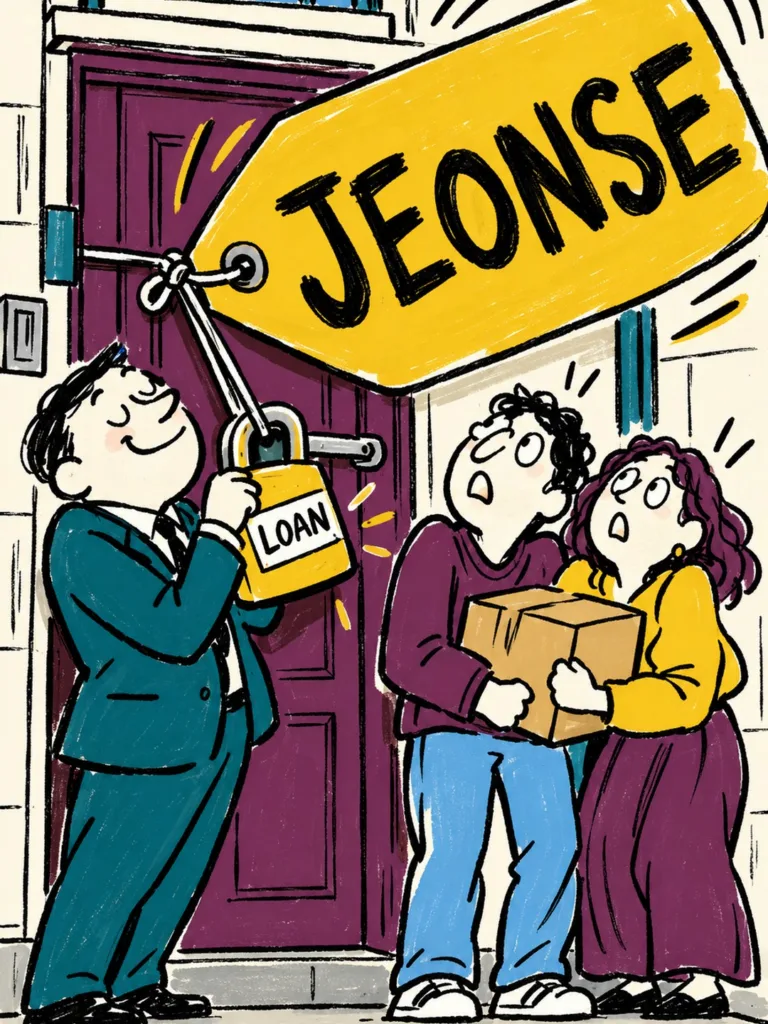
So the usual reading is "Seoul home prices set another record." But the real story is elsewhere. Counting from the start of this year, Seoul apartment jeonse deposits (Korea's lump-sum deposit lease) rose 8.35%, outpacing the 8.31% rise in home prices over the same period. Critics say rules meant to stop people from buying homes shrank the supply of jeonse homes and shifted the cost to tenants.
- How fast have jeonse deposits risen?
Over the same period last year, Seoul apartment jeonse deposits rose 1.87%. This year's rise is more than four times last year's over the same period. Even in the first week of October alone, jeonse deposits rose 0.16%, more than home prices (0.12%).
A year ago it was the other way around. By KB Real Estate's measure, Seoul apartment jeonse deposits rose 3.17% from January to November last year, about a third of the 10.09% rise in home prices. Put simply, the burden is now growing faster for people who rent on jeonse than for people who own.
Take a family renting on a KRW 700 million jeonse (about $523,000; the average Seoul apartment jeonse deposit was about KRW 711.78 million in August, per KB Real Estate). If its deposit rises at this year's pace, it goes up by about KRW 58 million (about $43,700). At last year's pace (1.87%), it would have been about KRW 13 million (about $9,800) (an example calculation; $1 = KRW 1,338.5 as of Oct. 8).
- Who used to supply jeonse homes?
For a jeonse home to exist, someone has to buy a home and lease it out. The main route was "gap investing" (buying a home with a jeonse tenant already in place). The tenant's deposit covers part of the price, and the home stays on the jeonse market.
That route closed on Oct. 20, 2025. All of Seoul was designated a land transaction permit zone (an area where buying a home requires permission from the district office), so anyone who buys a home in Seoul must live in it for two years. When the rule took effect in October 2025, a home with a tenant cannot get a purchase permit unless the tenant agrees to move out within four months.
Think of a car rental company. If it can't buy cars to rent out, there are fewer cars to rent. The difference is that homes can't be made quickly the way cars can, so the shortfall isn't easily filled.
- How much have jeonse listings shrunk?
According to the property data service Asil, Seoul apartment jeonse listings stood at 24,369 on Oct. 15, 2025, the day the Oct. 15 housing measures were announced. By Sept. 23, 2026, about 11 months later, they had fallen 15.7% to 20,542. In Dongdaemun District, they plunged 71.5%, from 1,132 to 323.
New contracts fell too. Seoul apartment jeonse deals in August totaled 7,263, down 32.2% from a year earlier, while renewals of existing contracts made up 58.9% of deals, up 15.2 percentage points from a year earlier (43.7%). Put simply, as it got harder to find a place to move to, more people stayed where they were.
- Where did would-be buyers go?
Buying a home also got harder. The Oct. 15 measures cut mortgage limits for homes priced above KRW 1.5 billion (about $1.12 million) in the Seoul metropolitan area's regulated areas. Homes priced at KRW 1.5 billion to 2.5 billion (about $1.12 million to $1.87 million) can be borrowed against only up to KRW 400 million (about $299,000), and homes above KRW 2.5 billion only up to KRW 200 million (about $149,000). The limit for homes at KRW 1.5 billion or less stays at KRW 600 million (about $448,000).
Last December, in its outlook for this year's jeonse market, the Construction & Economy Research Institute of Korea named "jeonse demand flowing in as buying slows" as one factor that would push deposits up. In other words, people who can't raise enough money to buy may stay on jeonse. Supply shrank as well: 17,603 Seoul apartment units were completed from January to July this year, 48.7% fewer than the 34,339 in the same period last year.
- Will jeonse supply recover?
Since May 29, 2026, a rule has let buyers of homes with tenants postpone the live-in requirement. But of the 3,012 land transaction permit applications for Seoul apartments in August, only 135 (4.5%) asked for this delay.
Fewer new apartments are coming, too. Seoul's multi-family housing move-ins from July 2026 to June 2028 are projected at 49,668 units, 44.3% below the 89,188 units projected for the previous two years (July 2024 to June 2026). Yoon Su-min, a real estate specialist at NH NongHyup Bank, said, "For now, I don't see any factor that would clearly ease the jeonse and monthly rent market."
- BITPRESS Insight
The rules that blocked home buying didn't hit only home prices. With fewer people offering jeonse homes, critics say the cost has moved onto tenants' deposits. Forecasts that people who find it harder to buy may stay on jeonse point the same way.
So for a family facing its next jeonse contract, "home prices are cooling, so deposits will stay calm" no longer works as a rule of thumb. As long as the rules against buying stay in place, it's closer to reality to weigh renewing versus moving on the assumption that deposits can rise faster than home prices.
Sources
https://www.fnnews.com/news/202610081400476102
https://www.korea.kr/news/policyNewsView.do?newsId=148950959
https://biz.sbs.co.kr/amp/article/20000266053
https://www.dailian.co.kr/news/view/1694370
https://www.ajunews.com/view/20251210173133204
https://www.newsis.com/view/NISX20260709_0003703427
Glossary
Jeonse — Korea's lump-sum deposit lease: instead of paying monthly rent, the tenant hands the landlord a large deposit and gets it all back when the contract ends.
Gap investing — Buying a home by using a tenant's jeonse deposit to cover part of the price and paying only the difference (the gap) with your own money.
Land transaction permit zone — An area where you need district office approval before buying a home or land; in Seoul, the buyer must live in the home for two years.
Renewal contract — Signing a new jeonse contract for the home you already live in instead of moving.
Home loans — Money borrowed from a bank using the home you are buying as collateral.
BITPRESS articles are information to help your investment decisions, not a recommendation to buy or sell any stock or coin. Investment decisions and their results are your own responsibility.