On Oct. 8, US company Securitize announced it would offer 12 US stocks, including Apple, Nvidia and Tesla, as coins, or tokens, on the Solana blockchain. Securitize's own stock rose about 10% that day.
At first glance it looks like one more crypto product that just borrows a stock's name. But the real point is elsewhere. According to the company, behind each token sits one real share, and the token is designed to carry dividends and voting rights. Yet the name that goes on Apple's shareholder register is not yours, the buyer of the token.
- What exactly launched?
Securitize (a Florida company founded in 2017 that moves traditional financial assets onto blockchain tokens) has issued $4.5 billion in tokenized assets. It issued the first blockchain-based money market fund (a fund that invests in short-term bonds and similar assets) from BlackRock, the world's largest asset manager, and listed on the New York Stock Exchange in June.
The new product is called Securitize Stocks. Trading starts on Securitize's Solana-based platform, and payments are made in USDC (a coin pegged to $1). At first it trades only during extended hours before and after the regular US session, and the company plans to expand to 24/7 trading. Eligible investors in permitted regions, including the US and Europe, can buy it.
- How is it different from a coin that just tracks the price?
According to the company, each token is backed by one real share. In other words, every token is paired with one actual share. That is why it is designed so that shareholder rights such as dividends and voting rights pass to the token holder.
CEO Carlos Domingo said, "Tokenized stocks should give investors more than a price that happens to track a stock." The path he chose instead is to bring stocks onto the blockchain while keeping shareholder rights, investor protections and market infrastructure intact.
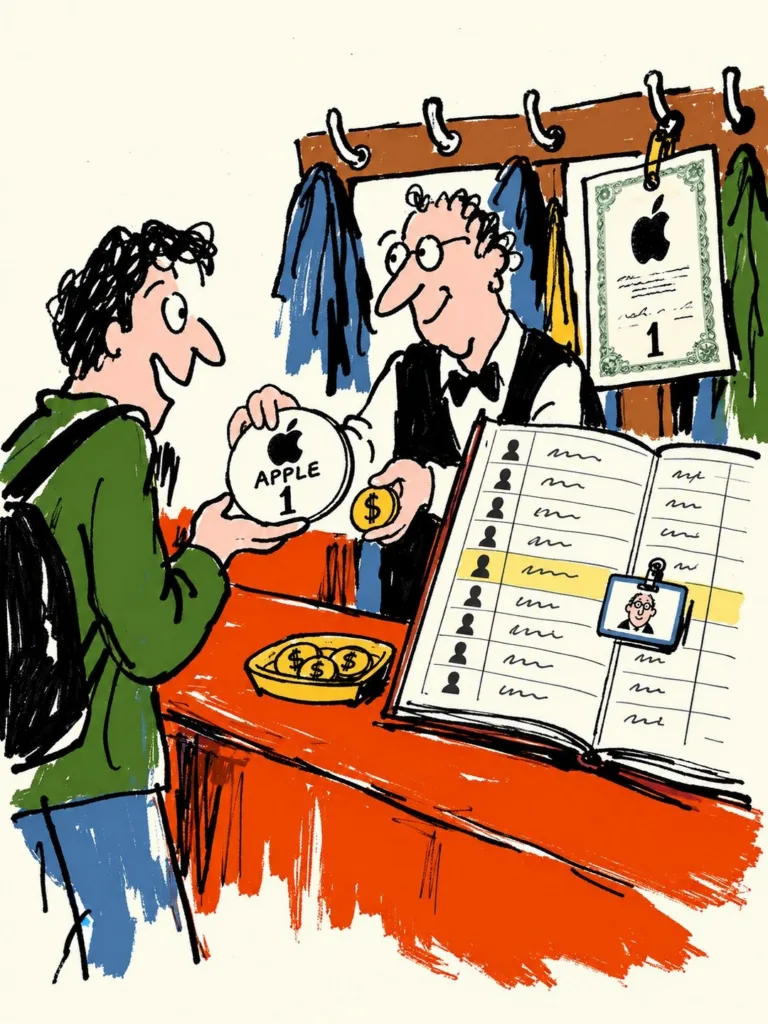
Think of it as a coat-check ticket at a theater. Your real coat is hanging in the back, and whoever holds the ticket is treated as the coat's owner. But the ticket is not the coat itself.
- So why isn't my name on the shareholder register?
A shareholder register is the list of shareholders a company keeps. According to the company, this token is not ownership recorded directly on that register but a "security entitlement" (a right to securities held on your behalf). The actual shares are held by Securitize's brokerage, and RQD supports the clearing and custody infrastructure that links the tokens to the traditional stock market.
It may sound strange, but a brokerage account is not so different. The US Securities and Exchange Commission (SEC, the US securities regulator) explains that most brokers hold client shares in the broker's name, not the client's, and keep records showing the client as the "real owner." Korea Securities Depository has also explained that it holds Korean investors' foreign stocks through local foreign custodians (institutions that handle custody, settlement and shareholder rights locally on its behalf) (2022).
Put simply, not having your name on the shareholder register is not unique to stock tokens. The difference is that the right changes hands as a token on a blockchain. The company said a path to direct ownership may open up if the companies that issued the shares start tokenizing them themselves.
- Why now?
Regulators opened the door. In September the SEC introduced an "innovation exemption" that allows new tokenized securities trading venues to be built on blockchains. This week, a joint venture of NYSE parent ICE and crypto exchange OKX also filed to offer tokenized stock trading under that framework.
Securitize plans to list these tokens on the 24/7 digital trading platform the New York Stock Exchange is preparing and on the ICE–OKX joint venue as well. But neither has set a launch date, and both must open and meet regulatory requirements first.
The market is still small. According to figures in an International Monetary Fund (IMF) analysis, tokenized stocks total about $2.3 billion, a tiny share of the roughly $300 trillion in global capital-market assets. Still, money moved first. Securitize's stock rose nearly 8% intraday on Oct. 6, when it announced a partnership with LG CNS to explore tokenized funds, stocks and stablecoins, and it has gained about 54% over the past month.
- Do stock tokens move exactly like the actual stocks?
No. Analyzing the tokenized stock market as a whole on Oct. 8, the IMF found that stock tokens trade far less actively than the actual stocks and that their price swings (realized volatility) are about 1.5 times as large. More than half of trading took place outside regular US market hours, and about 80% of trades were for less than one share.
Say you hold $10,000 worth. If the actual stock moves 2% in a day, that is $200 up or down; something that swings 1.5 times as much would move about $300 (a simple hypothetical calculation). The same stock name does not mean the same size of swings.
- BITPRESS Insight
The people whose decisions change with this news are those thinking about buying "stocks as coins." Until now, the question was "Is it crypto or a stock?" Now the first question is "Is there a real share behind the token, one for one, and who is holding that share?"
If the company's description holds, Securitize's tokens are the kind that come with a real share plus dividends and voting rights. In return, you do not put your name on the shareholder register; you hold, as a token, a right to shares held for you. It is a structure similar to leaving shares with your broker when you buy foreign stocks through a brokerage account. But according to the IMF analysis, stock tokens as a whole have swung more than the actual stocks.
There is one rule. It is not the company name on the token but whether one real share stands behind it, and who holds that share, that separates the real thing from the fake.
Sources
https://www.coindesk.com/business/2026/10/08/securitize-brings-apple-nvidia-and-tesla-to-solana-with-nyse-trading-in-the-works
https://www.theblock.co/news/markets/2026-10-08-securitize-launches-tokenized-us-stocks-solana-418043
https://cointelegraph.com/news/securitize-stock-jumps-launching-tokenized-us-equities-solana
https://cointelegraph.com/news/imf-flags-volatility-liquidity-risks-tokenized-markets-grow
https://www.sec.gov/answers/street.htm
https://www.inews24.com/view/1478224
Glossary
Token — A digital certificate recorded on a blockchain that can be sent and traded like a coin.
Solana — One of the blockchains used to send coins and record transactions.
USDC — A coin (stablecoin) designed so that one unit stays worth $1.
Security entitlement — A right to shares that someone else holds for you, instead of owning them directly in your own name.
Realized volatility — A measure of how widely a price actually moved up and down over a past period.
BITPRESS articles are information to help your investment decisions, not a recommendation to buy or sell any stock or coin. Investment decisions and their results are your own responsibility.