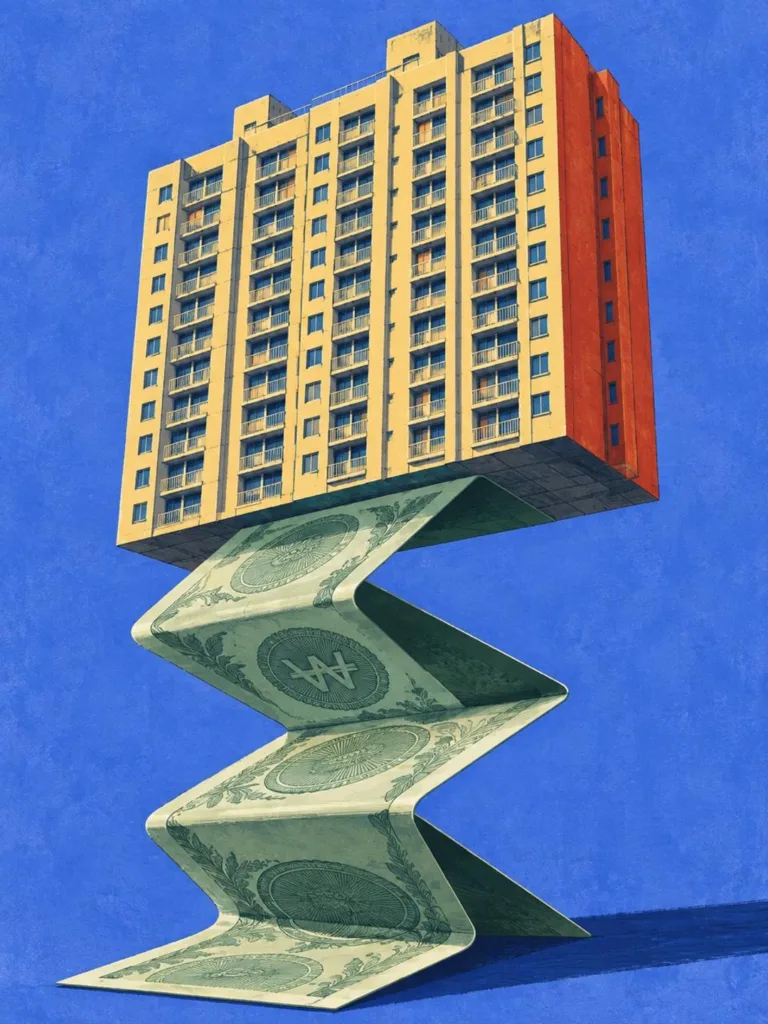
Seoul apartment prices won't stop rising. According to the Korea Real Estate Board, they have climbed for 84 straight weeks, from the first week of February last year to the second week of September this year. That is one week short of the all-time record of 85 weeks (second week of June 2020 to third week of January 2022).
The size of the rise is even more striking. Through the first week of September, the 83rd week, prices were up 17% in total, more than double the 7.7% gained over the 85 weeks of the 2020-22 "yeongkkeul" frenzy, when buyers borrowed all they could. A KRW 1 billion apartment would be up KRW 170 million. And this time, interest rates are rising. So what is holding prices up?
- Why rate hikes haven't stopped it: the money is different
The Bank of Korea raised its base rate to 3.0% on August 27, its second hike in a row and the first back-to-back increases in 3 years and 7 months, since the April 2022 to January 2023 cycle. Usually, higher loan rates mean fewer buyers and cooler home prices.
This run is different. Past booms leaned on low rates. This time, analysts say, bonuses from the chip boom and stock-market gains are flowing into real estate even with rates high, offsetting the effect of the hikes.
That doesn't mean rates have had no effect. Seoul's weekly price gain slowed from 0.22% in the fifth week of August to 0.16% in the second week of September, narrowing for three weeks in a row. The pace has eased, but the direction hasn't changed.
- Fewer new homes are coming to Seoul
Money alone doesn't explain it. According to Real Estate 114, new apartments ready for move-in in Seoul fall 38% in a month, from 5,512 in August to 3,438 in September. Nationwide, September's 14,174 is the fewest this year and the lowest since April 2021, 5 years and 5 months ago. It won't get much better: an expert expects move-ins in Gyeonggi and Incheon to rise somewhat next year, but to fall in Seoul.
Existing homes are also staying off the market. In land transaction permit zones, buyers must live in the home for two years, which analysts say has sharply cut the number of homes normally up for sale. On top of the supply shortage, demand curbs have had the side effect of shrinking listings. As one housing research head put it, "With supply short and demand high, prices can only face upward pressure."
- Jeonse pushes prices up first
When new apartments are scarce, the first thing to become scarce is jeonse, Korea's lump-sum deposit lease. When new complexes open, many owners put their units up for jeonse, so fewer move-ins mean fewer jeonse listings. Seoul apartment jeonse prices rose another 0.17% in the second week of September, faster than Gyeonggi's 0.15%. The tighter the housing supply, the sooner jeonse prices jump.
Renters who can't find a jeonse turn to buying instead. With jeonse prices rising and few listings, many decide they might as well borrow and buy. That demand has gone to apartments priced at KRW 1.5 billion or less, where buyers can still take a mortgage of up to KRW 600 million, lifting prices of mid-priced apartments in Seoul's outer districts.
- The neighborhoods that are rising have changed
From February to December last year, the rise was led by the three Gangnam districts and the Han River belt, such as Mapo and Seongdong. Songpa rose 20.57% and Seongdong 19% over that period.
This year looks different. From January to early September, the biggest gains came in Seongbuk (13.52%), Guro (11.06%) and Gangseo (11.01%). These areas have many apartments under KRW 1.5 billion that still qualify for sizable loans, so renters can switch to buying more easily. Gangnam, meanwhile, rose just 0.94% over the same period, the lowest of Seoul's 25 districts.
Recently the gap has widened further. After last month's tax reform proposal raised taxes on high-priced homes and on single-home owners who don't live in them, Gangnam and Seocho turned lower. In the second week of September, Gangnam fell 0.36% and Seocho 0.26%, while Jungnang rose 0.51% and Dobong 0.47%. A fire that started in the priciest areas has spread to neighborhoods that hadn't risen as much.
- BITPRESS Insight
Here is the chain behind this run. When new apartments are scarce, jeonse listings dry up first; as jeonse prices rise, renters switch to buying; and that demand spreads to mid-priced areas under KRW 1.5 billion, where loans are still available. Some analysts add that chip bonuses and stock gains are adding buying power.
That is why rate hikes don't stop it easily. Higher rates can reduce borrowing, but they can't build the homes that are missing. The reason an expert doubts Seoul prices will settle much next year comes down to move-in volumes too. The switch that stops this run is new supply more than interest rates.
So read the order in reverse. Prices won't turn first. First, more new apartments must arrive and jeonse listings must pile up. When jeonse prices cool, renters have less reason to buy, and only then do sale prices stop rising. What steers Seoul home prices right now isn't the bank's rate sheet but the move-in calendar.
Sources
https://www.ytn.co.kr/_ln/0102_202609132333351284
https://nocutnews.co.kr/news/6579769
https://m.news.nate.com/view/20260913n18417
https://www.ajunews.com/view/20260828170536430
https://kbthink.com/investment/deepdive/tip/260828.html
https://www.thepublic.kr/news/articleView.html?idxno=318784
https://www.etoday.co.kr/news/view/2624582
Glossary
Yeongkkeul — Short for "scraping together even your soul": borrowing as much as possible to buy a home, as many did in 2020-2021.
Move-in volume — The number of new apartments finished in a month and ready for residents to move in, that is, how many new homes hit the market.
Land transaction permit zone — An area where buying a home requires district approval. Buyers must live in the home for a set period, which blocks investment purchases.
Benchmark rate — The interest rate set by the Bank of Korea. When it rises, bank loan rates follow.
Han River belt — A name for popular residential areas along the Han River, such as Mapo, Seongdong and Gwangjin.
Jeonse — Korea's lump-sum deposit lease. Instead of monthly rent, the tenant gives the landlord a large deposit, often around half the home's price, and gets it all back when the lease ends.