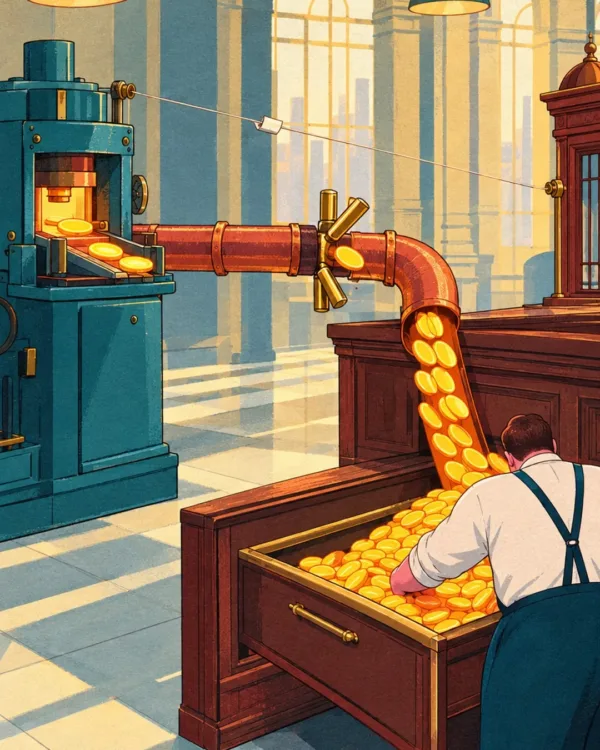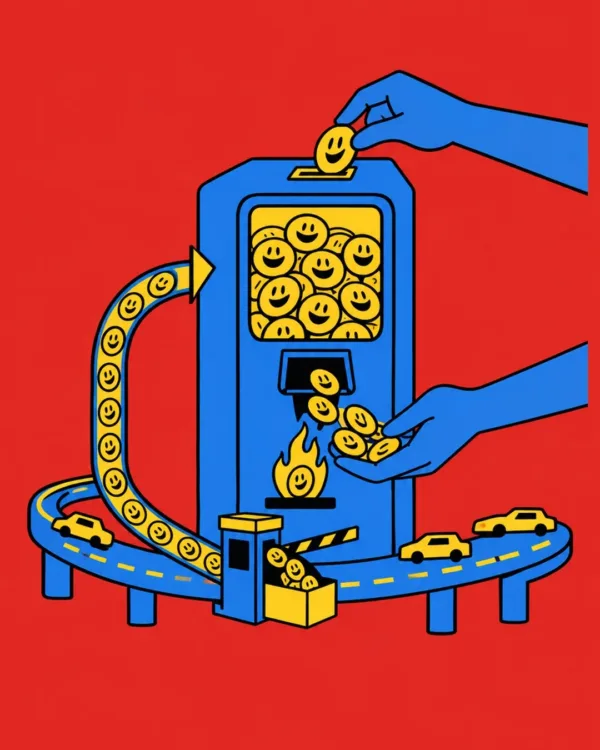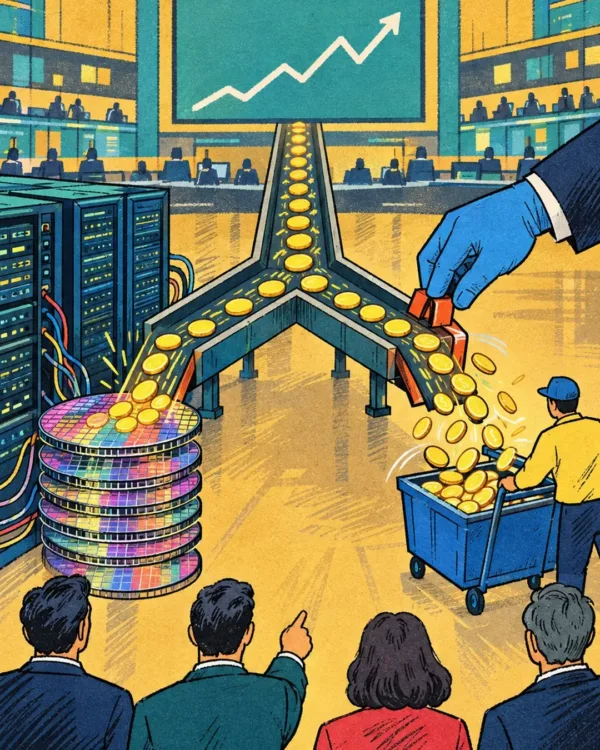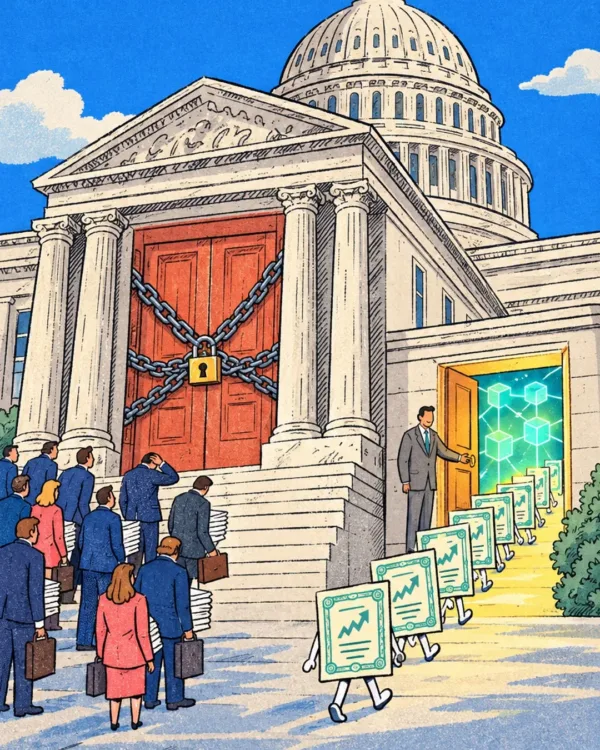

Samsung Electronics, sitting on KRW 167 trillion in net cash, is preparing a new shareholder return policy that includes a special dividend and additional share buybacks and cancellations. The amount and method have not been decided, but some brokerages forecast that the additional returns could reach around KRW 100 trillion. After SK hynix’s KRW 40 trillion move, can Samsung Electronics be the next to break the Korea discount?
- SK hynix’s KRW 40 trillion is more than a stock-boosting measure
SK hynix announced it would buy back and cancel up to KRW 40 trillion of its own shares between Aug. 20 and Nov. 19, 2026. It also set out a principle of returning at least 50% of free cash flow generated from 2025 through 2027 to shareholders.
When a company buys back its own shares and cancels them, the total number of shares issued falls. If the company’s profit stays the same, earnings per share rise, and each share held by existing shareholders becomes worth more.
What matters most is the promise, not the amount. The company made clear that instead of keeping all the huge cash earned in the chip boom piled up inside, it will return a set portion to shareholders.
- Samsung Electronics has already bought back KRW 10 trillion and canceled 87 million shares
It is not as if Samsung Electronics has done nothing for shareholders. At the end of 2024, it announced a KRW 10 trillion share buyback plan and completed the purchases by September 2025.
Of this, about KRW 8.4 trillion, based on acquisition cost, was earmarked for cancellation. It canceled about KRW 3 trillion worth first in 2025, and in April 2026 canceled another roughly 86.96 million common and preferred shares combined. The second cancellation cost about KRW 5.3 trillion to acquire, but was worth about KRW 14.6 trillion at market value when the cancellation was decided.
In 2025, it also paid an additional dividend of KRW 1.3 trillion on top of its regular annual dividend of KRW 9.8 trillion. Total cash dividends came to about KRW 11.1 trillion.
So Samsung Electronics has not simply been piling up cash with no plan. What it still lacks is a strong message, like SK hynix’s, about how much it will return, on what principle, and by when.
- Samsung Electronics’ existing commitment is 50% of free cash flow
Samsung Electronics’ current policy is to return 50% of the free cash flow generated over the three years from 2024 through 2026 to shareholders. Within that range, it pays about KRW 9.8 trillion a year in regular dividends and, if enough funds remain, adds special dividends or share buybacks and cancellations.
Free cash flow is the cash actually left over after subtracting capital spending on factories, equipment and other future growth from the cash earned through operations.
Samsung Electronics’ officially stated shareholder returns for 2024 and 2025 are KRW 20.9 trillion in cash dividends and KRW 8.4 trillion in share buybacks for cancellation. Adding the 2026 regular dividend of KRW 9.8 trillion brings the already confirmed returns to about KRW 39.1 trillion.
The core of the current policy is that if 50% of three years of free cash flow exceeds this amount, the difference is returned to shareholders as well.
- Where did the ‘KRW 100 trillion shareholder return’ talk come from?
Brokerage forecasts for Samsung Electronics’ 2026 free cash flow vary widely, from about KRW 185 trillion to KRW 308 trillion. Applying the current policy directly, 50% of that, about KRW 92.5 trillion to KRW 154 trillion, becomes the pool for shareholder returns.
Subtracting the roughly KRW 39.1 trillion in returns already confirmed for 2024 through 2026, a simple calculation puts the room for additional returns at about KRW 53 trillion to KRW 115 trillion. If free cash flow from 2024 and 2025 is added to the calculation, the pool could be even larger.
Samsung Electronics’ net cash stood at about KRW 167 trillion as of the end of June 2026. This is cash, cash equivalents and short-term financial instruments minus borrowings, bonds and other debt.
That figure will not be paid out as a special dividend as is, however. Samsung Electronics plans to spend more than KRW 110 trillion on facilities and R&D in 2026, and is also considering acquisitions in robotics, medical technology, automotive electronics and HVAC. Advance payments on long-term supply contracts and employee stock compensation could also affect the free cash flow calculation.
In the end, KRW 100 trillion is not a confirmed dividend but a potential amount of additional returns that comes out of applying the existing policy to current earnings forecasts.
- The most realistic scenario is a mix of special dividends and share cancellations
In its second-quarter 2026 earnings release, Samsung Electronics said it is discussing specific shareholder return plans, including a special dividend, and its next policy for 2027 and beyond. The industry has floated the possibility of an outline as early as August, but the official announcement date has not been set.
BITPRESS judges that Samsung Electronics is most likely to mix cash dividends with share buybacks and cancellations rather than pay out all the funds as special dividends.
Based on current earnings and brokerage forecasts, the base scenario is KRW 30 trillion to KRW 60 trillion in additional special dividends and KRW 30 trillion to KRW 60 trillion in share buybacks and cancellations. Total additional returns could range from about KRW 60 trillion to KRW 120 trillion.
Based on the current number of dividend-eligible shares, a KRW 30 trillion special dividend works out to about KRW 4,570 per share, KRW 50 trillion to about KRW 7,610, and KRW 60 trillion to about KRW 9,140. These are simple calculations, and the actual dividend could vary widely depending on final free cash flow and the share of buybacks.
For the company, a special dividend has the advantage of being felt by shareholders immediately. Share buybacks and cancellations, on the other hand, permanently reduce the share count and can raise per-share value over the long term. In terms of closing the Korea discount, doing both together could give the market stronger confidence.
- The KRW 90 trillion buyback report needs to be read separately
In June 2026, a report said Samsung Electronics could buy back up to KRW 90 trillion of its own shares, but the company disclosed that the timing and size of any buyback had not been decided.
More important, those buybacks may be used for employee performance compensation. Shares bought back to give to employees are not canceled and can end up back on the market. The effect is different from share cancellation, which permanently reduces the share count.
So even if Samsung Electronics announces a large buyback later, investors should not look at the total amount alone. They need to separate the shares to be canceled for shareholder returns from the shares to be held for employee compensation.
- The revised Commercial Act also shapes Samsung Electronics’ choices
Under the revised Commercial Act, in effect since March 6, 2026, companies must in principle cancel newly acquired treasury shares within one year of acquisition. Treasury shares already held must also, in principle, be canceled after a grace period.
Note: Where a business need is recognized, such as employee compensation or bringing in new technology, a company can keep holding or dispose of treasury shares with a provision in its articles of incorporation and approval at a shareholders’ meeting.
It is now harder than before for companies to buy back shares and hold them for long periods or use them to defend management control. That is why, if Samsung Electronics buys back more shares for shareholder returns, they are more likely to actually be canceled.
- What breaks the Korea discount is not ‘a one-off KRW 100 trillion’
Korean companies are undervalued not only because their profits fall short. Another major reason is that it is hard to predict to whom, on what basis, and when the cash they earn will be returned.
If Samsung Electronics carries out a large special dividend or share cancellation of around KRW 100 trillion, it could be a powerful boost for the stock. But one-off returns alone will not make the Korea discount disappear completely.
What matters more to the market is a new set of principles that will hold beyond 2027. The key questions are how much the regular dividend will rise, whether the 50%-of-free-cash-flow return standard will be kept or expanded, whether net cash above a certain level will be returned to shareholders automatically, and whether shares bought back will actually be canceled.
If Samsung Electronics sets out such standards clearly, shareholder returns will signal not just a stock-defense measure but a change in how the company allocates capital.
- BITPRESS Insight
So far, Samsung Electronics has confirmed no additional special dividend and no size for share buybacks or cancellations. The KRW 100 trillion shareholder return is also an estimate based on brokerage forecasts and the existing policy.
Even so, the chance of additional returns is clearly higher than before. Samsung Electronics holds KRW 167 trillion in net cash, its free cash flow is growing sharply on the chip boom, and the company has officially confirmed it is discussing a special dividend and its next shareholder return policy.
The most realistic outlook is an additional return package of KRW 60 trillion to KRW 120 trillion combining special dividends and share buybacks and cancellations. But if Samsung Electronics prioritizes growth investment and acquisitions, or the chip industry outlook worsens, the actual size could be smaller.
If SK hynix won the market’s trust first with the figure of KRW 40 trillion, it is now Samsung Electronics’ turn. What investors are waiting for is not simply a big dividend but a predictable promise that the company will keep sharing what it earns with shareholders.
Sources
https://www.kimchang.com/ko/insights/detail.kc?idx=34299&sch_section=4