On Oct. 13 the KOSPI fell 5.46% to close at 6035.35. Forced sales tallied that day (brokers selling, without the owner's consent, stocks bought with borrowed money) came to KRW 59.35 billion, the most since July 31.
The number alone reads like 'the market crashed, so leveraged shares were dumped that same day.' But the real story is elsewhere. The shares sold on the morning of the 13th were set for sale before the crash. Forced selling follows a calendar of settlement dates and collateral deadlines, and it usually piles up on the morning two days after a plunge.
- When was the KRW 59.3 billion sold on Oct. 13 decided?
This figure is forced selling from margin trading. In margin trading you pay only part of a stock's price up front and put in the rest by the settlement date, like buying on credit. Settlement comes two business days after the purchase, and if the money isn't in by then, the broker sells the shares the next morning.
Count the days, and the shares sold on the morning of the 13th are the ones whose money never arrived by the Oct. 12 settlement date. They are less a result of the crash on the 13th than of failed payments for shares bought earlier.
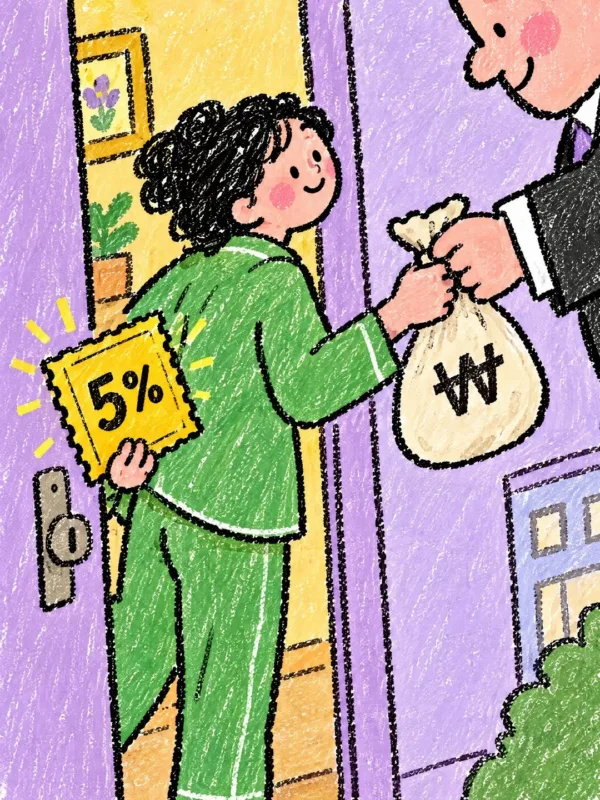
Think of a neighborhood shop that lets you pay later. You take the goods today and owe the money in two days; if you don't pay, the shop resells them the following morning. The difference is that a stock purchase on credit gets not a single extra day, and you don't get to set the resale price.
That is why forced selling trails the decline. As the KOSPI fell 1.98% on Oct. 7, 2.62% on Oct. 8 and 3.65% on Oct. 12, daily forced sales grew from KRW 6.359 billion on the 8th to KRW 27.1 billion on the 12th and KRW 59.35 billion on the 13th. Put simply, several days of falling prices passed through settlement dates and showed up in the numbers late.
- Why are stock-loan shares sold two days later?
The bulk of leveraged investing is stock loans (borrowing money from a broker to buy shares). The balance on the 13th was KRW 34.2529 trillion, about 28 times the KRW 1.2415 trillion in unpaid margin purchases that day. With a stock loan, the shares you buy are the collateral. Trouble starts when their value falls below a set ratio to the borrowed money, and that line (the collateral maintenance ratio) is usually around 140%.
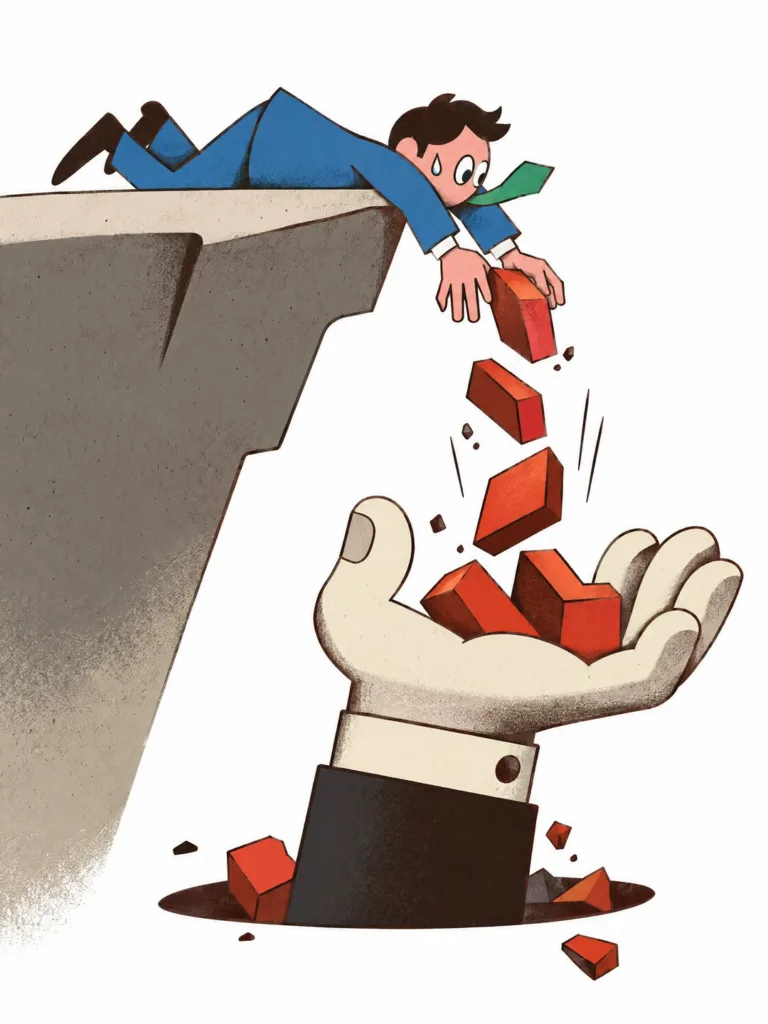
The order goes like this. The day after the collateral falls below the line, the broker asks for more collateral, and if it isn't topped up by the following day, the shares are force-sold. So for accounts whose collateral fell short on the 13th, the deadline is the morning of the 15th.
If you put in KRW 4 million and borrowed KRW 6 million to buy KRW 10 million of stock, your collateral ratio (stock value divided by the borrowed money) is about 167%. If the shares fall 16% to KRW 8.4 million, it hits 140% (hypothetical calculation). In reality, the KOSPI fell about 14%, from 7003.74 on Oct. 2 to its Oct. 13 close of 6035.35.
- How many shares does the broker sell, and at what price?
Forced-sale orders usually go in during the pre-open auction (a period that gathers orders before the market opens and fills them at a single price) and are filled when trading starts. The investor cannot set the selling price, and some brokers place the orders at the daily lower price limit.
The number of shares to sell is set generously compared with the shortfall. Korean stocks can move up to 30% a day, so brokers may calculate the quantity at a price up to 30% below the previous close.
If you are KRW 700,000 short and the stock closed at KRW 10,000 the day before, selling 70 shares looks like enough. But the broker calculates at KRW 7,000, 30% lower, so 100 shares are marked for sale. Any money left after the sale goes back to your account, but those extra 30 shares have already been sold on a day and at a price you didn't choose.
- Did forced sales also pile up two days later in July's crash?
Yes. Circuit breakers (a mechanism that briefly halts trading when the index plunges) were triggered on two straight days, July 28 and 29. Forced sales followed on July 30 at KRW 103.7 billion and July 31 at KRW 122 billion, topping KRW 100 billion two days in a row. Those two days took 22.7% of July's total forced sales of KRW 992.7 billion.
What's different this time is the size of the debt. The stock-loan balance, which had shrunk to KRW 28.935 trillion on July 31, topped KRW 34 trillion on Oct. 12 for the first time in about three months. Analysts read it as individuals borrowing more to bet on a rebound as prices fell.
- When will the forced sales from the Oct. 13 crash come?
By the calendar, stock-loan accounts whose collateral fell short on the 13th get a call for more collateral on the 14th and are sold on the morning of the 15th. Shares bought on margin on the 13th settle on the 15th, and if the money isn't in, they are sold on the morning of the 16th.
On that morning of the 15th, the KOSPI opened 5.59% lower at 5673.01 amid a shock from U.S. September consumer prices and worries about AI profitability, and fell more than 7% during the session. Unpaid purchases awaiting settlement have piled up too: margin debt grew from KRW 931.6 billion on Oct. 7 to KRW 1.2415 trillion on the 13th.
- BITPRESS Insight
For anyone who bought stocks with borrowed money, the real deadline is not the day prices fall but the second morning after. With margin trading, even if the market rebounds in between, an order goes out the next morning if the money isn't in by the settlement date.
The two-day lag also buys you time. Put in the money or sell on your own within it, and you close out at a price and quantity you choose. Wait, and a quantity calculated at up to 30% below the previous close is sold at the opening bell.
Your shares get sold not on the day prices fall but two mornings later, and the number sold is set higher than the shortfall needs.
Sources
https://m.sedaily.com/article/20101581
https://www.etoday.co.kr/news/view/2635802
https://biz.sbs.co.kr/amp/article/20000339950
https://www.newsis.com/view/NISX20261015_0003826968
https://biz.newdaily.co.kr/site/data/html/2026/10/15/2026101500055.html
https://biz.newdaily.co.kr/site/data/html/2026/10/15/2026101500134.html
https://news.mtn.co.kr/news-detail/2026080416155599328
https://www.newsis.com/view/NISX20260804_0003735544
https://kbthink.com/stock/stock-forced-liquidation.html
https://download.kiwoom.com/flash_help_new/0369.htm
Glossary
Forced liquidation — When an investor can't repay money borrowed to buy stocks by the deadline, or the collateral falls short, the brokerage sells those shares without the investor's consent.
Margin trading — A short-term credit trade where you pay only part of the share price up front and must deposit the rest by the settlement date (two business days after the purchase).
MarginLoans — Borrowing money from a brokerage to buy stocks, with the purchased shares serving as collateral.
Maintenance ratio — A rule setting how much the collateral shares must be worth compared with the borrowed money, usually around 140%.
Pre-open auction — The period before the market opens when orders that came in are gathered and filled all at once at a single price.
BITPRESS articles are information to help your investment decisions, not a recommendation to buy or sell any stock or coin. Investment decisions and their results are your own responsibility.