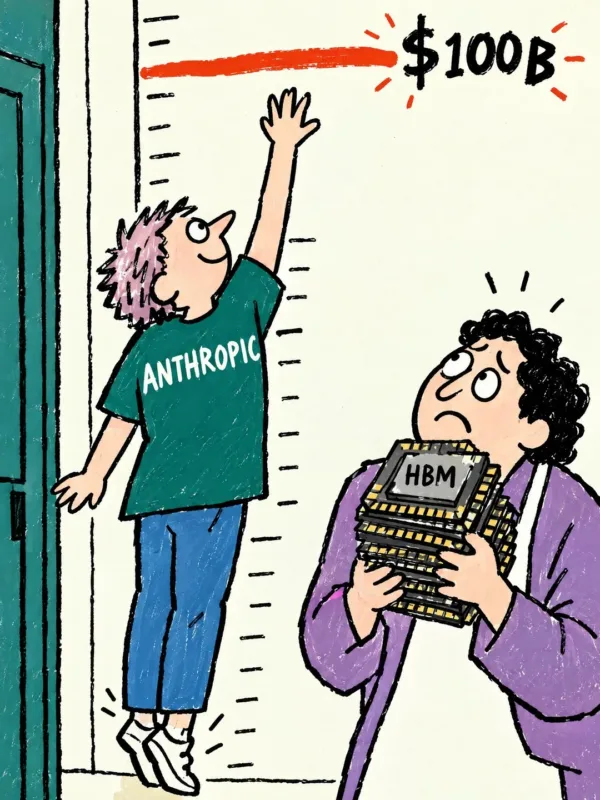
Two pieces of news came out on Oct. 14. Standard Chartered, a global bank (the British financial group that owns SC First Bank in Korea), let wealthy clients in the UAE (United Arab Emirates), starting with professional investors, buy and sell Bitcoin and ether (Ethereum) straight from their bank accounts. The same day, Payward, the parent company of crypto exchange Kraken, signed a deal to buy Saldo Bank, a Lithuanian digital bank.
The common reading is that ‘crypto has entered the mainstream financial system.’
But the key point lies elsewhere. Neither company directly explained why, but put the numbers side by side and the same picture appears. If banks sell coins directly, customers have less reason to go to an exchange outside the bank to buy them. If an exchange owns a bank, it gains another business — deposits and loans — on top of trading fees. In effect, the two have started competing for the money the same customers entrust to them.
- What did Standard Chartered open up?
Standard Chartered let eligible clients in the UAE buy and sell Bitcoin and ether through the bank accounts they already have. At first, it is open only to clients classified as professional investors (investors whose assets and experience exceed set thresholds).
The part to watch is how the coins are held. The bank chose a ‘closed-loop’ structure that keeps coin custody and settlement entirely inside its own walls. Clients don't need to set up a separate crypto wallet or sign up for another trading platform. It is the first time a global bank has launched such a service in the UAE, and the first time Standard Chartered has opened crypto trading directly to its wealthy clients.
It is like a department store that, after watching shoppers leave for a luxury boutique in the building next door, brings that brand right onto its own first floor. This time, though, the store doesn't just display the goods — it also handles payment and storage.
- Why is Kraken's parent company buying a bank?
Saldo Bank, which Payward is buying, had total assets of €163.9 million (about $180 million) at the end of 2025, up 22.7% in a year. The purchase price was not disclosed. According to the Financial Times, it is the first time a crypto company has bought a European bank. The deal is expected to close in 2027 after regulatory approval.
Buying a bank changes what a company can do. Payward will be able to offer European customers interest-bearing deposits, loans, cards and euro payments. Saldo Bank holds licenses in Lithuania, Finland, Sweden and Germany, and can also operate in the Netherlands. Co-CEO Arjun Sethi said a regulated European Union (EU) bank is needed to serve European customers as their main financial institution.
- Why trading fees alone aren't enough for an exchange
An exchange's basic income is the fee it takes when customers buy and sell coins. When trading slows, these fees tend to fall too. Payward's trading volume in the second quarter of this year was $310 billion, down 13% from a year earlier. Even so, its adjusted revenue rose 17% to $508 million.
The revenue mix changed too. Revenue tied to assets customers keep with the company, among other things, made up 60% of the total, up from 55% a year earlier. Payward has named custody, interest, payments and lending as sources of this revenue, and its banking division has already made more than $2 billion in loans.
Put simply, more than half of the exchange's revenue already comes from outside trading. A bakery whose revenue rose 17% even though 13% fewer customers came in is a shop that also earns money from things other than bread, like subscription deliveries. A bank license widens that ‘something else’ to include deposits and loans.
- What are banks worried about?
From a bank's point of view, a crypto exchange is an exit through which customer money leaves. In February this year, financial data firm Klaros analyzed transactions at 92 small US banks (community banks). Over 13 months, net deposit outflows from these banks to the crypto exchange Coinbase totaled $78.3 million. At the 53 banks where the direction of the money could be tracked, for every $2.77 that went out to Coinbase, $1 came back.
Put as a ratio, it is as if KRW 1 million comes back for every KRW 2.77 million that leaves a bank for an exchange (a ratio example). If a bank sells coins directly, customers have one less reason to move money to an exchange outside the bank to buy coins. Standard Chartered's structure, which ties custody and settlement inside the bank's walls, points the same way. But this is an interpretation read from the structure, not a reason the bank has given.
- What changes next?
Standard Chartered did not open the door all at once. It began Bitcoin and ether trading for institutional investors in the UK in July 2025, then expanded to institutional clients in the UAE on Sept. 3, 2026, and to wealthy clients in the UAE on Oct. 14. It plans to expand to other countries but has not given a timeline.
What's different this time is that the other side moved too. Kraken's parent company already has a limited-purpose payment account with the Fed, the US central bank (an account for holding money and settling payments directly with the Fed, of a type whose uses are restricted), and an Irish e-money license, and it now wants to add a European bank license. But the Saldo Bank acquisition is still awaiting approval, so it is not a done deal.
- BITPRESS Insight
In the end, banks and exchanges want each other's business for the same reason: steady income comes from wherever customers' money stays. Banks can keep customers who want to buy coins in-house, and exchanges gain another business to fall back on when trading slows.
So customers get more places to choose from. But even behind the same ‘buy Bitcoin’ button, who holds the coins and which country's regulators oversee them can differ. Standard Chartered keeps custody inside the bank's walls, while the Kraken side's bank purchase is still awaiting approval.
Rather than asking whether it's a bank that also does crypto or an exchange that also takes deposits, you'll see more clearly where to put your money if you first ask ‘who holds my money, and which regulator oversees it.’
Sources
https://www.coindesk.com/business/2026/10/14/standard-chartered-unlocks-direct-bitcoin-and-ether-trading-for-affluent-uae-clients
https://www.coindesk.com/business/2026/10/14/kraken-parent-payward-to-become-first-crypto-firm-to-buy-a-eu-bank-as-it-expands-into-deposits-lending
https://cointelegraph.com/news/krakens-parent-buy-lithuanian-saldo-bank-tradfi-expansion
https://theblock.co/news/business/2026-08-14-kraken-parent-payward-508-million-q2-adjusted-revenue-411818
https://cointelegraph.com/news/community-banks-see-net-deposit-outflows-to-coinbase-study
https://www.smarttoday.co.kr/ko-kr/articles/75286
Glossary
Closed-loop structure — A setup where buying, holding and paying with coins all happen inside a single bank, so customers don't need a separate wallet or exchange.
Professional investor — An investor whose assets or investing experience exceed set thresholds and who is therefore classified as allowed to trade higher-risk products.
Asset-based revenue — Revenue that comes not from fees charged when customers buy and sell, but from the custody, interest, payments and so on tied to the assets they keep with the company.
Adjusted revenue — Revenue a company calculates and announces separately, for example by leaving out one-time items, so it can differ from revenue under accounting standards.
BITPRESS articles are information to help your investment decisions, not a recommendation to buy or sell any stock or coin. Investment decisions and their results are your own responsibility.