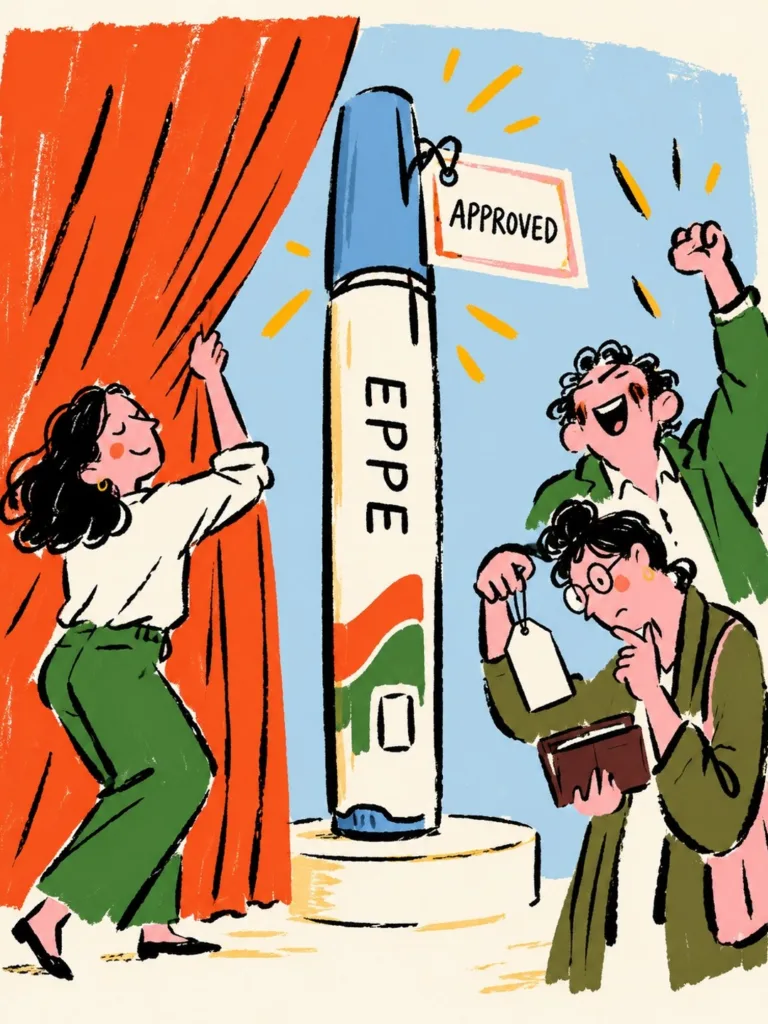
Good news for dieters who have struggled with shots costing about $450 a month, clinic fees included. South Korea's Ministry of Food and Drug Safety on Oct. 7 approved Efpe (efpeglenatide), an obesity shot from Hanmi Pharmaceutical. It is the 45th new drug developed in Korea and the first GLP-1 obesity drug developed in-house by a Korean drugmaker. It is not in pharmacies yet, though. The company aims to supply it by the end of the year, and as of approval day it had not set a price.
A "Korean Wegovy" arriving is not the whole story. On paper, Efpe's weight loss came in smaller than its two rivals', and Hanmi says it is weighing a "more affordable" price. The real question behind this approval is whether that price can move what other shots cost, about $187–$224 a month at the starter dose.
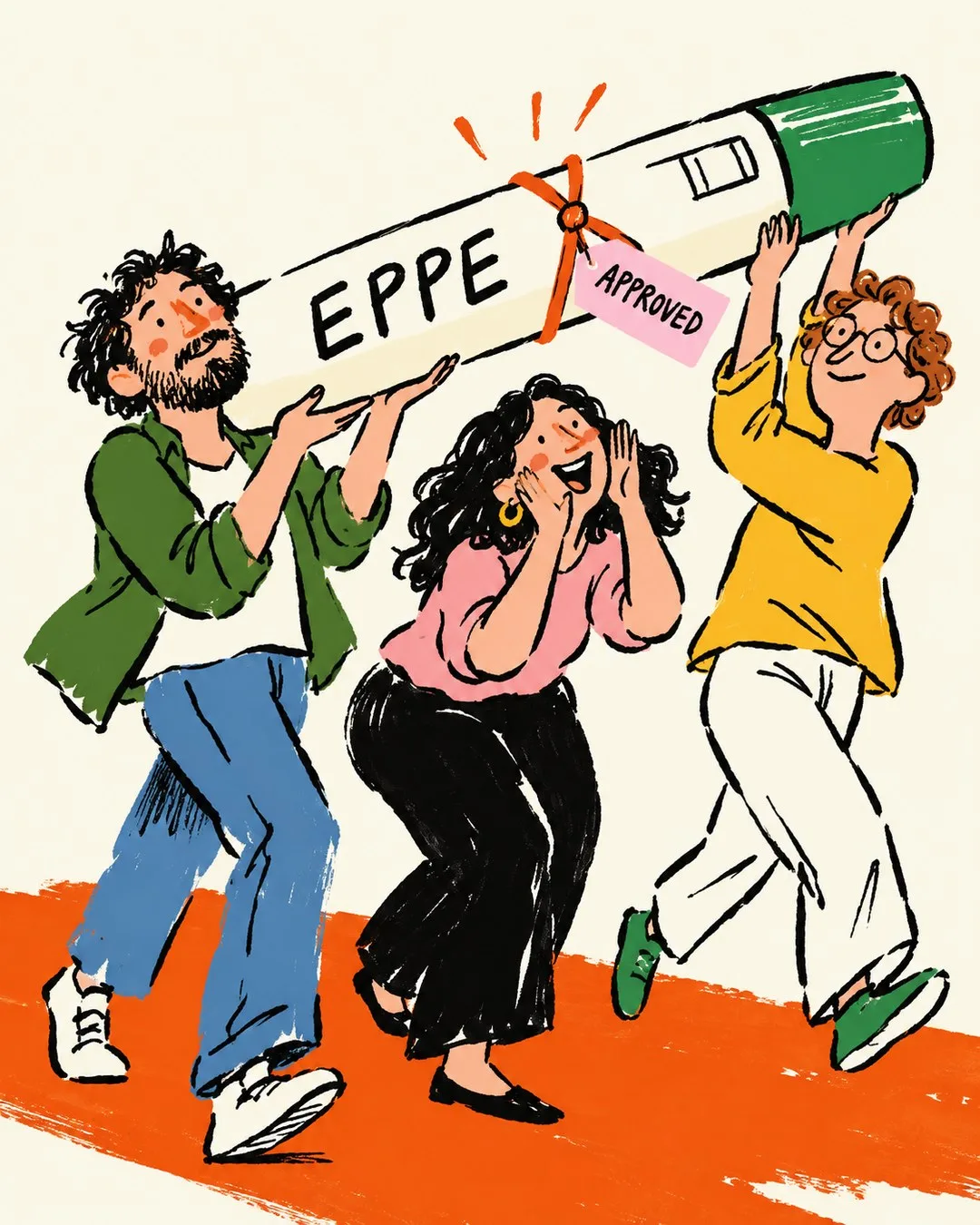
- What Efe is, and when it arrives
GLP-1 is a hormone your gut releases after you eat. Efpe acts like that hormone: it curbs appetite and slows how fast food leaves the stomach, so you feel full longer. It is injected once a week and is meant for adults with obesity or overweight but without diabetes, alongside diet and exercise.
It works the same way as Wegovy (an obesity shot from Denmark's Novo Nordisk, launched in Korea in October 2024). The difference is the factory. Unlike its two rivals, which are imported as finished products, Efpe is made from raw ingredients up at Hanmi's plant in Pyeongtaek, Korea. An exact launch date has not been announced.
- How big has Korea's obesity drug market become?
According to IQVIA (a drug-market research firm), Korea's obesity drug market grew from about $181 million in 2024 to about $612 million in 2025. Of that, Mounjaro (an obesity shot from U.S.-based Eli Lilly, launched in Korea in August 2025) took about $361 million and Wegovy about $165 million, together about 86%.
Put simply, the market more than tripled in a year, and two imported shots split it. By market share in August, Mounjaro had 85% and Wegovy 9%. Globally, J.P. Morgan forecasts the market for this class of drugs, including GLP-1s, will reach $200 billion by 2030.
- How does it compare with Wegovy and Mounjaro?
In an interim look at a Phase 3 trial of 448 Korean patients with obesity, people on Efpe for 40 weeks lost 9.75% of their body weight on average. People on a placebo (a dummy shot) lost 0.95%. For a 176-pound person, that works out to about 17 pounds in 40 weeks (hypothetical).
Measured against placebo, Efpe beat it by 8.80 percentage points, Wegovy by 12.5 points (68 weeks; 11.1 points in a trial of Korean and Japanese patients) and Mounjaro's top dose by 17.8 points (72 weeks). But Efpe's figure is a 40-week interim result and the trial groups differ, so this is not a head-to-head comparison. Hanmi says stomach side effects such as nausea and diarrhea run about half the rate of its rivals'.
- Besides Wegovy and Mounjaro, what else is coming?
The next fight is over pills. Eli Lilly's weight-loss pill Foundayo was approved in the U.S. on April 1, and as of July reports it was under review in Korea too, with a launch expected as early as next year. Novo Nordisk was considering bringing its Wegovy pill to Korea. In the U.S., Foundayo's lowest dose costs $149 a month without insurance, about half the roughly $299 a month for the shots (as of April reports).
In Korea, as of April reports, HK inno.N was running a Phase 3 trial of a GLP-1 drug candidate, and Ildong Pharmaceutical, Chong Kun Dang and D&D Pharmatech are developing pills.
- How much will Efpe cost?
Korea's national health insurance doesn't cover obesity shots, so patients pay the full price. The four-week supply price at the starter dose is about $161 for Wegovy and about $208 for Mounjaro; pharmacies sell them for about $187 and $224 on average.
Efpe's price hasn't been set, and Hanmi says it is weighing a "more affordable" price. The industry expects a starter-dose supply price of about $112 and a pharmacy price of about $149. If that holds, someone paying $224 a month at a pharmacy for Mounjaro's starter dose would pay about $75 less a month, or about $896 a year (hypothetical).
- How much could Efpe change the market and shot prices?
Hanmi's goal is at least $75 million in annual sales. At $149 in revenue per prescription, that takes 500,000 prescriptions a year; at $75, it takes 1 million. If the two rival drugs' prescription volume stays where it is, Efpe would need to win 20–40% of it. In sales terms, that is about 12% of last year's $612 million market (simple calculation). Because Efpe is cheaper, a roughly one-tenth share of the money still means a much bigger share of the people using these shots.
There is precedent for price cuts. Wegovy's supply price was about $278 for every dose, but ahead of Mounjaro's launch it cut prices by dose, including the starter dose to about $157 and the 1.7 mg dose to about $239. Industry watchers say the two imported drugs are likely to cut prices to defend their share once Efpe arrives. That is a forecast, though, and Efpe's price is still undecided.
- BITPRESS Insight
In the obesity shot market, the price comes straight out of patients' pockets. So when a rival arrives, prices have room to move. Wegovy cutting prices ahead of Mounjaro's launch is the precedent. This time, the Korean-made Efpe is expected to offer a more affordable price in exchange for smaller weight loss on paper. If the two imported drugs cut prices to defend their share (a forecast), shot prices will change even for people who never take Efpe.
That shifts the yardstick. Obesity shots are taken for months or longer. The money question isn't only how many percent you lose, but which shot costs less when you divide a year's price by the pounds you lose.
Sources
https://www.etoday.co.kr/news/view/2633571
https://news.bizwatch.co.kr/article/healthcare/2026/10/07/0043
https://www.fnnews.com/news/202610072126486628
https://www.insightkorea.co.kr/news/articleView.html?idxno=256090
https://www.segye.com/newsView/20261007520173
https://news.bizwatch.co.kr/article/healthcare/2026/09/23/0033
https://www.huffingtonpost.kr/article/260587
https://www.fetv.co.kr/news/articleView.html?idxno=307227
https://news.bizwatch.co.kr/article/healthcare/2026/07/08/0035
https://www.thelec.kr/news/articleView.html?idxno=54738
https://www.jpmorgan.com/insights/global-research/current-events/obesity-drugs
https://doctornow.co.kr/content/magazine/35248cf7505d4411a1fc4d9a8173ada9
Glossary
GLP-1 — A hormone the gut releases after a meal that curbs appetite and keeps you feeling full longer.
Placebo — A dummy drug with no active ingredient, used as a comparison to isolate the real drug's effect.
without national health insurance coverage — Care or drugs that national health insurance doesn't cover, so patients pay the full price.
Supply price — The price a drugmaker charges wholesalers and pharmacies; the pharmacy price is higher once distribution and pharmacy margins are added.
Phase 3 trial — The final pre-approval stage, in which a drug is given to many patients to confirm it works and is safe.
BITPRESS articles are information to help your investment decisions, not a recommendation to buy or sell any stock or coin. Investment decisions and their results are your own responsibility.