On Oct. 15 (U.S. time), the Philadelphia Semiconductor Index (a basket of chip companies listed on U.S. exchanges) fell 0.88%, its seventh straight daily decline. It had been down as much as 4.4% during the day and sits about 20% below its June peak. The same day, the S&P 500 health care index, in which big drugmakers such as Eli Lilly and AbbVie carry heavy weight, hit a record high. Eli Lilly rose as much as 5.2% intraday, and AbbVie had closed at a record $283.48 the day before.
When inflation picks up again and rate hikes look possible, people usually assume stocks fall across the board. Yet the S&P 500 actually rose 0.33% that day. Money leaving chip stocks moved into defensive stocks such as drugmakers and health care, and into Treasury bonds.
The real story is elsewhere. The market as a whole did not collapse; big money is changing where it hides. The dividing line is whether a company borrows heavily to pour money into AI, or whether its business holds up when the economy slows.
- Where did the money leave, and where did it go?
Over seven trading days, the companies in the chip index lost close to $2 trillion in market value (as of intraday Oct. 15). Korea felt the same wind. On Oct. 15 the KOSPI fell 7.6%, SK hynix dropped 11% and Samsung Electronics 9.5%.
On the other side, the S&P 500 health care index rose 2.8% intraday to a record. Besides Lilly, Bristol Myers Squibb, Amgen, AbbVie, Johnson & Johnson and Pfizer gained 2% to 4%. Sam Stovall, chief investment strategist at CFRA Research, called it "emblematic of a defensive rotation" (money switching from aggressive sectors to safer ones).
- Why is money leaving chip stocks now?
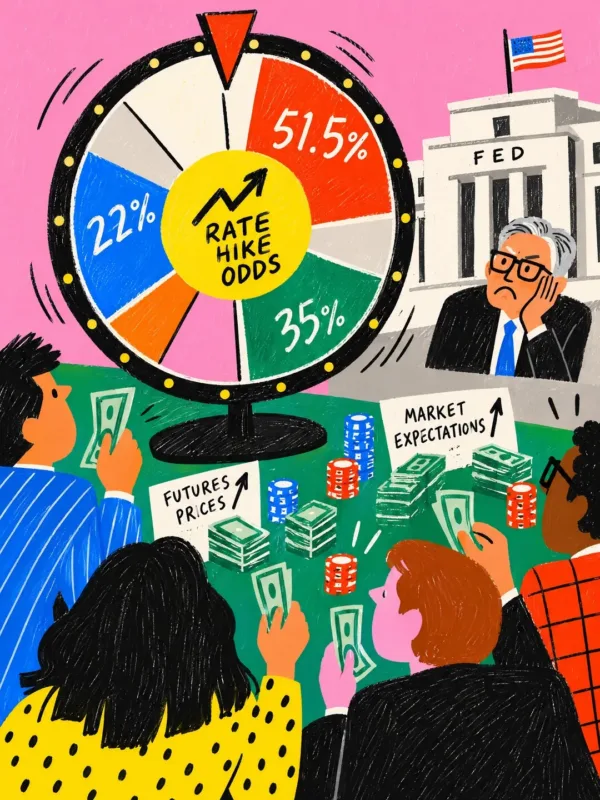
U.S. consumer prices for September, released Oct. 14, were up 3.7% from a year earlier, faster than August's 3.4%. Producer prices, released Oct. 15, rose 1.3% in a single month, the biggest jump since March 2022. The odds that the Fed raises rates by December, based on interest-rate futures prices (CME FedWatch), rose to about 67% from 62% a day earlier. On Oct. 14, the day the inflation data came out, the S&P 500 and the Nasdaq had their worst day since July.
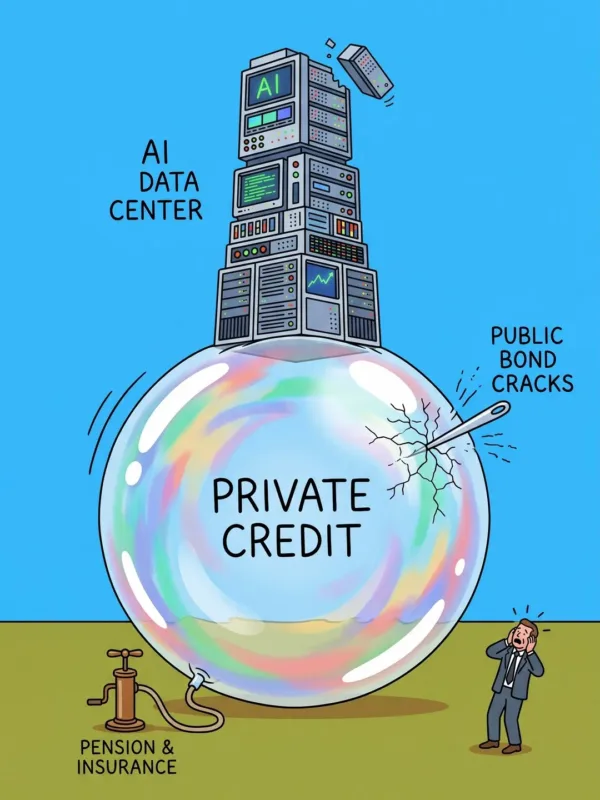
When rates rise, companies that borrow to build data centers pay more interest. "The cost to finance everything, whether it be a new single-family house or a giant data center, is going up," said Jed Ellerbroek, a portfolio manager at Argent Capital Management. "The best performing stocks today are the non-cyclical, defensive businesses." Heavily indebted data center company CoreWeave (an AI data center and computing firm backed by Nvidia) fell 15.5% on Oct. 14 alone.
Put simply, for a shop owner who expanded on a credit line, news of higher interest rates hurts right away. A shop with no debt is shaken far less by the same news.
- Why did that money go to drug stocks?
Stovall said money moved "because of the worry that maybe some sort of a debt crisis is emerging" at heavily indebted tech companies. The alternatives that money picked were defensive stocks such as consumer staples, health care and utilities. Investment bank RBC Capital Markets also raised U.S. health care to "overweight" on Oct. 14 and cut technology to "market weight," citing tech's high valuations.
Think of a grocery budget. When money gets tight, people cut back on eating out but rarely skip the medicine they take every day. That is what "less tied to the economy" means. Still, reports said the Oct. 14 jump in drug stocks was triggered by the inflation data, not by company-specific news. In other words, money seeking shelter, not earnings, pushed the stocks up.
- If you own just "the S&P 500," what changes?
Based on estimates at the Oct. 15 close, technology makes up 38.5% of the S&P 500 and health care 9.5%. Nvidia alone accounts for 7.96%.
If you had put KRW 10 million into a fund tracking the S&P 500, about KRW 3.85 million would sit in tech stocks and about KRW 950,000 in health care (a hypothetical split using the Oct. 15 estimated weights). Even on a day the index rose 0.33%, money selling tech and money buying drug stocks were moving sharply in opposite directions inside it.
- Has this happened before?
Something similar happened in June. On June 26, AbbVie, Eli Lilly and Johnson & Johnson all closed at record highs, and coverage at the time described it as money rotating from tech and chips into health care. The chip index also peaked in June.
What is different this time is the reason. In June the story was about earnings: "The quality companies are benefiting," said RBC analyst Trung Huynh. This time, inflation, interest rates and AI companies' debt pushed the money out.
- BITPRESS Insight
A headline like "U.S. stocks plunge" sounds like one block, but on Oct. 15 money inside the U.S. market left chip stocks for defensive stocks such as drugmakers. Looking at the index alone, it was an ordinary day with a 0.33% gain.
Someone who holds U.S. stocks through a single S&P 500 fund has more than four times as much money in tech as in health care. On days when rate worries grow, what decides your return is not the index's name but which sectors carry the most weight inside it.
How much your U.S. stocks will swing on rate news comes down not to "I bought U.S. stocks" but to how that money is split between companies borrowing to invest in AI and businesses less tied to the economy.
Sources
https://www.cnn.com/2026/10/15/business/tech-selloff-nasdaq-ai-intl
https://idahobusinessreview.com/2026/10/15/sp-500-nasdaq-ai-selloff-inflation-concerns/
https://rallies.ai/news/healthcare-stocks-rally-as-investors-seek-safety-amid-tech-debt-worries-ab83232d32041540
https://yournews.com/2026/10/15/7227238/wall-street-rebounds-as-investors-abandon-ai-stocks-for-healthcare/
https://www.moomoo.com/community/feed/eli-lilly-merck-co-and-abbvie-shares-surged-here-s-117441262059526
https://chartrow.com/sp500/sector-weights
https://www.itiger.com/news/2646736234
Glossary
Philadelphia Semiconductor Index — An index that tracks major chip companies listed on U.S. exchanges, showing how the chip sector as a whole is doing.
S&P 500 health care index — A sector index made up only of the drug, biotech and medical companies in the S&P 500.
Sector rotation — When money stays in the stock market but moves out of one sector and into another.
Defensive stocks — Shares of companies whose sales hold up even when the economy weakens, so their prices tend to swing less.
Producer prices — Changes in the prices companies receive when they sell what they make; over time these often pass through to consumer prices.
KOSPI — The main index of the Korean stock market, much like the S&P 500 in the U.S.
BITPRESS articles are information to help your investment decisions, not a recommendation to buy or sell any stock or coin. Investment decisions and their results are your own responsibility.