
The Bitcoin market is really two markets. One is the **"spot market,"** where coins are actually bought and sold; the other is the **"derivatives (futures and options) market,"** where people bet on future prices. Lately, this "betting table" has grown so large that it is driving actual market prices.
1. Leverage and liquidation: "buying KRW 10 million worth with KRW 1 million"
The core of derivatives is **leverage**. It is a way to chase big profits with little money, and it often becomes the main culprit behind crashes.
- A simple example: Say you have KRW 1 million. You borrow KRW 9 million from an exchange and bet a total of KRW 10 million on Bitcoin rising (10x leverage).
- If it rises: If Bitcoin rises just 10%, you make KRW 1 million — a 100% return on your principal.
- If it falls: If Bitcoin instead falls 10%, you are at risk of not being able to repay the loan. At that point the exchange forcibly sells your coins. This is **"forced liquidation."**
- Impact on the market: Even a small price drop can unleash a waterfall of these "forced liquidation" sell orders. That selling pushes prices down further and triggers more liquidations, causing a **"cascading decline."**
2. Funding rate: "the entry fee paid by those betting on a rise"
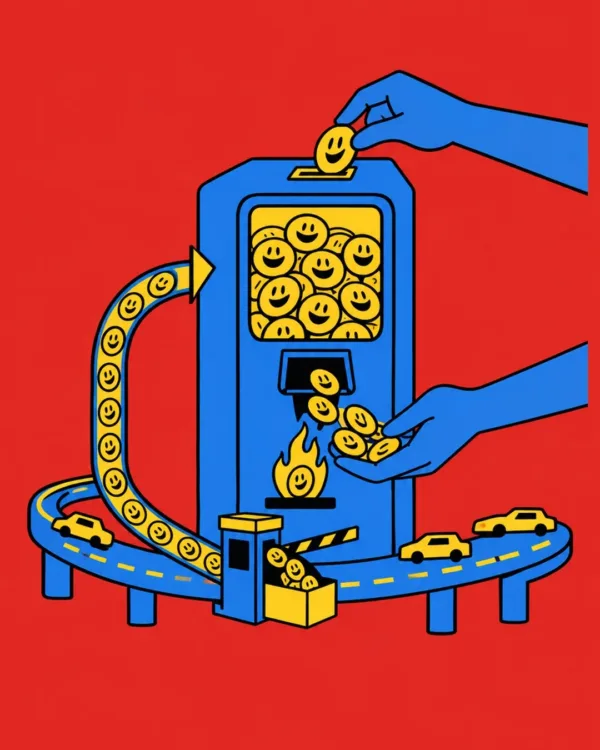
The futures market has a unique system called the **"funding rate."** It is a kind of "fee" meant to keep the market from tilting too far to one side.
- A simple example: If 90% of the market believes "the price will go up!" (long positions), those traders pay a fee every eight hours to the minority who believe "the price will go down!" (short positions) in return for keeping the market balanced.
- Insight: What if the funding rate gets too high? It means the "entry fee" for those betting on a rise has become expensive. If people feel the burden, give up their bets and start selling, the price becomes more likely to plunge instead.
3. Options expiry: "a tug-of-war between huge sums of money"
At certain points each week or month, options contracts expire. Around then, institutional investors fight hard to "steer the price."
- A simple example: If big investors hold many contracts that say "we get a bonus if Bitcoin is below KRW 150 million on Dec. 26," they will try to keep the price below that level right before expiry, even if it means dumping coins on the market. This is described as the price converging on the "max pain" point.
💡 BITPRESS's "survival insights"
To avoid being swept away by the waves of the derivatives market, beginners only need to remember three things.
- Watch out for news that "liquidation volume is piling up on exchanges": If this news comes out when prices are at a peak, it is a warning light that big volatility may be coming soon.
- Be careful chasing prices when the funding rate is excessively "positive (+)": When everyone is shouting that prices will rise, it is more likely a short-term top.
- Only use spare money for spot investing: Volatility in the derivatives market shakes even spot holders' nerves. But spot investing, which carries no "forced liquidation," can ultimately ride out the derivatives whirlpool if you give it time.
Conclusion: Bitcoin's price no longer rises simply because many people "want to buy." It is set by the outcome of a "complex game of strategy" in the derivatives market. Don't just look at charts — get in the habit of reading the market's hidden sentiment (derivatives data).
Additional notes:
- Key terms: Long = a bet that the price will rise / Short = a bet that the price will fall
- Checking the data: We recommend making a habit of checking real-time "liquidation heatmaps" and "funding rates" on sites like Coinglass.