



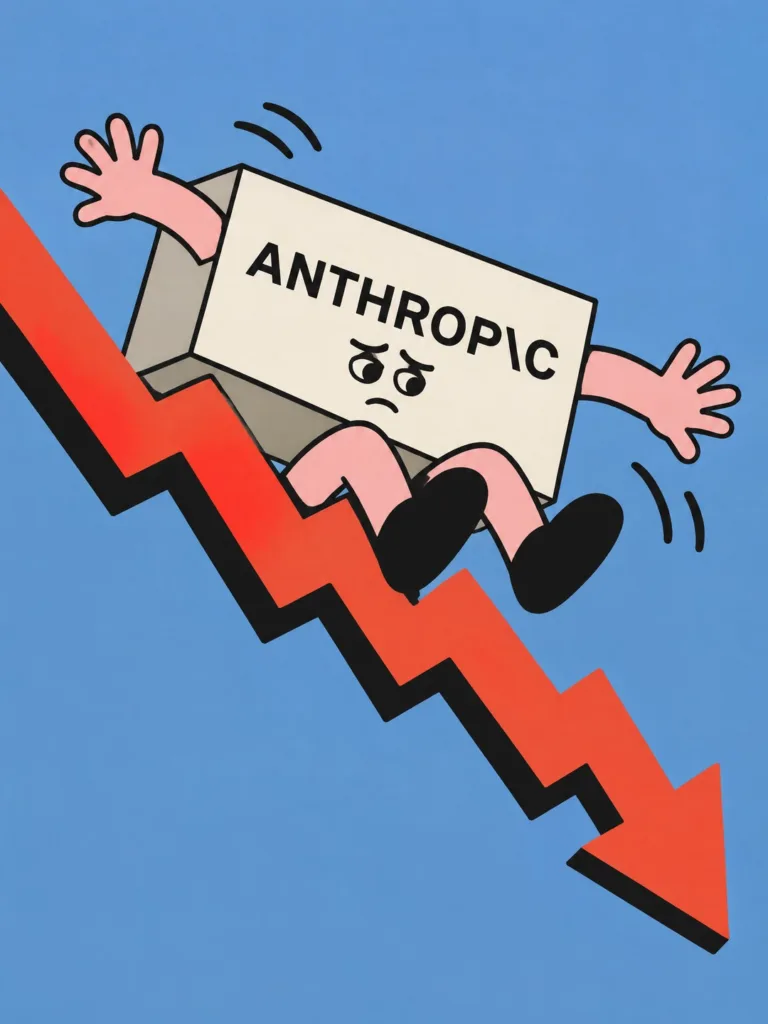
On November 24, Anthropic (the U.S. AI company behind the Claude chatbot) fell about 5% in pre-market trading, back to the $83 IPO price. That is about 28% below the $115 peak it hit after its November 19 Nasdaq listing.
The common view goes like this. The IPO price is what institutions paid for shares before listing, so buying at that level is as cheap as they did, and there is less room to fall.
But the key point is different. The IPO price is not a floor; it is a negotiated price that the company and institutions set when orders were hottest. And Anthropic still has a string of events ahead that could move the stock.
- Why $83 cannot serve as a benchmark for a bargain
Anthropic first set a target range of $70 to $78 per share. As orders poured in, it priced the shares at $83, above that range, and sold 980 million shares to raise about $81 billion. It was the largest initial public offering (IPO, the first sale of a company's shares to the public) in U.S. history.
The heat is also visible in a comment from a U.S. asset manager. Brad Gerstner of Altimeter Capital said, 'We placed the largest subscription in our firm's 20-year history.' In other words, even big investors wanted to buy far more than usual, and the IPO price was set in that climate.
Think of a new apartment's sale price. A unit selling below that price does not mean that price is the floor. The price was set when subscription fever was at its peak.
- Less than a week after listing, the stock fell 28% from its peak
On November 19, the stock briefly traded at $111.50 right after listing, 34% above the IPO price. But it closed that day at $97.17, so its gain shrank to 17% in a single day. It then hit a $115 peak and slid back to the IPO price level by November 24.
Every $1,000 bought at the peak would be worth about $722 at $83. Put simply, money that jumped in right after listing is already at a loss, and institutions that received IPO shares are only just breaking even.
- The CEO sold at the same $83 price, according to a filing
An SEC filing shows CEO Dario Amodei sold 3.38 million Class A shares at $83 each on November 20. That is about $281 million.
That is the IPO price, not the prior day's $97.17 close. However, how the sale was arranged is not confirmed, so this sale alone cannot show what the CEO thinks of the stock.
Selling was also open from the start. Some current and former employees could sell up to 10% of their holdings from the first day of trading.
- The remaining events are analyst reports and lock-up releases
The first is underwriter research. Underwriting banks such as Goldman Sachs and Morgan Stanley cannot publish reports on the company for at least 10 days after listing under the rules. Counting from the November 19 listing, reports could come as early as late November.
One firm has already published. Needham rated the stock Buy with a $150 target price on the first trading day, and Bloomberg's tally puts the average target of the five Buy ratings at about $116. Underwriter reports could give institutions that have been waiting a reason to take another look at the stock.
The second is the release of lock-ups (a promise that pre-listing shareholders cannot sell their shares for a set period). Anthropic's lock-ups are released in 23 steps over one year. Some executives and employees can sell another 35% of their holdings after the annual results for fiscal 2026 (the company's one-year accounting period), and the founders can sell 29% about 180 days after listing.
Think of it as the same goods being resold on a secondhand market 23 times over one year. Unlike resale, though, a stock's price can hold if buyers keep pace with the added sellers.
- Facebook took more than a year after listing to top its IPO price again
There is also a case where the IPO price did not become a floor. Facebook, which listed in 2012 at an IPO price of $38, saw the lockup on 271 million shares expire on Aug. 16. It closed at $19.05 the next day. By September it had fallen to $17.55, and the first time it traded above $38 during the day after its debut was July 31, 2013.
SpaceX, which listed earlier, was at $131.60 in pre-market trading on November 24, below its $135 IPO price.
There is also a difference. Facebook barely held its IPO price on its first day, while Anthropic traded as much as 34% above its IPO price right after listing. That also means many investors bought above the IPO price.
- BITPRESS Insight
Buying at the IPO price does mean buying at the same price as the institutions. But the institutions' $83 was set when orders were hottest, so it does not guarantee a floor going forward.
Over the next year, what moves Anthropic's stock is not earnings alone. Underwriter reports will come out, and locked-up shares will be released 23 times. Each time, the balance between sellers and buyers is reset.
A better test of the floor is not the gap from the IPO price, but whether the stock holds up on lock-up release days.
Sources
https://www.coindesk.com/tech/2026/11/24/live-updates-bitcoin-pulls-back-to-usd60-000-as-stock-rally-fails-to-budge-crypto
https://www.aljazeera.com/economy/2026/11/19/anthropic-starts-trading-in-the-us-after-blockbuster-ipo
https://www.stlpr.org/npr/2026-11-19/investors-scramble-for-a-piece-of-ai-giant-anthropic-in-blockbuster-ipo
https://thenextweb.com/news/anthropic-ipo-amodei-nasdaq-bell-ant-debut-needham-staff-sales
https://www.businessinsider.jp/article/2610-anthropics-stock-lockup-ipo-valuation-ant-dario-amodei/
https://leverageshares.com/us/insights/anthropic-lock-up/
https://www.financialsamurai.com/ipo-quiet-period/
https://www.mprnews.org/story/2012/08/17/facebook-falls-to-half-of-public-offering-price
https://thedailyrecord.com/2013/07/31/facebook-passes-38-initial-public-offering-price/
Glossary
IPO price — The price at which a company sells its new shares to institutional and individual investors when it goes public. It is set by looking at the order book right before the listing.
Lockup — A commitment that keeps executives, employees and investors who held shares before the IPO from selling them for a set period of time.
Underwriter — A securities firm or bank that handles a company's IPO process, sets the offer price, and sells shares to investors.
Pre-market trading — Trading that takes place early in the morning, before regular U.S. stock market hours open. Trading volume is lower than during regular hours.
BITPRESS articles are information to help your investment decisions, not a recommendation to buy or sell any stock or coin. Investment decisions and their results are your own responsibility.





