



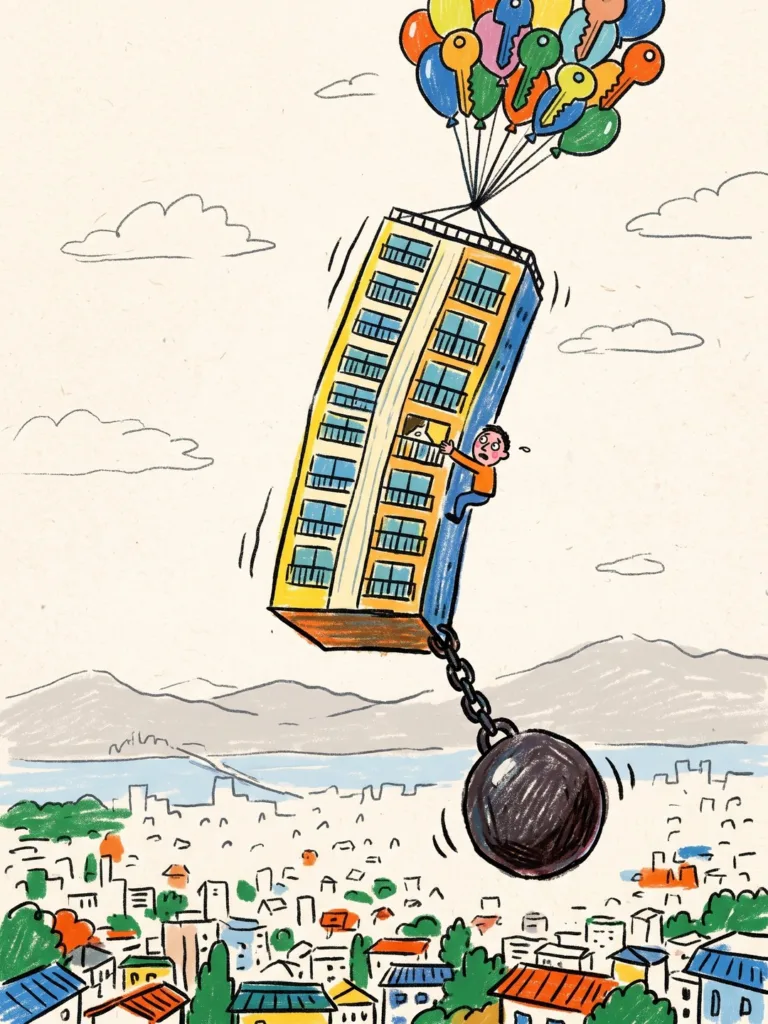
The Construction & Economy Research Institute of Korea (CERIK, a think tank that publishes construction and real estate outlooks) forecast on Nov. 15 that Seoul-area home prices will rise 3.0% next year. Two days earlier, on Nov. 13, Lee Hyun-cheol, head of the Apartment Cycle Research Institute, warned on a YouTube show that the Seoul-area rally will soon stall and that a "long downturn lasting as long as 4 to 5 years" is coming.
To someone trying to buy a home, the two messages sound like opposites. So people usually ask "which one is right?" or conclude that they should just follow whichever side most experts take.
But the real point lies elsewhere. In BITPRESS's view, the two forecasts are looking at different things in the same market. CERIK pointed to a shortage of jeonse (Korea's lump-sum deposit lease) homes, while Lee saw the current rise as temporary and flagged the risk that buyers with mortgages could not keep up with the interest.
- What exactly did the two forecasts say?
In its "2027 Construction and Real Estate Outlook," CERIK put next year's rise in Seoul-area sale prices at 3.0%. That is smaller than this year's forecast of 4.8%, but it means prices keep rising.
Lee says the opposite. In his view, the current gains on the outskirts of Seoul and in parts of the metropolitan area are "a temporary phenomenon appearing while market energy is badly depleted," and after the rise stalls soon, prices will fall for as long as 4 to 5 years.
The two numbers also cover different time spans. The 3.0% is a forecast for next year alone, while 4 to 5 years is the longest decline Lee mentioned. So rather than putting them side by side and picking a winner, it is better to look at what each one rests on.
- CERIK says the shortage of jeonse homes is holding up home prices
It starts in 2023. That year, real estate project financing (PF, a way of borrowing money to build apartments with the project's outlook as collateral), a type of site-level loan, went bad, and housing starts fell sharply. Homes can be occupied only after construction finishes, so CERIK expects that gap to show up next year as a cliff in move-in supply.
Fewer new apartments → fewer homes offered for jeonse → higher jeonse prices. CERIK forecast that nationwide jeonse (Korea's lump-sum deposit lease) prices will rise 4.5% next year, faster than this year's 3.6%. It also judged that "rising jeonse prices act as a floor under sale prices."
Picture a tenant who has failed to find a jeonse home to move into for months and changes their mind to "might as well buy." But buying takes a large sum of cash or a loan, so not every tenant can make that switch.
- The jeonse shortage already shows up in the numbers
In a Korea Real Estate Board survey, Gyeonggi Province's jeonse supply-demand index for the second week of Nov. was 110.7. That is the highest in about 5 years, since the first week of Aug. 2021 (111.3), when the jeonse crunch was severe. Seoul was higher still that week at 120.2, and Incheon was at 110.4.
Nam Hyuk-woo of the Woori Bank Real Estate Research Institute explained that "tenants with financial means are switching to buying, or being pushed out to surrounding areas." The government plans to calm the rental market with its "Housing Stability Plan," which provides for 44,000 move-ins in the Seoul area and 100,000 public homes by the first quarter of next year. If that supply arrives on time, the jeonse shortage that CERIK relies on eases by that much.
- Lee Hyun-cheol sees the current rise as temporary
Lee's basis for expecting a decline of as long as 4 to 5 years is his judgment that the current rise is a temporary phenomenon arising while market energy is badly depleted. He also noted that in past corrections after surges, even a "smart single home" in areas like Gangnam fell without exception.
He also pointed to the risk that people who follow the rally by buying with a loan may not be able to keep up with the interest. "The moment you enter with a loan, prices have to keep rising for you to hold on, and if a downturn lasts for years, you may not withstand the interest burden and end in disaster," he said.
CERIK did not leave this force out either. It said high mortgage rates, limits on loan amounts and the possibility of heavier taxes would weigh on buying. It judged, however, that solid demand in Seoul and large bonuses in the semiconductor industry would support prices.
- How much does a 1-percentage-point rate gap cost each month?
Neither forecast said whether interest rates will rise. But we can calculate whether a buyer could cope even if rates did rise. Suppose someone borrows KRW 300 million for 30 years with equal principal-and-interest payments: at 4% a year, they pay about KRW 1.43 million a month, and at 5%, about KRW 1.61 million. A 1-percentage-point rate difference means about KRW 180,000 more each month, or about KRW 2.14 million more over a year.
Put simply, even a small rise in rates noticeably increases the money that leaves your paycheck each month. While home prices are rising, this burden is hidden, but if prices stand still for a few years, only the interest is left.
- BITPRESS Insight
In BITPRESS's view, the two forecasts seem to be saying the other is wrong, but they are actually measuring different things. If the force from the jeonse shortage is large → some tenants move to buying → home prices are held up. If, as Lee says, the current rise is temporary and the downturn drags on → buyers with loans struggle to cover the interest.
Which side is bigger cannot be settled now, and it is not decided by a majority of experts either. So there are two things to watch. One is whether the jeonse supply-demand index stays high, and the other is which way loan rates move.
For someone trying to buy a home, the remaining question is less "will prices rise or fall?" than "if rates rose 1 percentage point, how many years could I carry about KRW 180,000 more a month on a KRW 300 million loan?" If you can hold on, you can ride out the downturn warning, and if you cannot, it is risky even if the rise forecast turns out right.
Sources
https://www.fnnews.com/news/202611150959100017
https://m.news.nate.com/view/20261115n06777
Glossary
Project financing (PF) — A way of borrowing money to build apartments, backed by what the project is expected to earn rather than by land or a company's credit.
Move-in volume — The number of new homes completed in a given year that people can move into.
Equal principal-and-interest repayment — A way of repaying a loan in which the combined principal and interest is paid in equal monthly amounts.
BITPRESS articles are information to help your investment decisions, not a recommendation to buy or sell any stock or coin. Investment decisions and their results are your own responsibility.





