
Tether bought Bitcoin while prices were falling
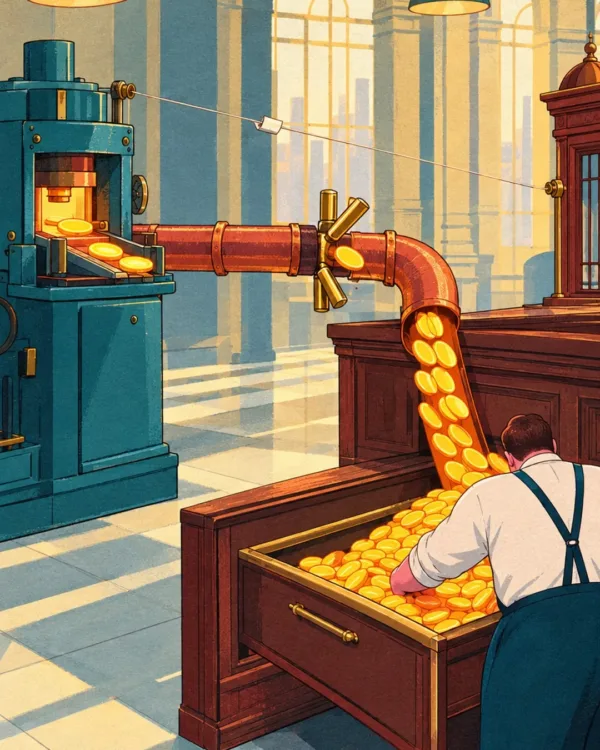
Tether bought about 8,888 BTCmore in Q4 2025, increasing its Bitcoin holdings.
What matters is the timing of the purchase..
That period
- was not a strong uptrend for Bitcoin
- but a stretch of repeated volatility and corrections.
In other words, this purchase
was neither chasing rising prices,
nor a strategy aimed at short-term momentum.
Tether deliberately
acquired Bitcoin while prices were depressed— that is what it did.
Why a "falling Bitcoin" instead of Treasuries?
Many investors ask:
"Wouldn't Treasuries be safer for USDT reserves?"
That's right.
If you only look at short-term stability, Treasuries are the answer.
But Tether's choice
is closer to **"structural efficiency"** than "stability."
1️⃣ Tether looks at "system stability," not "returns"
Tether's Bitcoin buying
like those of ETFs and institutions, aimed at maximizing returns— that is not its purpose.
For Tether, Bitcoin is
- not a short-term volatile asset but,
- over the long term, an asset that defends the USDT system..
Buying when prices are overheated
does not fit this purpose.
If anything,
- The more anxious the market,
- the more depressed the price,
the greater Bitcoin's
appeal as a long-term defensive assetbecomes.
2️⃣ Treasuries are "stable," but not "asymmetric"
U.S. Treasuries are safe, but
- they have little room to rise significantly
- and their real value erodes under inflation.
Bitcoin, on the other hand,
- with downside risk already priced in,
- and upside left open, an asymmetric structure— that is what it offers.
From Tether's point of view,
- Treasuries are a defensive asset;
- the greater Bitcoin's Bitcoin is a leveraged bet on the system's growth.
.
That is why Tether
doesn't fill its reserves with Treasuries alone.
3️⃣ What matters is "who buys when prices fall"
The question that really matters in the market is this:
"Who is buying, and with what kind of money?"
Tether
- Not retail investors,
- not hedge funds,
- and with no risk of short-term liquidation.
In other words,
A buyer with no reason to sell.
When such a buyer
keeps buying steadily during price declines,
it firms up the market's structural floor.
What this buying means for Bitcoin's price
✔ It is not a short-term bullish signal
This purchase
is not a signal that "it's about to skyrocket."
Tether does not make price predictions.
✔ But it is "buying that builds a floor"
Tether's buying
- happens most quietly
- when fear lingers in the market
- and liquidity has dried up.
This resembles
Not buying that pushes prices up,but that
but buying that keeps prices from collapsing.
The "invisible floor" Tether built
In the Bitcoin market,
- retail buys at the top
- and leverage collapses in corrections.
In between,
Tether
- when prices are depressed,
- it comes in more quietly than anyone
- carrying the most cash.
The more this pattern repeats,
the higher Bitcoin's price floor
gradually rises.
BITPRESS Insight
Tether's Bitcoin buying
It is not "a bet predicting a rally."
It is a structural judgment
that Bitcoin will not break down easily..
- Treasuries are safe, but they don't create change.
- Bitcoin is unstable, but it changes the structure.
Tether
Tether is a player that uses both at once.
And here is the important point:
when Bitcoin corrects,
the coolest-headed money is coming in.
When the market talks of fear,
the system is already preparing for the next stage.