SpaceX reported third-quarter revenue of $14.575 billion on Oct. 20, up 161% from a year earlier, and swung to a $4.4 billion profit. On the earnings call the same day, Elon Musk said Tesla and SpaceX have each set up a special committee to discuss merging the two companies.
The easy read is that Tesla shareholders win by teaming up with a booming SpaceX. But the two committees haven't agreed on any terms, and there is no timeline.
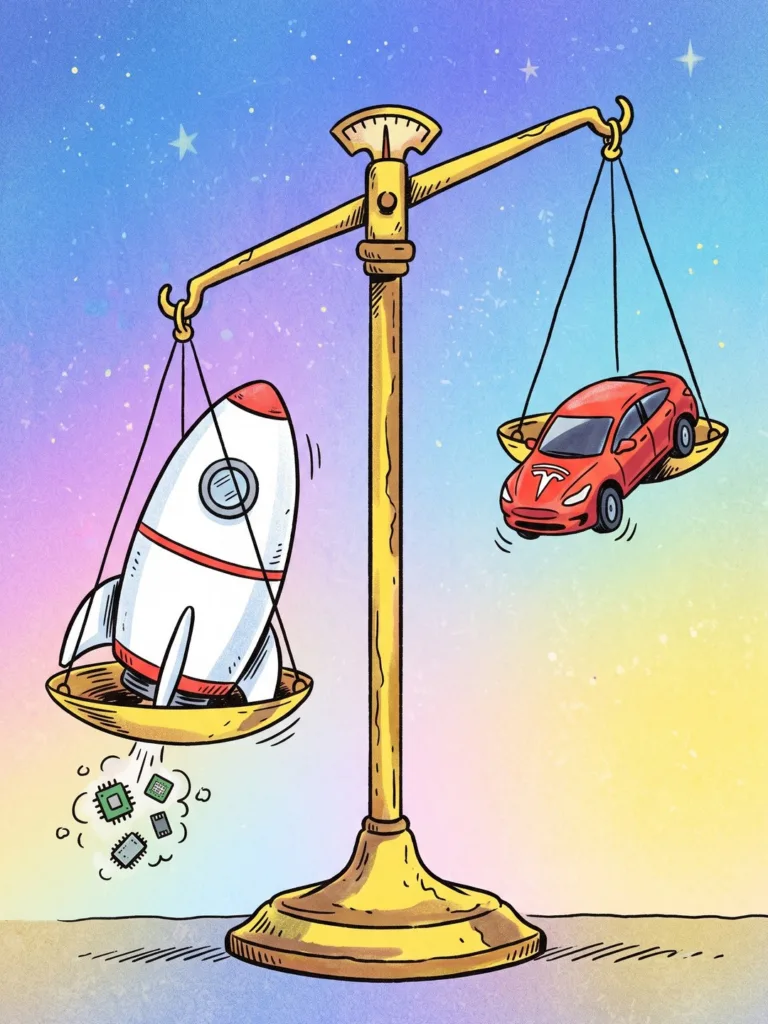
The key point lies elsewhere. If a merger happens, what Tesla shareholders get will be decided not by how SpaceX performs but by ‘how many SpaceX shares one Tesla share is swapped for.’ Yet Musk sits on both sides of the table over that ratio. He is Tesla's largest shareholder, with a 19.8% stake as of Sept. 30, and the CEO of SpaceX, where he is reported to hold a majority of the voting rights (the votes cast at shareholder meetings) even after the listing.
- How far have the merger talks gone?
Musk said both companies formed special committees of independent directors, a group of board members with no stake in the deal who weigh it on the company's behalf, at the request of shareholders. Because he is "a conflicted party," he added, he cannot take part in the committees' discussions.
He said it is an exaggeration to treat a merger as certain, that the committees have not yet agreed on any terms, and that there is no guarantee they will. Once the committees draw up a proposal, it must be put to a shareholder vote.
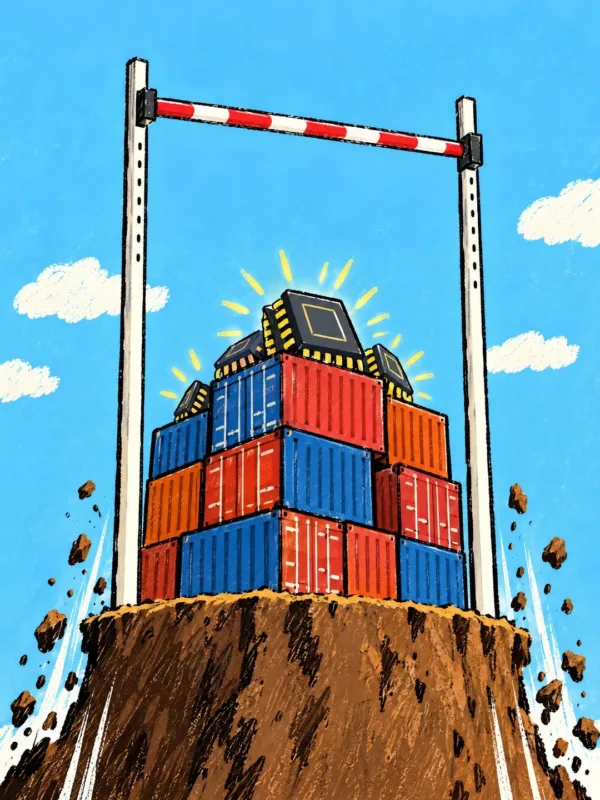
On the Tesla side, the bar is high. A deal needs the support of 50% of all Tesla shares, not just the shares that vote. Think of a condo redevelopment that needs approval from a set share of all owners, not just a majority of those who show up. Shares that don't vote effectively count as "no."
- Why the exchange ratio sets Tesla shareholders' share
How the companies would combine hasn't been decided either. Barclays analyst Dan Levy, however, has suggested SpaceX could be the buyer in an all-stock deal.
In a stock deal, Tesla shareholders receive SpaceX shares instead of cash. The exchange ratio is how many SpaceX shares one Tesla share is swapped for. Think of a used-car trade-in: what the dealer credits for your car determines your share.
Take someone with 100 Tesla shares (a hypothetical). At a ratio of 2 SpaceX shares per Tesla share, they get 200 SpaceX shares; at 2.5, they get 250. Same Tesla stake, a 25% difference in what they receive.
- What kind of company would Tesla shareholders be getting?
Of SpaceX's $14.575 billion in third-quarter revenue, $7.56 billion came from its Super Intelligence (SI) segment. That unit, which includes the Grok AI model, cloud computing deals and Cursor, a coding company bought in August, grew revenue 830% from a year earlier, including the acquisition.
Not all of the $4.4 billion profit came from the core business, either. Operating income, what the businesses themselves earned, was $2.791 billion. Interest and other income were added on top, and the tax line actually added $390 million, so net income ended up larger than operating income.
Put simply, Tesla shareholders would be getting shares not so much in a rocket company as in a company that makes more than half its revenue from AI.
- What does it mean that SpaceX spends more than it brings in?
In the same quarter, SpaceX's capital expenditure (money spent on long-lived facilities such as factories and data centers) was $19.593 billion, more than $5 billion above its revenue. Of that, $16.444 billion, about 84%, went to the superintelligence business. The company projected fourth-quarter capital expenditure of $35 billion to $40 billion.
It is like a shop with $10,000 in monthly sales spending about $13,400 on equipment in the same month (an illustration). If the equipment brings in more customers, the shop grows; until then, the gap has to be covered from savings.
After a merger, Tesla shareholders would share in both the growth if this spending pays off and the burden if it doesn't.
- Why it matters that Musk is on both sides
An exchange ratio is a number where one side's gain is the other side's loss. Value Tesla richly and Tesla shareholders benefit; value it cheaply and SpaceX shareholders do. Musk's stakes differ in size: 19.8% of Tesla's shares versus a majority of SpaceX's votes (a projection reported in May). So the ratio that is best for Musk and the ratio that is best for Tesla shareholders may not be the same.
That is why Musk is out of the talks and independent directors are doing the weighing. University of Colorado law professor Ann Lipton has flagged dilution: extra shares Musk earns under his Tesla pay package would also turn into SpaceX shares in a merger, shrinking ordinary Tesla shareholders' slice of the combined company.
This isn't the first deal with Musk on both sides. In November 2016, Tesla bought SolarCity, a solar company where Musk was board chairman. The difference this time is that Tesla may not be the buyer; as Barclays' analysis suggests, it could be the one sold to SpaceX.
- BITPRESS Insight
For Tesla shareholders, the news isn't that "Musk's companies are coming together." It's that, after a merger, their stake would turn from a piece of an electric-car company into a piece tied to an AI and satellite company whose capital spending exceeds its quarterly revenue.
SpaceX's 161% revenue growth doesn't mean the terms will be good for Tesla shareholders. If that growth is already priced into SpaceX's stock, what Tesla is valued at matters even more.
The test is simple. Whether a merger is good for Tesla shareholders depends not on how well SpaceX is doing, but on how many SpaceX shares each Tesla share is worth in the deal.
Sources
https://www.sec.gov/Archives/edgar/data/1181412/000162828026066482/spaceexplorationtechnologi.htm
https://www.investing.com/news/transcripts/earnings-call-transcript-spacex-tops-q3-2026-estimates-shares-jump-after-hours-93CH-4961292
https://ca.finance.yahoo.com/news/spacex-tesla-form-special-committees-222811801.html
https://www.sec.gov/Archives/edgar/data/1318605/000110465926116700/tm267596-1_def14a.htm
https://techcrunch.com/2026/05/21/how-elon-musk-will-increase-his-power-through-the-spacex-ipo/
https://finance.yahoo.com/sectors/technology/article/why-a-merger-with-spacex-could-be-bad-for-tesla-shareholders-134417184.html
Glossary
Exchange ratio — In a merger, the number of the surviving company's shares paid for each share of the company that disappears.
Special committee — A group of independent board members with no stake in a deal who judge whether it is good for the company and negotiate its terms.
Conflict of interest — When one person sits on both sides of a deal, so what is best for them may differ from what is best for the company and its shareholders.
Capital expenditure — Money a company spends to buy or build long-lasting assets such as factories, equipment and data centers.
Dilution — When new shares are issued, existing shareholders end up owning a smaller slice of the whole company.
BITPRESS articles are information to help your investment decisions, not a recommendation to buy or sell any stock or coin. Investment decisions and their results are your own responsibility.