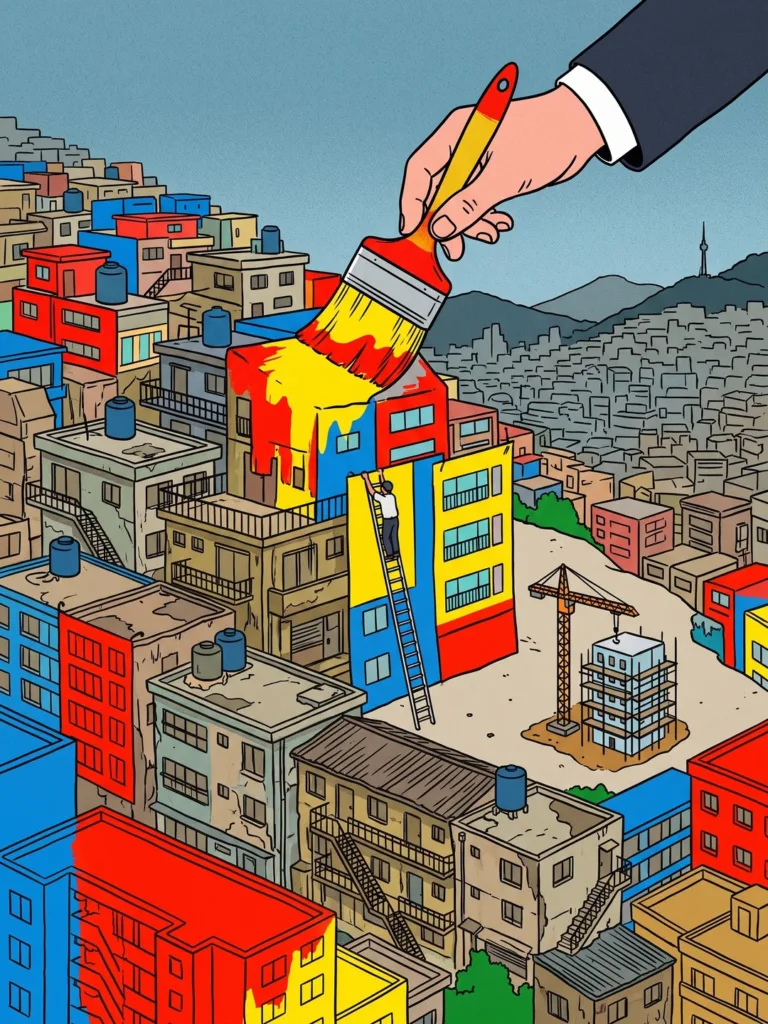
On Oct. 16, the government set a target of moving people into about 100,000 public homes in the Seoul area (Seoul, Incheon, Gyeonggi) from the fourth quarter of this year through the end of next year (2027). Moving in means people actually living in the homes. "Public homes" is a catch-all term for housing in which the government or public bodies are involved in supply, such as public sale, built-for-rent and purchase-and-lease homes.
Going by the number alone, it is easy to read this as 100,000 new homes soon easing the jeonse (Korea's lump-sum deposit lease) squeeze (BITPRESS's interpretation). But the key point is elsewhere. Split the numbers by type and only 17,000 homes look like new builds by type. The biggest group, 45,000, is jeonse lease homes, which use existing housing.
- What kinds of homes make up the 100,000?
By type, the Ministry of Land, Infrastructure and Transport's figures are 9,000 public sale homes, 8,000 built-for-rent homes, 29,000 purchase-and-lease homes, 45,000 jeonse lease homes and 5,000 publicly backed private rental homes. The five types add up to 96,000, and the announcement's wording is "about 100,000 homes."
Put simply, the 100,000 is not 100,000 new apartments. It adds up many kinds of homes that work in different ways. It is like a store's sale list that includes both newly stocked goods and items that were already on the shelf. The difference is that, depending on the type, the number of homes in the market may or may not grow.
- 17,000 homes look like new builds by type
Built-for-rent homes are rental homes that LH (Korea Land & Housing Corporation) builds directly on public land and elsewhere and supplies; they include permanent rental, national rental, happiness housing and integrated public rental. Public sale homes are homes for sale offered by public bodies, and the government has announced that its Q4 call for public sale applicants will include Third-Generation New Town homes, part of a new-town development program in the Seoul area. The announcement doesn’t say they are ‘new builds,’ but by type these are homes that are built and put on the market. Together they come to 17,000 homes, about 18% of the 96,000 total across types.
Move-ins at Third-Generation New Towns begin in earnest in December, starting with Incheon Gyeyang. Goyang Changneung and Hanam Gyosan, also Third-Generation New Towns, appear in this year's construction-start figures. The announcement doesn't say how many of the 100,000 homes are in the Third-Generation New Towns.
- The biggest group, 45,000, is jeonse lease homes that use existing housing
With a jeonse lease home, an eligible applicant finds a home within the support limit, LH signs a jeonse contract with the owner, and LH rents that home to the applicant at a low price. In the May call for applicants, the Seoul-area support limit was up to KRW 130 million, and the target group was low-income households without a home.
For example, if a neighborhood has 10 jeonse homes and LH signs for one of them and rents it to an eligible household, the neighborhood still has 10 jeonse homes (assumption). The household's deposit burden shrinks, but the number of homes stays the same. A jeonse lease is a way to help households that need a home, not a way to build new ones.
- The announcement doesn't split the 29,000 purchase-and-lease homes into new and existing
With purchase-and-lease homes, LH either buys new homes under a prior agreement with a private developer once they are completed (construction finished), or buys existing homes, and rents them to young people, newlyweds and others at below-market rent. New homes take about one to two years from construction start to move-in. LH tracks its new-build purchase agreements separately, and this year's Seoul-area construction-start figures also include new-build purchases, so the purchase-and-lease group includes new homes bought under agreements.
But the announcement doesn't say how many of the 29,000 are new and how many are existing. So the number of newly built homes is at least 17,000, the ones that look like new builds by type, and rises to 46,000 (calculation) if every purchase-and-lease home is new. The 5,000 publicly backed private rental homes were left out of this count because the announcement doesn't say whether they are new. How many more are actually new can't be known from the announcement.
An editorial in an economic daily also pointed out, regarding the 74,000 jeonse lease and purchase-and-lease homes, that because they include methods that use existing housing, "not all 100,000 homes will be newly built."
- The move-in target and construction starts are different numbers
The 100,000 move-ins is a target through the end of next year. The results already confirmed are on the construction-start side. The government's target for Seoul-area construction starts this year is 268,000 homes, and as of the second week of October, 99,000 homes had started, 37% of the target.
The government expects at least 218,000 to 235,000 homes to start by the end of the year. On that outlook, the total could fall 33,000 to 50,000 homes short of the target. For public housing alone, 16,200 of this year's 62,000-home target have started, a progress rate of 26%.
Put simply, the homes to be moved into by the end of next year and the homes whose construction began this year are numbers at different stages. The former is a target; the latter is the result so far.
- BITPRESS Insight
In this announcement, 17,000 homes look like new builds by type. The biggest group, 45,000 jeonse lease homes, is support in which LH signs for existing homes, so it does not by itself build new homes in the Seoul area. The new-build share mixed into the purchase-and-lease homes can't be confirmed from the announcement.
That doesn't make the 100,000 meaningless. Jeonse lease and purchase-and-lease homes help low-income households without a home, young people and newlyweds live more cheaply than at market prices. But that help goes to qualifying households, which is a different matter from how many new homes get built.
When you read a supply announcement, there is one yardstick. Split the number into "newly built homes," "homes that use existing housing" and "homes that are still just a target," and even the same 100,000 shows how much of it actually reaches the number of homes in your neighborhood.
Sources
https://www.mt.co.kr/estate/2026/10/16/2026101613020730592
https://nocutnews.co.kr/news/6592680
https://www.fnnews.com/news/202610161329255322
https://www.fnnews.com/news/202605210930365350
https://www.fnnews.com/news/202610111327229822
https://www.smarttoday.co.kr/ko-kr/articles/104743
Glossary
Public homes — a catch-all term for housing in which the government or public bodies are involved in supply, such as public sale, built-for-rent and purchase-and-lease homes.
Jeonse lease — homes where an eligible applicant finds a home, LH signs a jeonse contract with the owner, and LH rents the home to the applicant at a low price.
Purchase-and-lease — LH buys new homes it agreed on in advance once they are completed, or buys existing homes, and rents them out below market rent.
Built-for-rent homes — rental homes LH builds directly on public land and others and supplies, such as permanent rental, national rental and happiness housing.
Groundbreaking — the start of building work on a home, a stage before move-in, when people actually live there.
BITPRESS articles are information to help your investment decisions, not a recommendation to buy or sell any stock or coin. Investment decisions and their results are your own responsibility.