IREN, which switched from Bitcoin mining to AI infrastructure, has signed a multiyear cloud services deal with U.S. AI developer Anthropic, according to U.S. tech outlet The Information. On the news, IREN shares rose 4% in pre-market trading on Oct. 12 (U.S. time). The report did not give the deal's value or length.
Many people read this as a miner riding the AI wave. The idea is that miner stocks ultimately follow the Bitcoin price.
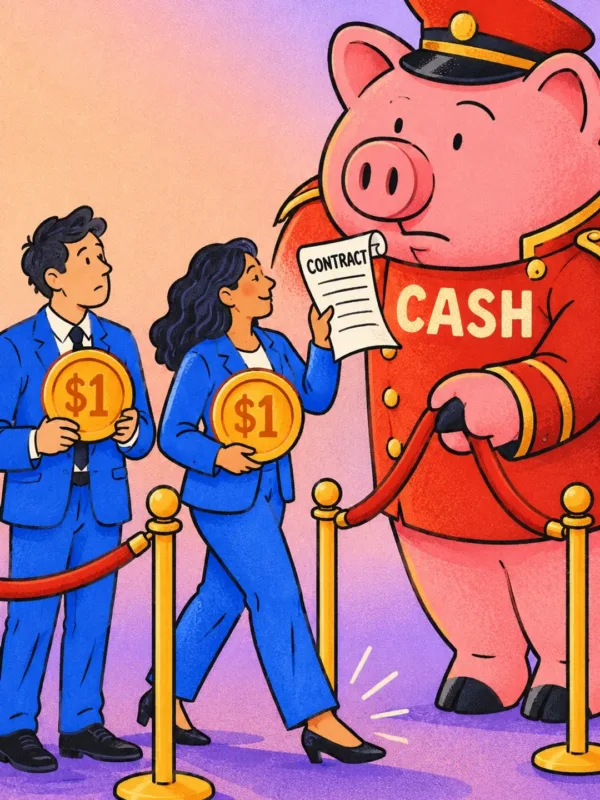
But the real point lies elsewhere. Unlike mining income, which swings with the Bitcoin price, a multiyear contract with a well-known customer can itself serve as collateral for borrowing. A loan IREN took out against its Microsoft contract income got an A credit rating and carried an average interest rate of 6%. Money the same company borrowed for a different project cost 9% (the projects differ, so a simple comparison is hard).
- What is IREN renting to Anthropic?
What IREN sells is AI cloud (AI computing power rented over the internet). It installs Nvidia GPUs (chips for AI computing) in its own data centers, lets AI companies use that computing power, and charges them a fee.
Its first big customer was Microsoft. Under a $9.7 billion (about KRW 12.9 trillion) deal announced last November, IREN will rent Nvidia GPUs in its Texas data center to Microsoft for five years. If the report is right, Anthropic is an additional customer on top of that.
Think of a building owner: mining is like running a shop yourself, while AI cloud is like leasing space to a big company for several years. The difference is that IREN has to buy not just the building but also the expensive computers that go inside it.
- Why contract income beats mining income
Mining income depends on the price of the Bitcoin that gets mined. On Oct. 12, Bitcoin fell as low as about $82,300 during the day, and Cointelegraph described the current market as a downturn in which mining profitability is getting worse.
From a lender's point of view, the difference is big. Someone holding a multiyear contract can show they can repay more easily than a freelancer whose income swings month to month. Unlike a personal loan, though, a company loan can take the money expected from that contract itself as collateral.
BlocksBridge Consulting, which publishes a mining industry newsletter, said that “big lenders have become pickier about data center loans, and decisions increasingly depend on the customer, the contract and whether the project can be finished.”
- How different were the rates at the same company?
In June, IREN borrowed $3.65 billion (about KRW 4.9 trillion). The collateral was its GPUs and the money expected from its Microsoft contract, and credit rating agency Fitch gave the loan an A, an investment-grade rating. The average interest rate was 6%.
In August, it borrowed $2.4 billion (about KRW 3.2 trillion) for a different project at a fixed rate of 9%. Cointelegraph wrote that the two loans cover different projects and cannot be compared directly, but they show how much borrowing costs can vary even within the same company.
Put simply, the interest varied widely from loan to loan at the same company. If you borrowed KRW 100 million for a year, 6% would mean KRW 6 million in interest and 9% would mean KRW 9 million. Scaled up to $3.65 billion, that is a gap of about $110 million (about KRW 146 billion) a year (illustrative math).
- So how much more money is needed?
The problem is scale. A June analysis by BlocksBridge, citing data from asset manager VanEck, estimated that publicly traded Bitcoin miners would need about $50 billion (about KRW 67 trillion) to build all the AI facilities they have planned. IREN's shortfall alone was $21.1 billion (about KRW 28 trillion).
Riot Platforms was estimated to need $7.2 billion and HIVE Digital $4.6 billion. According to VanEck data, at the peak of the Bitcoin bull market last October, miners' debt was about 500% higher than in the second quarter of 2024.
Winning a customer contract is not the end of it. To deliver on the contract, a company first has to raise money to buy GPUs, build facilities and bring in power. It is like signing a lease for a shop first and then borrowing to pay for the interior work.
- Are there other costs attached to these deals?
Interest is not the only price of backing an AI contract. In a deal involving Cipher Digital, a miner moving into AI facilities, Google agreed to guarantee $1.4 billion (about KRW 1.9 trillion) in lease obligations in exchange for warrants (the right to receive new shares at a set price) equal to 5.4% of Cipher.
If those warrants are exercised, existing shareholders' stakes can shrink. It is like a friend agreeing to co-sign your home lease in exchange for a share of your house. News of a contract may come with not just interest costs but also a stake handed over.
- BITPRESS Insight
IREN's Anthropic deal is better seen not as an “AI theme” label but as a miner changing the way it makes money. When income tied to the Bitcoin price is replaced with multiyear contract income from a well-known customer, that contract becomes collateral for borrowing. The 6% loan backed by Microsoft contract income, which got an A credit rating, is an example.
That changes the numbers miner stockholders should watch. More than the Bitcoin price, the key figures for judging a company's future become who the customer is and how many years the contract runs, what rate the company borrowed at against that contract, and how much more money it needs to finish its facilities.
Miner stocks make more sense when you ask not “Will Bitcoin go up?” but “Is the income locked in by contracts, and can the company handle the debt needed to deliver on them?”
Sources
https://cointelegraph.com/news/bitcoin-miners-ai-financing-costs-debt-funding-gap
https://www.coindesk.com/markets/2026/10/12/bitcoin-holds-usd83-000-as-dollar-strength-keeps-markets-on-edge
https://w.media/iren-closes-usd-3-65bn-financing-for-microsoft-ai-infrastructure-deal/
https://www.ecb.europa.eu/stats/eurofxref/eurofxref-hist-90d.xml
Glossary
AI cloud — A service in which AI companies, instead of buying their own computers, rent AI computing chips in another company's data center over the internet.
Collateral — Property, or money expected in the future, that a lender can take if the borrower fails to repay.
Investment grade — A rating a credit rating agency gives when it sees a low risk of the money not being repaid; borrowers with this rating can usually borrow at lower interest rates.
Fixed rate — A type of loan in which the interest rate set at the start stays the same for the whole loan, even if market rates change.
Warrants — The right to receive a company's new shares at a set price; when exercised, the number of shares rises and existing shareholders' stakes shrink.
BITPRESS articles are information to help your investment decisions, not a recommendation to buy or sell any stock or coin. Investment decisions and their results are your own responsibility.