Korea's average fixed-rate mortgage (home loan) rate was 3.97% last October. By this August it was 4.88%, up 0.91 percentage points. Over the same period, the Bank of Korea's base rate (the rate the central bank sets, which serves as the starting point for other rates) rose from 2.50% to 3.00%, up 0.50 points.
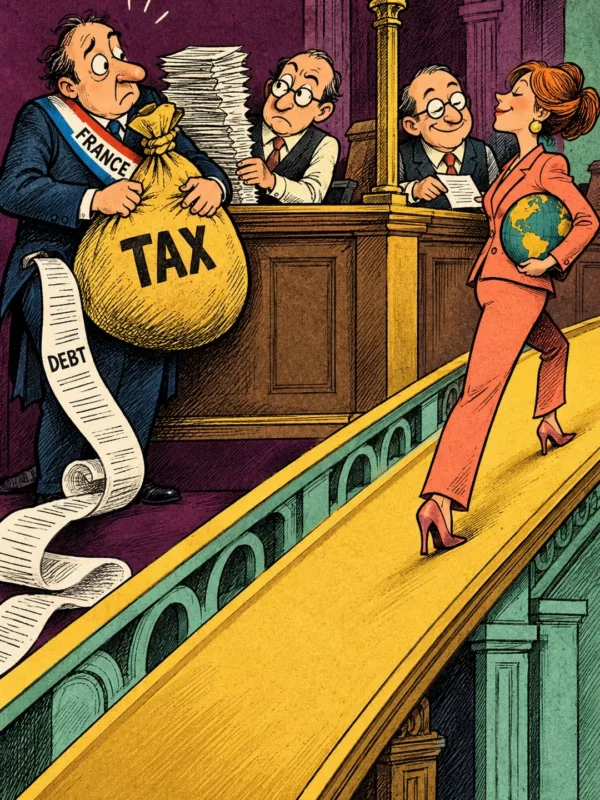
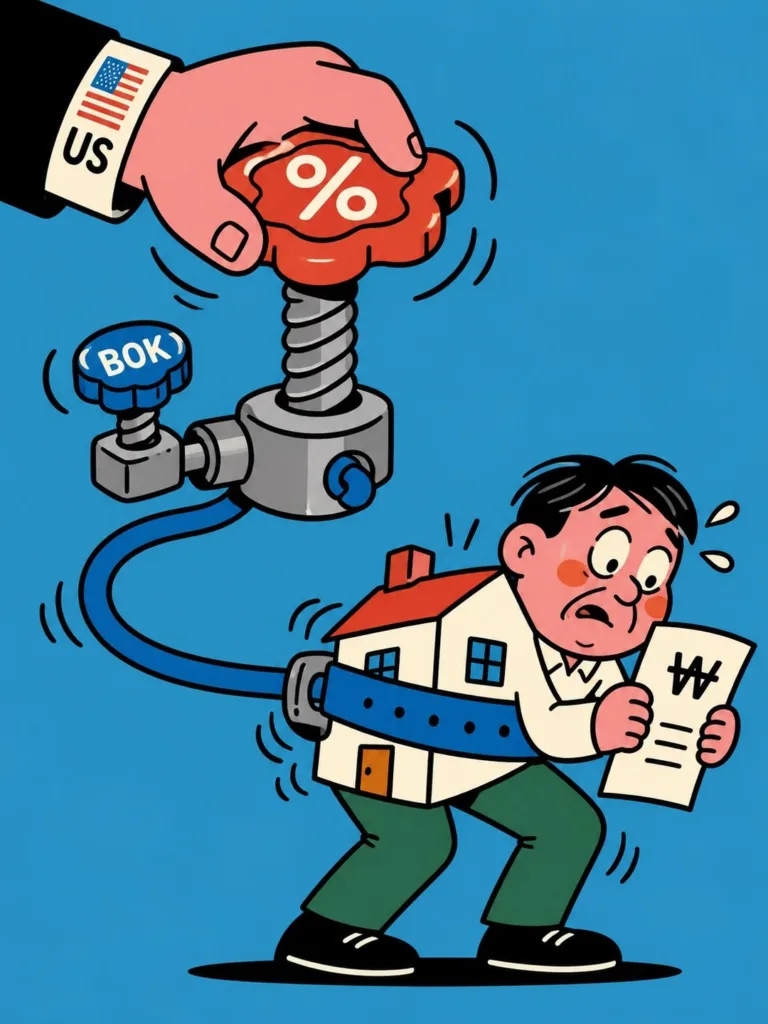
The usual reading is: "The Bank of Korea raised rates, so loan interest went up." The Bank of Korea did raise its base rate two months in a row, on July 16 and Aug. 27. But the key lies elsewhere. Fixed rates track not the base rate but what banks pay to borrow money for five years, and that price also moves with U.S. interest rates.
- Why did fixed rates rise while the Bank of Korea stood still?
Until the July 16 hike, the base rate was held at 2.50%. Yet fixed mortgage rates rose for 10 straight months through July after hitting 3.97% last October.
The reason lies in the length of the loan. The 5-year bank bond yield also rose in July, from 4.32% to 4.39%. Kim, head of the Bank of Korea's financial statistics team, said: "Mortgages have long maturities, so they follow the 5-year bank bond yield and similar rates. The rise in benchmark rates and banks' sales strategies both had some effect."
- How does what a bank pays for five-year money become my interest rate?
The 5-year bank bond (a bond a bank sells to borrow money) yield is the benchmark for 5-year fixed mortgage rates. Banks add a spread (the bank's own margin) and subtract preferential discounts (cuts for meeting certain conditions) to set the final loan rate. When bank bond yields rise, it costs banks more to raise money, and the interest customers pay goes up too.
Think of it like the wholesale price of flour at a bakery. When the wholesale price rises, bread prices follow. The difference from flour is that this wholesale price is set every day in the bond market and moves with U.S. interest rates too.
On Sept. 15, the 5-year bank bond yield rose to 4.655%. That was the highest since Oct. 26, 2023 (4.810%), in about two years and 11 months. That same day, the five biggest banks' 5-year fixed mortgage rates ranged from 4.89% to 7.29% a year.
- Why do U.S. rates push up Korean bank bond yields?
On Sept. 15, when the 5-year bank bond yield hit its highest in two years and 11 months, the yield on U.S. Treasuries (bonds the U.S. government sells to borrow) that are repaid in 10 years was above 5%. When U.S. Treasury yields rise, Korean bonds become relatively less attractive to investors, putting upward pressure on yields of Korean government bonds and bank bonds.
U.S. Treasuries pay more → Korean bonds must offer more interest to sell → banks pay more to borrow → fixed mortgage interest goes up. It's like when the bank next door raises its deposit rate, your bank has to follow to keep customers. The difference is that in the bond market, the "bank next door" is the U.S. government.
Park, an economist at Woori Bank, said: "Concerns about U.S. fiscal health and a global trend of rising rates are working together," adding that "bank bonds, which are sensitive to this, have no choice but to come under upward pressure."
- How much more would a 300 million won loan cost each month?
Say you borrow 300 million won (about $222,000) for 30 years with equal monthly payments of principal and interest. At 3.97%, you'd pay about 1,427,000 won (about $1,055) a month; at 4.88%, about 1,589,000 won (about $1,174). That's about 160,000 won ($119) more a month, or about 1.94 million won ($1,432) a year (example calculation).
If the fixed rate had risen exactly as much as the base rate (0.50 points), the gap would have been about 90,000 won ($65) a month. The remaining 70,000 won or so ($55) is a share the base-rate hike alone doesn't explain.
Put simply, if you had calculated your interest from the base rate alone, you would have missed nearly half of the increase.
- How did borrowers move between fixed and variable rates?
In July, the fixed rate was 4.76% and the variable rate (a loan whose rate resets every set period) was 4.35%, a gap of 0.41 points. The share of fixed rates among new mortgages then fell to 31.9%, the lowest in 12 years and 5 months, since February 2014. Kim said, "The widening gap had a big effect, with borrowers moving to variable-rate loans."
In August, the trend shifted a little. The fixed rate rose 0.12 points to 4.88% and the variable rate rose 0.18 points to 4.53%, narrowing the gap. The fixed-rate share rose again to 35.3%, its first increase in 10 months. COFIX (an index averaging what banks pay to raise funds), the benchmark for variable loans, follows deposit rates up, so variable-rate interest could climb further.
A borrower who took out a mortgage to buy a home in Seoul's Gangbuk district chose a fixed rate that was 0.8 points higher than the variable rate offered to him. On 300 million won, that's about 140,000 won ($103) more a month, but he wanted to avoid the burden of a rate that changes every three months. "Even if I pay more now, I decided to reduce uncertainty going forward," he said.
- BITPRESS Insight
For anyone buying a home or refinancing, a fixed rate is interest that can rise first, following bank bond yields, even while the Bank of Korea stands still. And those bank bond yields also move with U.S. Treasury yields. This time, the Bank of Korea's hikes accounted for just over half of the rise in fixed rates.
So choosing between fixed and variable isn't about "which is cheaper now" but a bet on "where rates go next." A fixed rate is insurance: you pay extra to avoid the risk of rates rising further. A variable rate means paying less now but taking on that risk yourself.
Here is the test to apply to your own loan: between the extra you pay each year for the fixed-variable gap and the extra you'd pay if rates rise and your variable interest follows, which would your paycheck handle worse?
Sources
https://www.seoul.co.kr/news/economy/finance/2026/09/16/20260916029002
https://www.mt.co.kr/economy/2026/08/26/2026082611082672553
https://www.seoul.co.kr/news/economy/finance/2026/10/01/20261001029004
https://weekly.khan.co.kr/article/202608271209001
https://www.newsis.com/view/NISX20260716_0003711920
Glossary
Benchmark rate — The rate set by the Bank of Korea, which serves as the starting point for other rates, such as what banks charge each other.
Bank bonds — A certificate a bank issues when borrowing money, promising to repay with interest by a set date; a 5-year bond is repaid in five years.
COFIX — An index averaging what banks pay to raise money through deposits and other sources, used as the benchmark for variable-rate mortgages.
Borrower — A person who has borrowed money from a bank.
Benchmark rate — A market rate banks use as the basis for setting loan rates, such as bank bond yields or COFIX.
BITPRESS articles are information to help your investment decisions, not a recommendation to buy or sell any stock or coin. Investment decisions and their results are your own responsibility.