There is a place where retail investors burned by leveraged ETFs are flocking lately: covered call ETFs that promote monthly payouts. The Korean market for them has already passed KRW 26 trillion, and some products advertise distribution rates above 12% a year. Is this really a ‘safe high dividend,’ or just another temptation?
1. What exactly is a covered call ETF?
A covered callis a strategy that tries to catch two rabbits at once. You buy a stock (=Covered) and at the same time sell a call option on that stock (=Call).
Let’s make it simple. Say you own Samsung Electronics shares. Someone bets, “This stock won’t go above KRW 80,000 within a month,” and you tell them, “If it goes above KRW 80,000, I’ll sell you my shares, so pay me some money right now.” That ‘money’ is the option premium.
If the stock stays at KRW 80,000 or below? The premium goes straight into your pocket. If the stock shoots above KRW 80,000? Your shares are sold off by force, and you miss out on any gains beyond that.
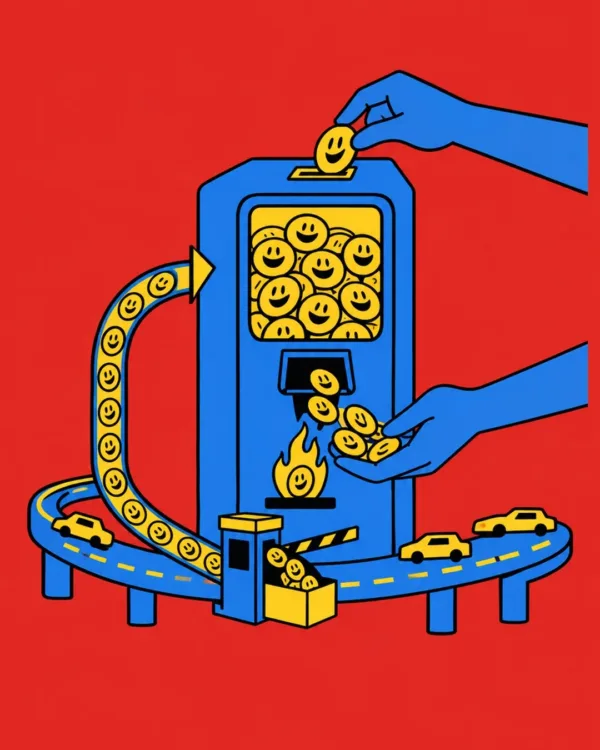
A covered call ETFis a product that has a machine do this for you. The ETF holds S&P500 or KOSPI 200 stocks, sells call options at the same time to earn a premium every month, and pays that money back to investors as monthly distributions.
2. Why people are rushing in like crazy right now
The Korean ETF market has been on a roller coaster lately. Total net assets, which had hit KRW 500 trillion, lost KRW 80 trillion in a month, and retail investors who took big losses on semiconductor leveraged ETFs are moving in search of steady cash flow.
But covered call ETFs can actually earn more when volatility is high. Why? Because when the stock market swings, call option prices (premiums) get more expensive. The bigger the fear, the more people there are who want the right to buy those shares, and the higher the price (premium) they pay.
In fact, net assets of Korean covered call ETFs have grown by more than KRW 10 trillionsince the start of the year, and Mirae Asset’s TIGER US Nasdaq100 Target Daily Covered Call ETF has topped KRW 2 trillion in net assets.
On top of that, the fact that money comes in every monthis winning over retirees and people preparing for retirement. The mindset at work: “Stocks go up and down, but the monthly distribution lands like clockwork.”
3. The three hottest covered call ETFs right now
🥇 KODEX 200 Target Weekly Covered Call
- Features: Uses the KOSPI 200 as its underlying asset and rolls over (swaps in new) call options every week
- Size: Net assets have topped KRW 5 trillion , the leader among Korean covered call ETFs
- Performance: 1-year return 86.67% (an overwhelming No. 1 among non-leveraged ETFs)
- Distribution rate: About 1–1.5% a month (varies in the 12–18% annual range)
🥈 TIGER Dividend Covered Call Active
- Features: Actively managed, focusing on dividend stocks and adding a covered call strategy
- Performance: 1-month return 24.04%, monthly distribution rate 2.56%, among the highest in Korea
- Popularity: Net retail buying over the past month of KRW 456 billion — second in popularity only to leveraged ETFs
🥉 JEPI (JPMorgan Equity Premium Income ETF)
- Features: Based on the US S&P500, the world’s largest covered call ETF, managed by JPMorgan
- Distribution rate: Annual 7~9% level (monthly payouts)
- Strengths: Spreads investment across about 100 leading US companies and delivers steady income even in volatile markets
4. “Put in KRW 100 million, get KRW 1 million a month?” The reality in numbers
Here is what everyone wants to know: “So how much can I actually make?”
Distribution rates for covered call ETFs vary widely by product and market conditions. Most are managed to target around 10–15% a year . Let’s run a simple calculation.
Sheet
| Investment | At 10% a year (monthly) | At 12% a year (monthly) | At 15% a year (monthly) |
|---|---|---|---|
| KRW 10 million | About KRW 83,000 | About KRW 100,000 | About KRW 125,000 |
| KRW 50 million | About KRW 417,000 | About KRW 500,000 | About KRW 625,000 |
| KRW 100 million | About KRW 830,000 | About KRW 1 million | About KRW 1.25 million |
| KRW 300 million | About KRW 2.5 million | About KRW 3 million | About KRW 3.75 million |
Monthly distributions change every month, and distribution rate ≠ total return. Payouts may include a return of principal.
For example, if you put KRW 100 million into a product with a 12% annual distribution rate, you can expect roughly KRW 1 million a monthin cash flow. With KRW 300 million, that’s KRW 3 million a month, enough to pay rent and eat out in Seoul.
But there is a trap you must never overlookhere.
5. A “12% distribution rate” is not a “12% return”
This is the biggest misunderstanding. Just because an ETF pays 1% a month does not mean your money grows 12% a year.
Distributions come from three main sources:
- option premium (money earned by selling call options)
- Dividends (dividends from the underlying stocks)
- Return of capital (sometimes paid out of your principal)
No. 3 is the problem. To keep distributions on target, some covered call ETFs include return of capital (ROC), which hands part of your principal back to you. In other words, you could end up saying, “I got KRW 1 million a month, but now my principal is down to KRW 95 million?”
Another trap is capped gains in a rising market. In a year when the stock market jumps 20%, a covered call ETF has to give up a large part of the gain because of its call options. In 2023, when the S&P500 rose 24%, QYLD (a Nasdaq 100 covered call ETF) posted a return well below that.
“Holds up when volatility is high, lags in bull markets, and falls a little less in bear markets” — that is what a covered call ETF really is.
6. So what should investors do?
Covered call ETFs sit on the opposite side from leveraged ETFs. They are not for hitting a jackpot but a tool for steady cash flow.
They suit:
- People who want to cover monthly living costs in retirement with ETF distributions
- People who need monthly cash flow even in volatile markets
- People who want to build a monthly-payout strategy in a pension or tax-advantaged account (IRP, ISA)
They are not recommended for:
- People who want “a stock that doubles”
- People who expect their principal to be protected (you can lose principal)
- People who buy based on the distribution rate alone
Experts often suggest a portfolio like this:
- Safe assets 30% + Broad market index (S&P500, KOSPI 200) 35% + Covered call ETFs 35%
Pure index ETFs handle growth, and covered call ETFs handle cash flow.
BITPRESS Insight
Some covered call ETFs even advertise dividend yields as high as 19%.
But those are based on a single stock (Palantir), so they are extremely volatile, and they raise the distribution rate by mixing in bonds. There is always a reason behind a high distribution rate.
The real value of a covered call ETF lies not in “KRW 1 million a month in cash flow”but in “cash coming in every month even when the stock market swings”. But the price you pay is clipped wings in a rising market.
“Monthly payouts landing like clockwork look good, right? But check whether they are being carved out of your principal, and how far they lag in a rising market” — be sure to check these two things before you buy. Faced with the lure of a 19% yield, logic comes first.
Sources
Size of Korea’s covered call ETF market as of end-July 2026
KODEX 200 Target Weekly Covered Call product information
TIGER US Nasdaq100 Target Daily Covered Call product information
TIGER Dividend Covered Call Active product information
Example distribution rates for RISE US Tech100 Daily Fixed Covered Call
Tax guide for distributions from Korean equity covered call ETFs