[Fact check] Do Koreans really hold that much Ripple?
The short answer: YES, and the share is shocking.
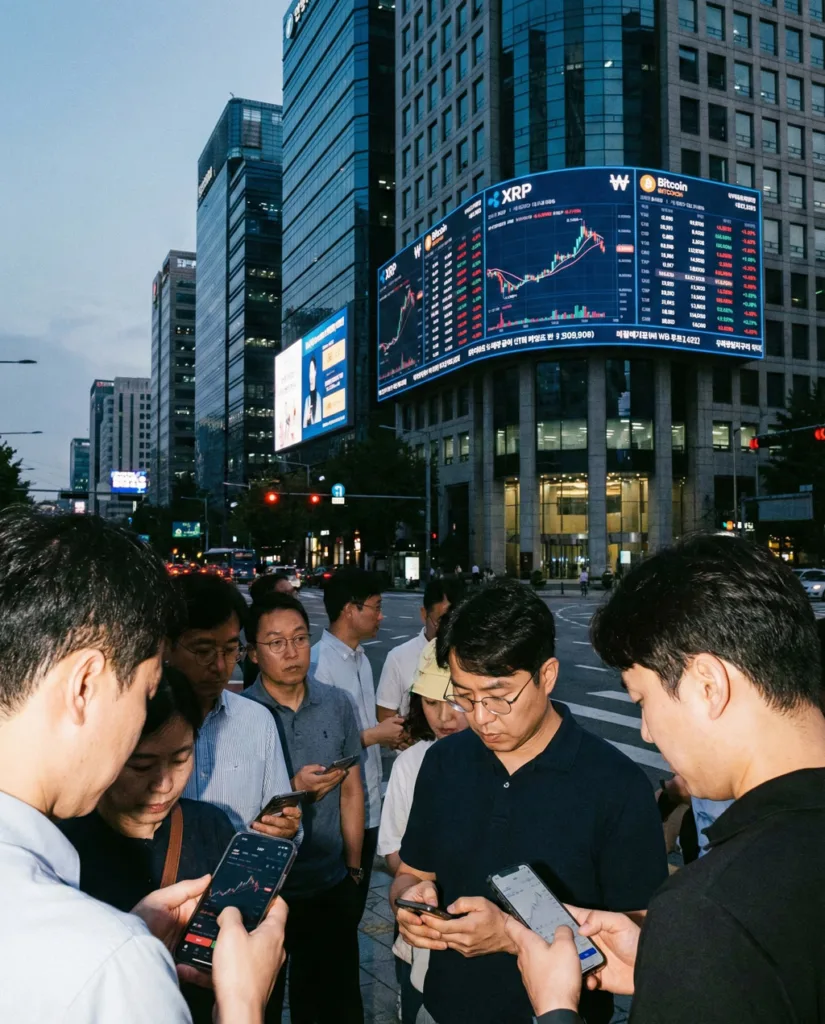
A 2024 survey by the Korea Financial Intelligence Unit (FIU) found that, of Ripple (XRP)'s global market cap, Korea accounted for about 16%.
Upbit customers alone hold 12.07%of the global circulating supply
, and some estimates suggest Koreans hold up to 25%of the total circulating supply.
.
Trading volume is even more striking:
- Ripple trading volume on Upbit in 2025 topped $1 trillion (about KRW 1,400 trillion) — ahead of Bitcoin and Ethereum No. 1
- As of February 2026, Ripple's 24-hour trading volume on Korean exchanges was $1.2 billion — dwarfing Bitcoin ($285 million) and Ethereum ($304 million)
- Of Upbit's 13.26 million users, 22%traded Ripple
In other words, Koreans make up 0.7% of the world’s population yet hold 16–25% of all XRP, making Korea a “Ripple powerhouse.”
Why Ripple of all coins? Five decisive reasons
1. “Unit-price psychology”: Bitcoin is too pricey, Ripple feels just right
A typical mindset among Korean investors: “It feels good to own a lot of something”
- Bitcoin at KRW 160 million → you can only buy 0.0061 BTC
- Ethereum → 0.1884 ETH
- Ripple at KRW 4,200 → you can buy 235.9 XRP
With the same KRW 1 million, you get 238 XRP but only 0.0006 BTC. A distinctly Korean mindset kicks in: the more units you hold, the stronger the sense that it’s “mine.” On top of that, the belief is widespread that “KRW 4,200 turning into KRW 42,000 feels more realistic than KRW 160 million turning into KRW 1.6 billion.”
.
2. The 2017 “Ripple syndrome”: a legendary rally made in Korea
In December 2017, Korea was swept up in a Ripple frenzy. As Upbit and Bithumb listed XRP, access became easier, and it soared more than eightfold in a single month,breaking through KRW 3,000
.
The “Ripple = jackpot” perception formed back then has lasted to this day. In particular, the generation that either made money on Ripple in 2017 or missed that chance has developed a “love-hate relationship” with it and still can’t let go.
3. The “Ri-tto-sok” meme: a self-deprecating joke only Koreans get
“Ri-tto-sok” — short for “fooled by Ripple again?”
. The meme was born in 2018, when XRP crashed from KRW 4,500 to KRW 700.
It isn’t mere mockery; it has become part of the identity of Korean Ripple investors. It captures the naivety (?) and good humor of getting fooled over and over and still buying back in. That is meme-coin-level community cohesion.
4. The SEC lawsuit: “bodhisattva fans” (a protective fandom) born of a sense of injustice
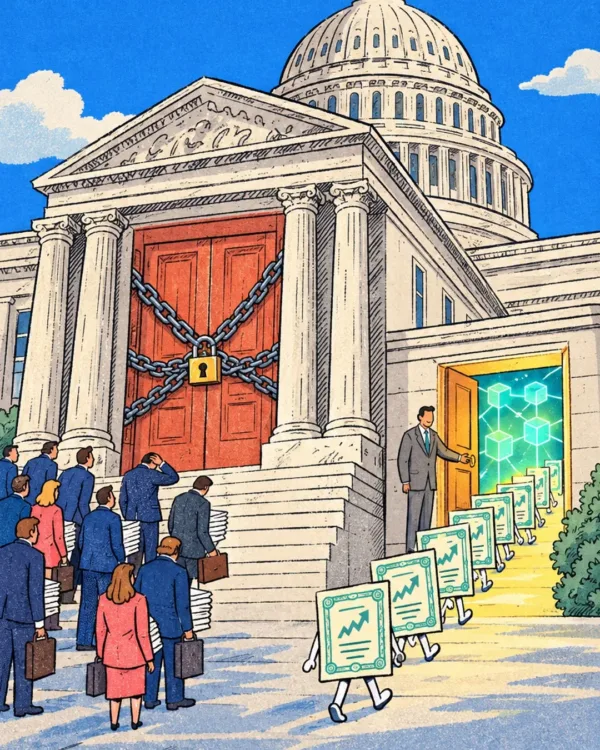
In December 2020, the SEC sued Ripple, kicking off a three-year legal battle. During this period, XRP failed to rise even in a bull market and fell instead
.
But Korean investors, feeling that “Ripple was wronged,” turned into “bodhisattva fans” (protective instinct + fandom). In July 2023, when the court ruled that XRP “is not a security when sold to retail investors,” investors shouted “We’re free!” and the mood turned festive
. This cycle of injustice → support → solidarity deepened Koreans’ attachment to Ripple.
5. Exchange infrastructure: “Ripple = king of the won market”
Korean exchanges are built around spot trading. With futures and margin trading limited, traders have to day-trade volatile altcoins instead, and XRP hits the sweet spot of liquidity (trading volume) and volatilityfor them
.
- Trading peaks at 9 a.m. (when the stock market opens), led by XRP
- Tight spreads (the gap between bid and ask) make it ideal for day trading
- The kimchi premium (Korea premium) shows up most clearly in XRP
In the end, Korea’s exchange infrastructure turned Ripple into an “asset optimized for speculation.”
The macro view: structural reasons Korea loves Ripple
An underdeveloped financial system → an opening for Ripple
In Korea, remittance fees are high and sending money abroad is even more complicated. Ripple’s “fast, cheap international transfers” story held practical appeal for Koreans
. In fact, Ripple is exploring partnerships with Korean banks, and its partnership with BDACS (a Korean crypto custody firm) launched in August 2025
.
An alternative for the “generation that missed Bitcoin”
About 44% of Koreans in their 20s and 30s have signed up for a crypto exchange
. They missed the days “when Bitcoin cost KRW 1 million” and flocked to Ripple in search of “the next Bitcoin.” Those who witnessed the 2017 Ripple rally, in particular, are determined “not to miss out this time”
.
Even civil servants buy Ripple?
The 2025 public officials’ asset disclosure showed that many of the 411 officials holding crypto owned XRP. Seoul city council member Kim Hye-young held 16 coins including XRP, and the largest holder owned more than 400,000 XRP
. This shows that Ripple is not “a hobby for a particular group” but a mainstream investment vehicle.
Conclusion: a peculiar “Ripple = Korea” ecosystem
The reasons Koreans love Ripple are not simple. Psychological (unit price, sense of ownership), historical (the 2017 rally), cultural (the Ri-tto-sok meme), structural (exchange infrastructure) and financial (remittance demand) factors have all worked together.
If we had to pick the most likely core reason:
“Memories of hitting (or missing) the jackpot on Ripple in 2017 + the reality that Bitcoin is too expensive to buy + Ripple being the easiest coin to trade on Korean exchanges + the sense of injustice and urge to root for it created by the SEC lawsuit”
These four combine to create a “Ripple = Korea”ecosystem unlike any other.
Outlook: If Ripple wins approval for a spot ETF, or its cooperation with Korean banks takes concrete shape, this “love for Ripple” will only deepen. But since XRP has yet to reclaim its 2017 peak (KRW 4,500), “Ri-tto-sok” is likely to continue for a while.
BITPRESS Insight
The dilemma of a “Ripple powerhouse”
Koreans’ love for Ripple is not just an investment craze; it is a unique phenomenon born at the intersection of structural financial psychology and the digital asset market. It is the product of that psychology meeting the particularities of Korea’s financial market: high remittance costs, exchanges centered on the won market, and a speculative investing mindset.
A question for investors: Can Ripple really become “the next Bitcoin,” or will it remain “forever Ri-tto-sok”? The fate of this asset, 16% of which is held by Koreans, ultimately depends on the global regulatory environment and how quickly Ripple Labs wins real bank adoption. For the passion of the “bodhisattva fans” to pay off, Ripple has to prove practical value in 2025, beyond the memories of 2017.