



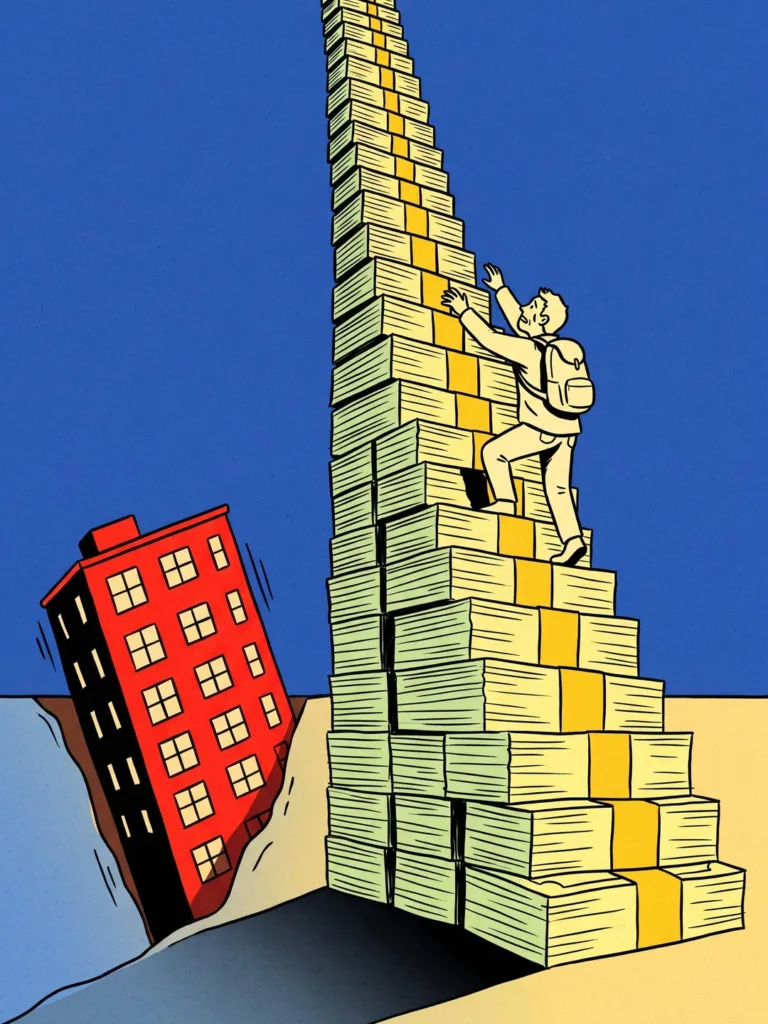
In the Korea Real Estate Board's statistics for the second week of November (as of Nov. 9), released Nov. 12, apartment prices in Seoul's Seongdong district fell 0.02% and in Gangdong 0.01%. Seongdong fell for the first time in 32 weeks and Gangdong in 33. The same week, Seoul apartment jeonse deposits (a Korean lease in which a tenant pays a large refundable deposit instead of monthly rent) rose 0.17%, matching the previous week's gain.
The common reading goes like this. With home prices turning down, jeonse deposits should soon follow, giving tenants some relief. Experts see it differently: demand that put off buying because of loan curbs is staying in jeonse homes, while the live-in requirement and limits on gap investing have cut the number of jeonse listings, leaving supply and demand even tighter. In other words, what moves Seoul jeonse deposits now is less the price of homes than the number of homes offered for jeonse, and that number is down 15.7% in a year.
- Why did jeonse deposits rise even where home prices fell?
The same week, Seoul jeonse deposits rose 0.21% in the 14 districts north of the Han River and 0.13% in the 11 districts south of it. Jeonse deposits rose across Seoul, including the 11 southern districts that contain Seocho, where home prices fell.
Seocho is the clearest case. Its apartment prices fell for 14 weeks in a row. Its jeonse deposits, which had been falling after July's fourth week as move-ins at large apartment complexes added supply, then rose 0.04%, turning up again after 15 weeks (as of the Nov. 9 data). In Seongdong, jeonse deposits rose 0.28% the week before home prices turned down (as of Nov. 2), one of the bigger gains in Seoul.
Put simply, home prices and jeonse deposits are now moving for different reasons.
- Why did people who could not buy stay in jeonse homes?
Experts say the fall in home prices owes much to a drop in the number of people willing to buy. Nam Hyuk-woo of the Woori Bank real estate research institute said the "loan quota also limits demand from people trading up." The loan quota caps the total amount of household loans banks can make in a year, and trading up means selling your current home and buying another to move into. People who could not get a loan and so could not buy do not vanish; they stay in the jeonse homes where they live now. That does not add new people to the jeonse search. But because they do not move out, no home opens up for the next tenant.
Think of what happens when used-car installment loans dry up. People who wanted to buy a car keep renting one. Even if car prices fall, the number of people looking for rental cars does not shrink. The difference is that homes cannot be added quickly the way a rental company adds cars.
- Why did landlords who offered jeonse leases decline?
Supply is blocked too. On Oct. 15 last year, the government designated all of Seoul a land transaction permit zone (an area where buying a home requires district office approval). As announced at the time of designation, anyone who buys an apartment in the zone must live in it for two years.
Before that, gap investing (buying a home with its tenant still in place by paying only the difference between the price and the jeonse deposit) was common. Because the buyer did not live there, the home simply stayed on the market as a jeonse listing. The live-in requirement closed off that route. When the buyer moves in, one fewer home comes up for jeonse.
Landlords choosing monthly rent over jeonse added to the squeeze. From January to September this year, monthly rent made up 51% of Seoul apartment rental deals, up 7.3 percentage points from a year earlier.
- How far have Seoul jeonse listings fallen?
According to the real estate data platform Asil, Seoul had 21,783 apartment jeonse listings as of Nov. 6, down 15.7% from the same day a year earlier. Listings fell 57.4% in Dongdaemun, from 948 to 404, 35.8% in Nowon and 23.0% in Geumcheon.
Put simply, there are visibly fewer homes to choose from for people looking for jeonse.
In August, the average jeonse deposit for a Seoul apartment was 636.62 million won, up 82.68 million won (14.9%) from two years earlier. In Gangdong it was 603.75 million won, up 102.92 million won (20.6%) in two years. The drop in listings is measured over one year and deposits over two, so the periods differ, but the rise appears to be the combined result of the listing drop and the factors above.
- How are tenants holding on?
Tenants are holding on with the contract renewal right (the right to stay in the current home for one more term with any increase capped at 5%). This year, 43.1% of Seoul renewal contracts used the right, and in Seongdong the share was higher, at 55.6%.
A tenant who moved in two years ago at Seoul's average jeonse deposit of 553.95 million won would owe at most about 27.7 million won more when using the renewal right. Over the same two years, Seoul's average jeonse deposit rose 82.68 million won. That gap is why tenants use the renewal right.
- When did jeonse deposits fall?
Look at where jeonse deposits actually fell and the answer shows. Seocho's jeonse deposits kept falling after July's fourth week as move-ins at large complexes added supply, and rose again only in November's second week, after 15 weeks. It means that where move-ins are concentrated, as in Seocho, jeonse deposits fell when new apartments came onto the jeonse market all at once. It was not because home prices fell.
For now, that kind of supply signal is weak. If anything, there is concern that rental prices could climb faster once demand from next spring's moving season is added. Nam said buying could also pick up once bank lending limits are reset next year.
- BITPRESS Insight
For falling home prices to be good news for tenants, one of two things has to change first. Either people who wanted to buy get loans and move out of jeonse homes, or more homes have to come up for jeonse. Right now, loan curbs block the front door and the live-in requirement blocks the back.
So this round of home-price weakness is just a tug of war between sellers and buyers, and it does nothing to cut what tenants pay. There is one test. What sets your next jeonse deposit is less news that home prices in your area fell than whether more homes are listed for jeonse than a year ago.
Sources
https://www.dailian.co.kr/news/view/1711787
https://news.bizwatch.co.kr/article/real_estate/2026/11/13/0054
https://www.seoul.co.kr/news/newsView.php?id=20261113032001
https://supple.kr/news/cmwd3mprxfq8gal9pqk17k2ki
https://dealsite.co.kr/articles/172651
https://kbmaeil.com/article/20260927500015
https://www.mt.co.kr/estate/2025/10/15/2025101509242798805
Glossary
Land transaction permit zone — An area where buying a home requires district office approval; in Seoul, as announced at designation, apartment buyers must live in the home for two years.
Gap investing — Buying a home with its tenant in place by paying only the difference between the price and the jeonse deposit.
Lease renewal right — A tenant's right to extend the contract once more and cap any increase in jeonse or monthly rent at 5%.
Jeonse listings — The number of homes offered for jeonse on the market, which is the amount of choice open to tenants.
Loan quota — A rule capping the total amount of household loans banks can make in a year.
BITPRESS articles are information to help your investment decisions, not a recommendation to buy or sell any stock or coin. Investment decisions and their results are your own responsibility.





